Getting Close Without Disturbing Wildlife
The animal's behaviour matters more than my frame. This is the discipline behind every close photograph in my gallery.
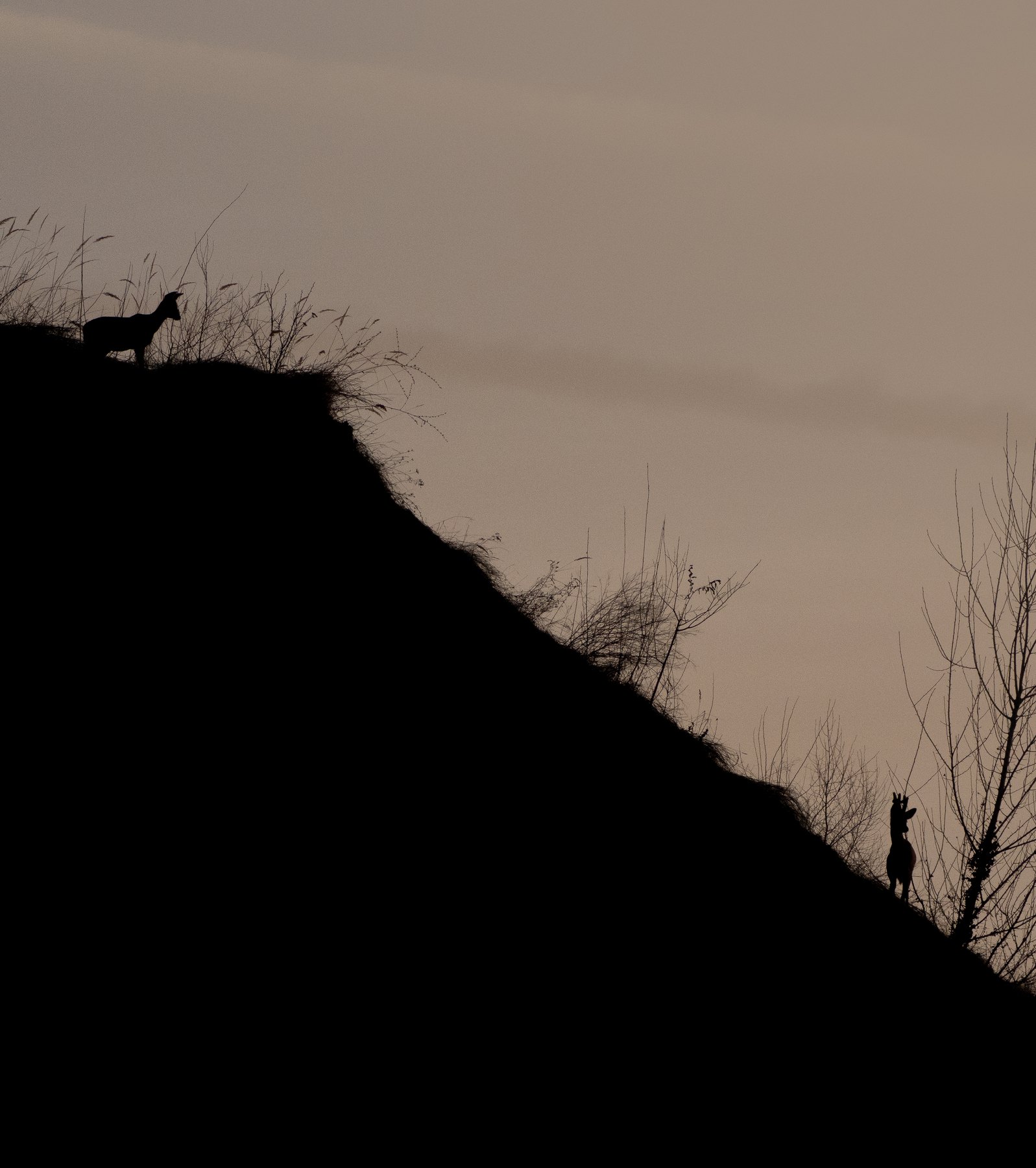
The best wildlife photographs look effortless, but they're built on a simple discipline: the animal's behaviour matters more than my frame. A photograph taken by stressing an animal isn't a trophy — it's a record of a mistake.
The rule I work by
If the animal changes what it's doing because of me, I'm too close. A bird that stops feeding, a deer that lifts its head and holds it — those are signals. The photograph I want is of an animal behaving naturally, so my job is to stay outside the distance where I become the most interesting thing in its world.
How I actually get close
Let the animal come to you. This is the single most effective technique I know. Pick a spot with good light and a clean background, settle in, and wait. Animals habituate to a still, quiet shape far faster than to one that moves toward them.
Move when they're not looking. When I do need to close distance, I move only when the animal is feeding or facing away, a few steps at a time, and I freeze the moment it looks up.
Use the terrain. Near a city, camouflage and earthy clothing can be enough; in truly wild areas, a hide or natural cover is a must.
Dress and act boring. Muted clothing, no sudden movements, no eye contact with nervous animals. I try to be the least interesting thing in the landscape.
Reading the signals
Every species tells you how it feels:
- Relaxed: feeding, preening, resting — keep doing what you're doing.
- Alert: head up, body tense, staring at you — stop. Wait for it to settle or back away slowly.
- Stressed: alarm calls, flushing, repeated looking — you've already gone too far. Leave.
The deer photographs in my gallery came from the first category: animals that decided I wasn't a threat and went back to their morning. Those frames are worth ten of the third.
Why it makes better photographs
This isn't only ethics — it's craft. A relaxed animal gives you time: time to refine composition, wait for light, catch behaviour. A nervous animal gives you one rushed frame of a creature that wants you gone. The patient approach is also the productive one.
What I'd tell someone starting out
- Learn the alert posture of the species you photograph — it's your distance meter.
- Stillness beats stealth. Sit down, wait, let the wildlife resume its life around you.
- If you flush it, you failed. Note what happened and give that animal more room next time.
- The welfare of the subject always outranks the photograph. Always.
Wild By Nick — Field Notes. Photographs and words by Nick Ungureanu.