Mammals
Beech Marten
Martes foina · Jder de piatră
A nocturnal marten with a forked white bib, often living close to villages and towns.
At a glance
- Status in Romania
- Resident
- Habitat
- Forest / Urban / Mountain
- Activity
- Night
- Diet
- Mainly carnivorous: rodents (mice, squirrels), birds and insects, plus forest fruit. In some areas the diet is almost entirely carrion, insects and fruit.
- Conservation status
- Least Concern (IUCN)
- Photography difficulty
- Difficult
Photography Guide
Practical starting points based on the species’ behaviour and habitat, not fixed rules.
- Where and how to look
- Village edges, barns and rocky hillsides at night; tracks and droppings on walls and paths.
- Best time / activity
- Night
- Photography difficulty
- Difficult
- Ethics
- Never wait at dens or resting sites, never bait, and keep any encounter short — these animals are easily disturbed.
Identification
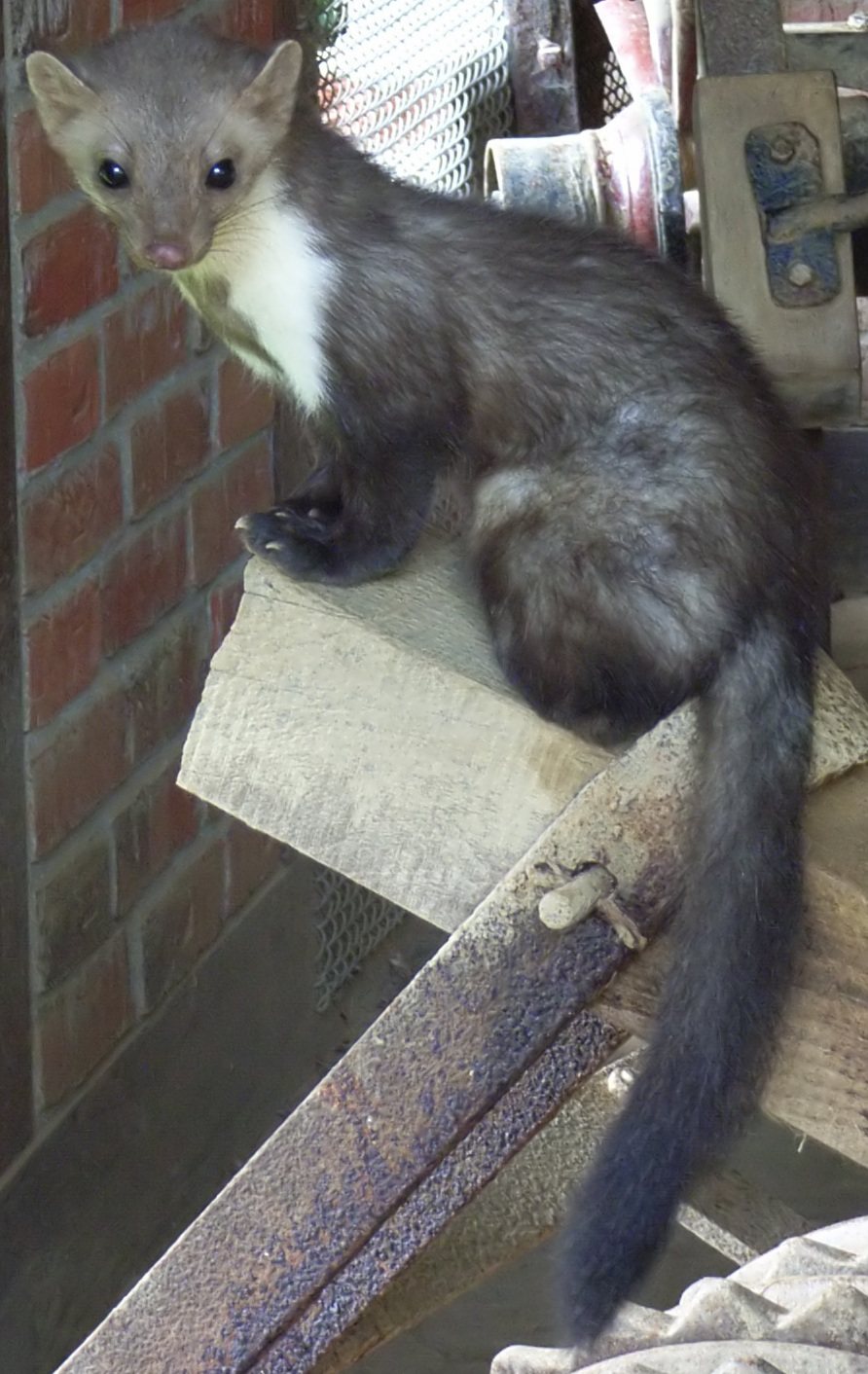
Rich brown marten with a large white (rarely pale grey) throat-and-chest patch, split on the chest by a dark intrusion from the belly. Relatively pale, pinkish or light grey nose.
Habitat
Nocturnal. Prefers deciduous woods, especially their edges, and rocky hills, often near human settlements; in some areas a regular presence in villages. Climbs into the mountains up to the alpine zone.
Approximate range in Romania
Diet
Mainly carnivorous: rodents (mice, squirrels), birds and insects, plus forest fruit. In some areas the diet is almost entirely carrion, insects and fruit.
Behaviour
Easy to confuse with the Pine Marten; the bib colour and shape are the key.