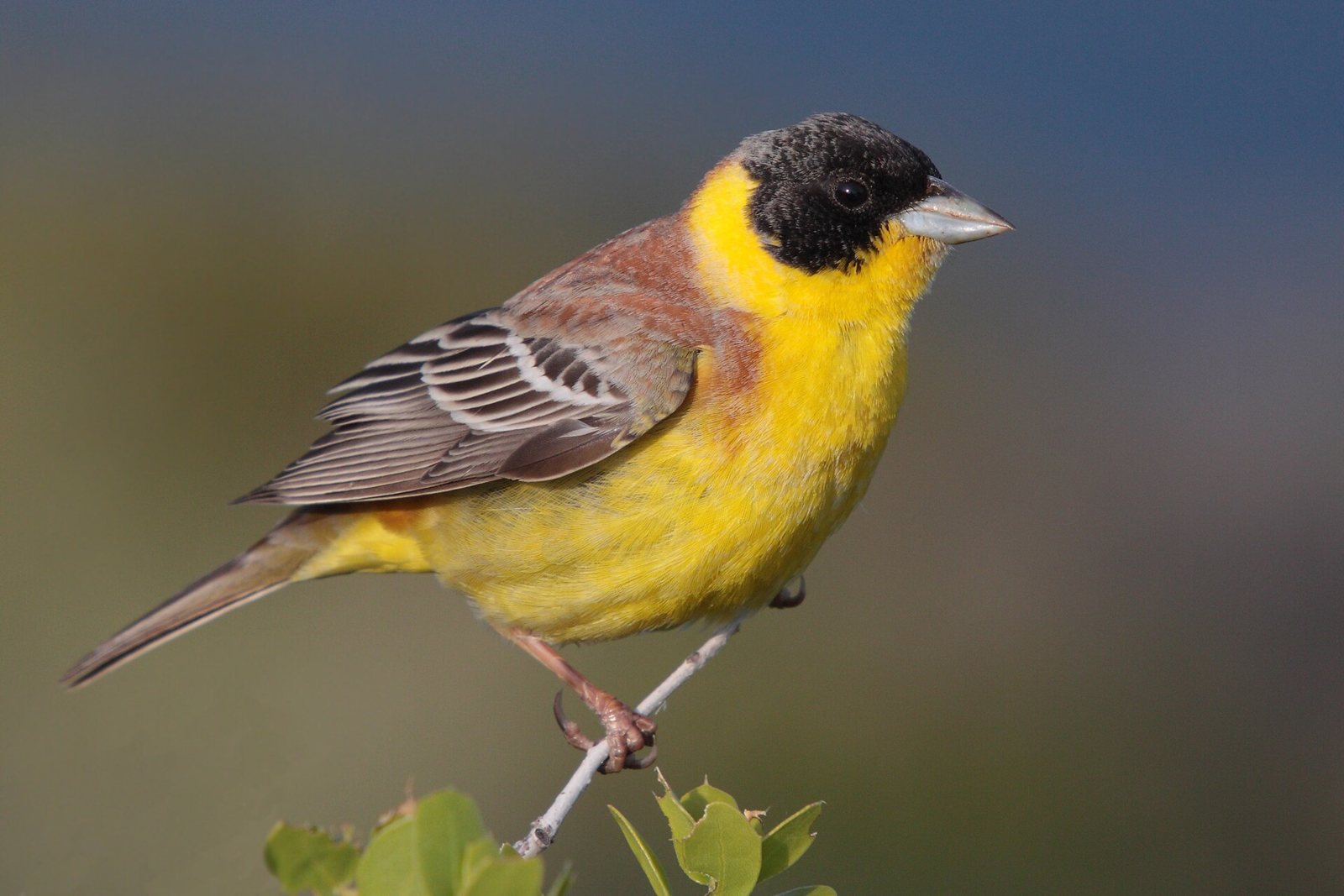
Black-headed Bunting
Emberiza melanocephala · Presură cu cap negru
A bright yellow bunting with a black hood, breeding in the dry lowlands of southern Romania.
At a glance
- Status in Romania
- Summer visitor
- Habitat
- Meadow
- Activity
- Morning · Daytime
- Diet
- Seeds such as millet, wheat and maize and other plant parts; chicks are fed invertebrates.
- Conservation status
- Least Concern (IUCN)
- Photography difficulty
- Easy to observe
Photograph this species
- Best months
- April, May, June, July, August
- Best time / activity
- Morning · Daytime
- Photography difficulty
- Easy to observe
- Where to look
- Dobrogea scrub and field edges from May.
Months confirmed by a Romanian source. General guidance, not local sightings.
Photography Guide
Practical starting points based on the species’ behaviour and habitat, not fixed rules.
- Where and how to look
- Dobrogea scrub and field edges from May.
- Best time / activity
- Morning · Daytime
- Photography difficulty
- Easy to observe
- Ethics
- Keep away from nests, do not use playback in the breeding season, and let the bird decide how close it comes.
Identification
Habitat
Distribution
Approximate range in Romania
Diet
Behaviour
Seasonality in Romania
Breeds in Romania and is migratory. Usually arrives from late April–early May and leaves for the wintering grounds towards the end of August.
Presence
Estimated from existing data
Breeding
Migration
Wintering
Data note. Some monthly timing is based on existing estimates and has not yet been verified against a Romanian source.
About this data
Source-verified months inform the seasonal filters. Local timing can vary. Unconfirmed months do not imply absence. Presence verification is separate from monthly status; each month's details identify its verification. Lighter bands mark estimated timing. Empty event rows mean no event is recorded, not confirmed absence.