Birds
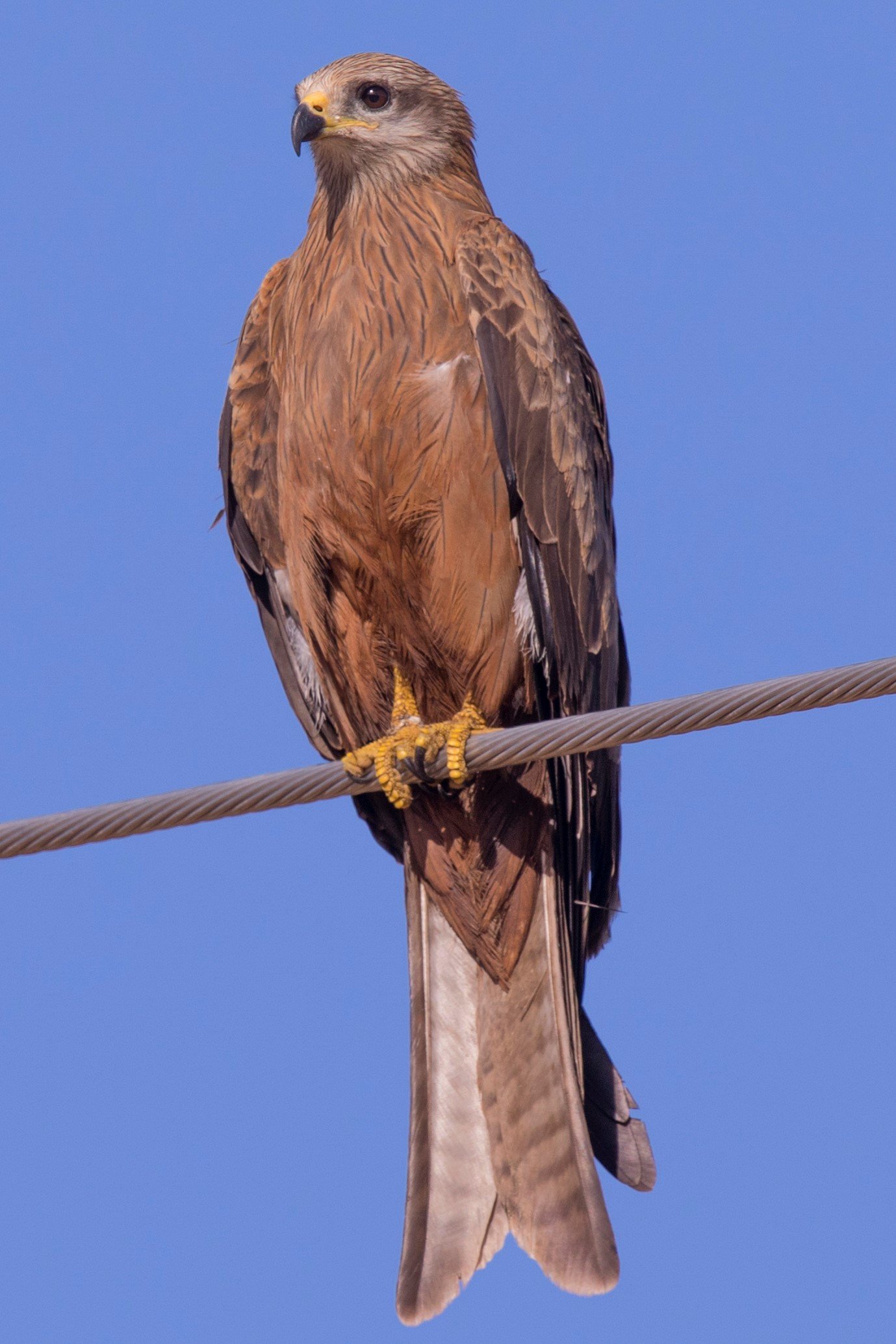
Black Kite
Milvus migrans · Gaie neagră
A dark, fork-tailed raptor that spends much of its time soaring, listed as a conservation target in the Casimcea Steppe.
At a glance
- Status in Romania
- Summer visitor
- Habitat
- Wetland / Forest
- Activity
- Morning · Daytime · Evening
- Diet
- Insects, small mammals and remains of large mammals, birds, snakes, frogs and fish.
- Conservation status
- Least Concern (IUCN)
- Photography difficulty
- Moderate
Photograph this species
- Best time / activity
- Morning · Daytime · Evening
- Photography difficulty
- Moderate
- Where to look
- Watch over wetlands and near villages from spring for a soaring raptor with a shallow forked tail.
Photography Guide
Practical starting points based on the species’ behaviour and habitat, not fixed rules.
- Where and how to look
- Watch over wetlands and near villages from spring for a soaring raptor with a shallow forked tail.
- Best time / activity
- Morning · Daytime · Evening
- Behaviour to anticipate
- Low passes while soaring and twisting the tail to steer.
- Photography difficulty
- Moderate
- Starting shutter speed
- 1/2000 sec or faster for flight.
- Fieldcraft
- Watch from one place; kites often return over the same feeding area.
- Ethics
- Keep well away from nests and never disclose nest sites; watch from a distance and leave if the bird changes behaviour because of you.
Identification
48–58 cm long with a 130–155 cm wingspan. Angled wings and a forked tail make identification relatively easy. Sexes look alike; the female is slightly larger.
Habitat
Prefers to nest near wetlands and human settlements, in rock crevices or tall trees.
Distribution
A conservation target in the ROSPA0100 Stepa Casimcea Natura 2000 site in North Dobrogea.
Approximate range in Romania
Diet
Insects, small mammals and remains of large mammals, birds, snakes, frogs and fish.
Behaviour
Spends much time soaring on rising air in search of food. It is attracted to smoke and fire, hunting animals that flee the flames. Courtship includes acrobatic chases, rolls and dives.
Seasonality in Romania
Winters in Africa and arrives from the wintering grounds in March to breed.
Monthly presence has not yet been source-verified.
Breeding
Both parents build a stick nest lined with plant material, often decorated with plastic, cloth or paper. Birds can breed from their second year.