Birds
Black Stork
Ciconia nigra · Barză neagră
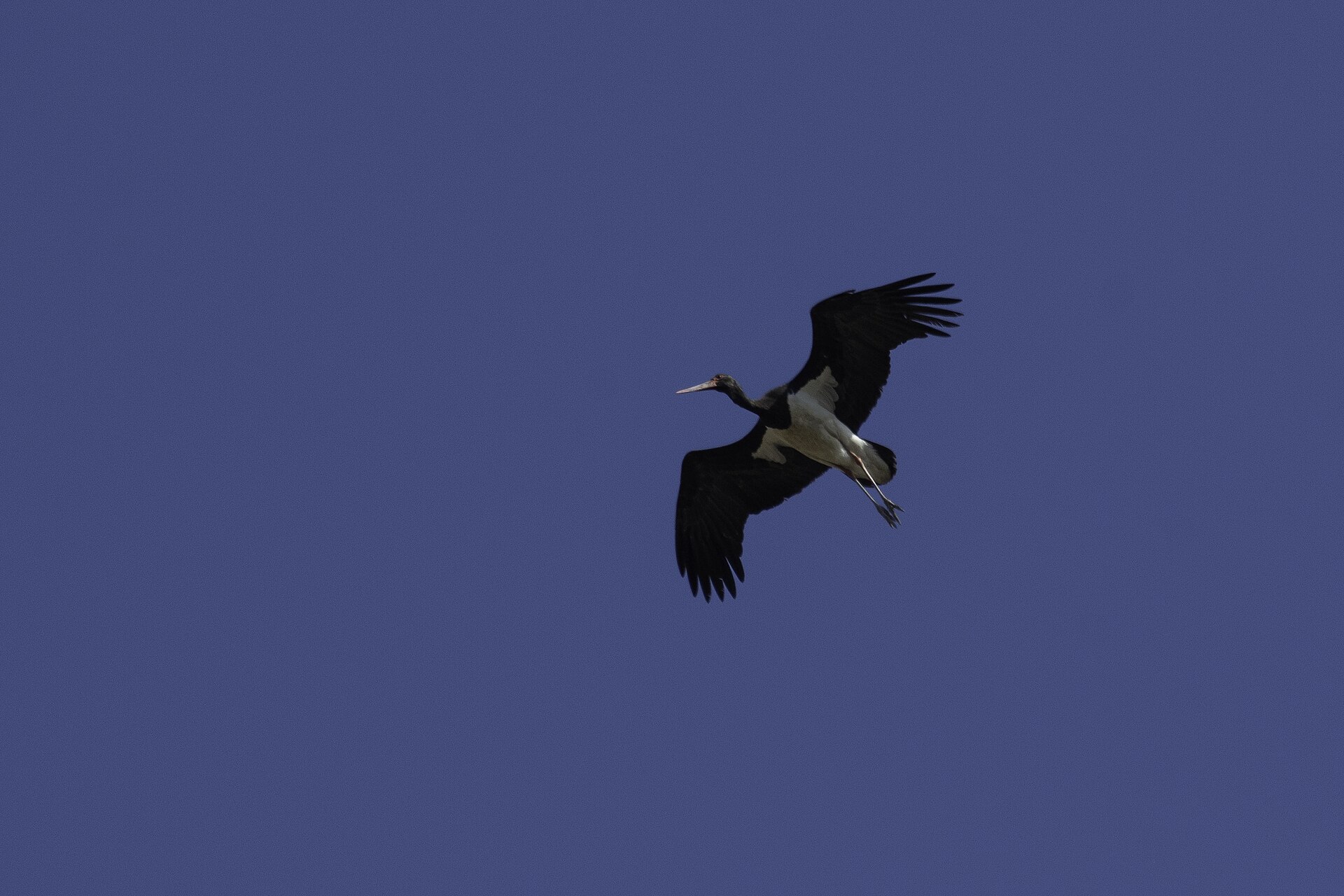
A shy forest stork, glossy black with a white belly and red bill and legs.
At a glance
- Status in Romania
- Summer visitor
- Habitat
- Forest / Wetland
- Activity
- Daytime
- Diet
- Fish, amphibians and aquatic insects.
- Conservation status
- Least Concern (IUCN)
- Photography difficulty
- Difficult
Identification
Black with green and purple gloss, white belly, red bill and legs.
Habitat
Old forests with streams, rivers and wet meadows.
Approximate range in Romania
When it is active
Daytime
Diet
Fish, amphibians and aquatic insects.
Behaviour
Much shyer than the white stork and usually solitary.
Seasonality in Romania
SOR records arrival from March and departure in late September or early October.
- JanUnknown
- FebUnknown
- MarPresentMigration*
- AprPresentBreeding*
- MayPresentBreeding*
- JunPresentBreeding*
- JulPresentBreeding*
- AugPresentBreeding*
- SepPresentMigration*
- OctPresent
- NovUnknown
- DecUnknown
Source-verified months inform the seasonal filters. Local timing can vary. Unconfirmed months do not imply absence. * Event timing retained from the earlier entry, not yet source-verified.
Breeding
Nests in large trees deep in old forest. Nest sites must never be disclosed or approached.
How to find it
Forest streams and rivers in hill and mountain areas, from a distance.
Photography
General guidance based on the species’ behaviour, not a report of Nick’s personal field experience.
- Difficulty
- Difficult
- Ethics
- Very sensitive to disturbance; never search for nests.
Practical starting points, not fixed rules.