Mammals
European Hare
Lepus europaeus · Iepure de câmp
The familiar long-eared hare of open fields and low hills.
At a glance
- Status in Romania
- Resident
- Habitat
- Meadow
- Activity
- Morning · Evening · Night
- Diet
- A wide range of plants, including crops such as cereal shoots, cabbage and young trees. In winter mainly grasses, bulbs and tree bark.
- Conservation status
- Least Concern (IUCN)
- Photography difficulty
- Moderate
Photography Guide
Practical starting points based on the species’ behaviour and habitat, not fixed rules.
- Where and how to look
- Open farmland and meadows at dawn and dusk.
- Best time / activity
- Morning · Evening · Night
- Photography difficulty
- Moderate
- Starting shutter speed
- 1/2000 sec or faster for running animals.
- Fieldcraft
- A vehicle on a farm track or a low position at a field edge works better than walking towards it.
- Ethics
- Never chase or flush hares, and leave young (leverets) where they are — they are not abandoned.
Identification
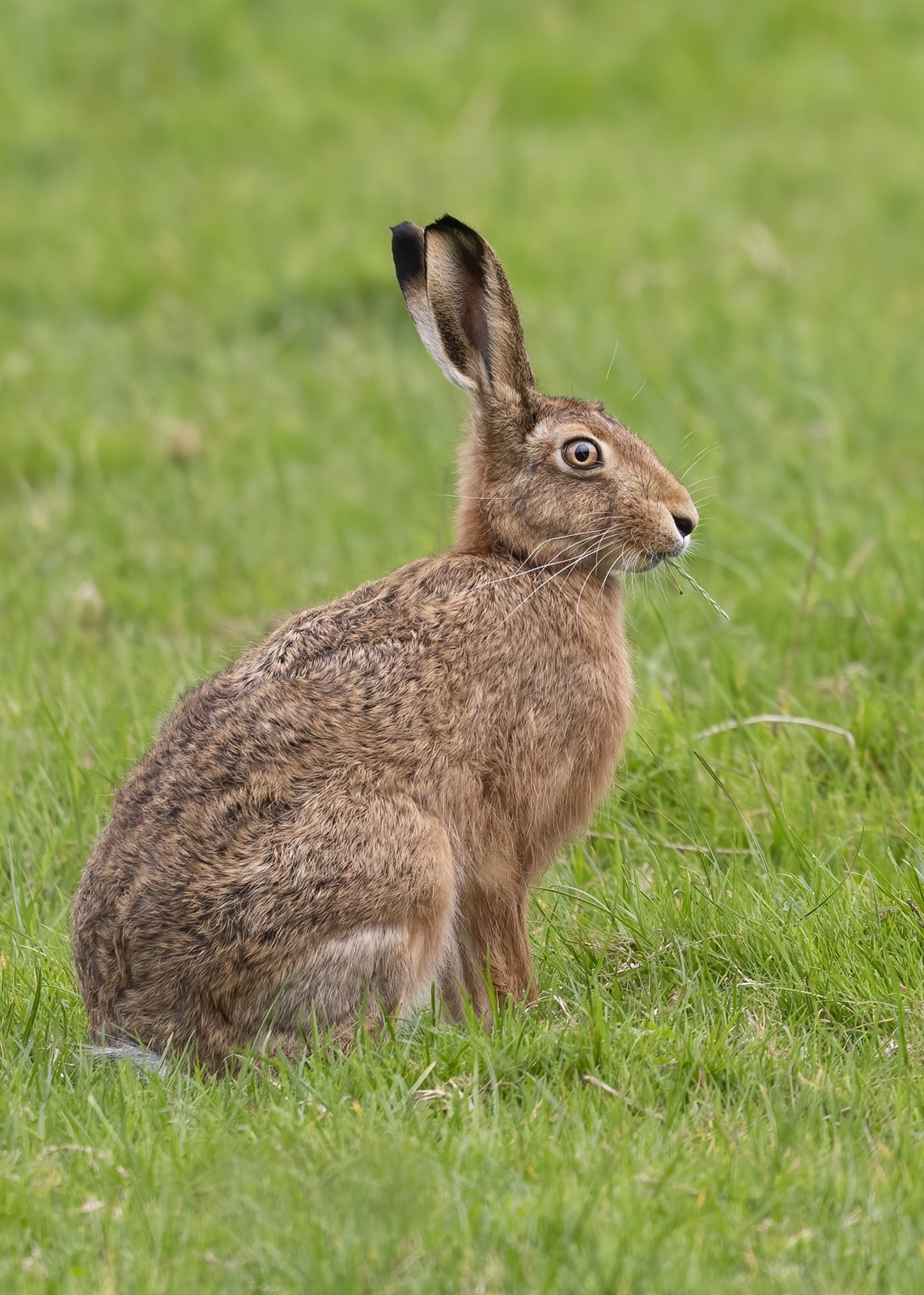
Long ears (about as long as the head) with black tips, long legs, especially the hind legs, and a short tail that is black above. Light yellowish-brown above.
Habitat
Mainly nocturnal but also active by day. Found in most temperate European habitats, preferring open plains and low hills.
Approximate range in Romania
Diet
A wide range of plants, including crops such as cereal shoots, cabbage and young trees. In winter mainly grasses, bulbs and tree bark.
Behaviour
Relies on camouflage and crouches flat before bolting at speed.