Birds
Homing Pigeon
Columba livia · Porumbel voiajor
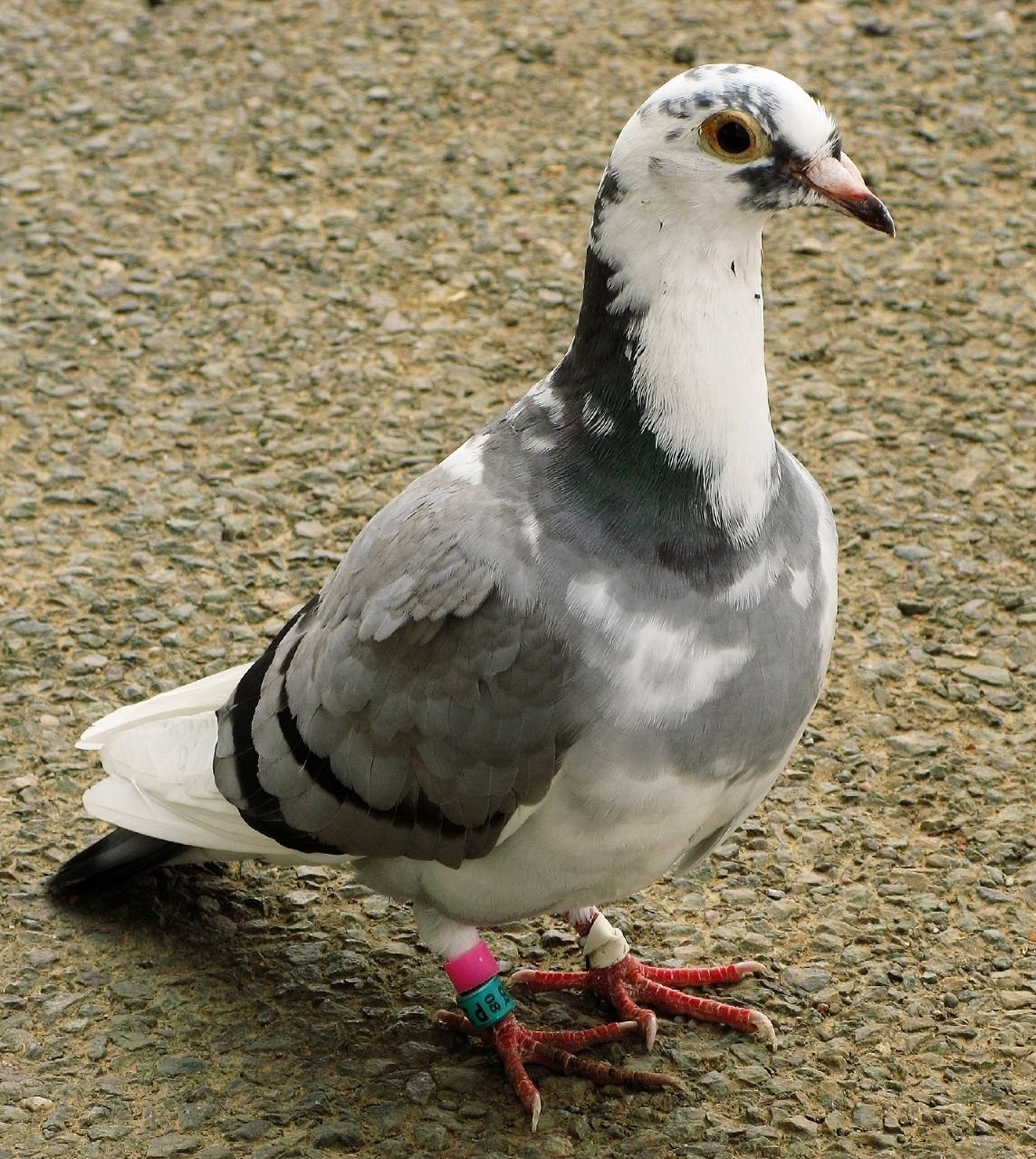
The homing pigeon is a domestic variety of the Rock Pigeon (Columba livia), bred and trained to return home. It is not a separate wild species. The familiar pigeons living freely in towns are usually feral domestic pigeons, not necessarily homing pigeons.
At a glance
- Habitat
- Urban
- Diet
- Domestic pigeons feed mainly on cereal seeds and other plant material, often on the ground. Urban feral birds also take food scraps; this is not a recommendation to feed them.
- Photography difficulty
- Easy to observe
Photograph this species
- Photography difficulty
- Easy to observe
- Where to look
- Observe pigeons already present around buildings without approaching their lofts or disturbing them. Look for a numbered leg ring from a distance, but do not assume that every city pigeon is a racing bird.
Photography Guide
Practical starting points based on the species’ behaviour and habitat, not fixed rules.
- Where and how to look
- Observe pigeons already present around buildings without approaching their lofts or disturbing them. Look for a numbered leg ring from a distance, but do not assume that every city pigeon is a racing bird.
- Photography difficulty
- Easy to observe
- Fieldcraft
- General photography guidance: observe quietly at the bird's level and leave space for it to move or fly away. Do not use food to stage a photograph.
- Ethics
- Do not chase, handle or flush a bird for a photograph, and stay away from nests and private lofts. If a ringed pigeon appears injured or distressed, contact a veterinarian or the relevant pigeon-racing organisation for advice; identification and reporting depend on the ring's country and organisation.
Identification
Domestic pigeons have variable plumage. A familiar pattern is a grey body, darker head and two dark wing bars, but colour alone does not identify a homing pigeon. Racing pigeons carry numbered leg rings; the registration details are more useful than plumage for confirming their origin.
Habitat
Associated with people and managed pigeon lofts. A racing pigeon may rest on a roof or in a tree during training or racing. SOR's wider domestic-pigeon account describes settlements, farms, silos and industrial buildings; these habitats do not identify a bird as a homing pigeon.
Distribution
In Romania, SOR records the domestic form of Columba livia across the country except mountain areas. That account covers domestic and feral pigeons generally, not a mapped population of homing pigeons. No separate wild range is assigned here.
Diet
Domestic pigeons feed mainly on cereal seeds and other plant material, often on the ground. Urban feral birds also take food scraps; this is not a recommendation to feed them.
Behaviour
Homing pigeons are bred and trained for returning home. Racing birds sometimes stop to rest while racing or training, then continue their journey. A lone resting bird is not automatically injured or abandoned.
Seasonality in Romania
No separate Romanian monthly presence or breeding calendar has been verified for the homing variety. SOR's year-round domestic-pigeon account covers the wider domestic and feral taxon, so its timing is not applied here.