Photographing Birds at Sunset — Shutter Speed and Timing
The last fifteen minutes of light over a reedbed are the best and the most unforgiving in wildlife photography. This is how I work them.
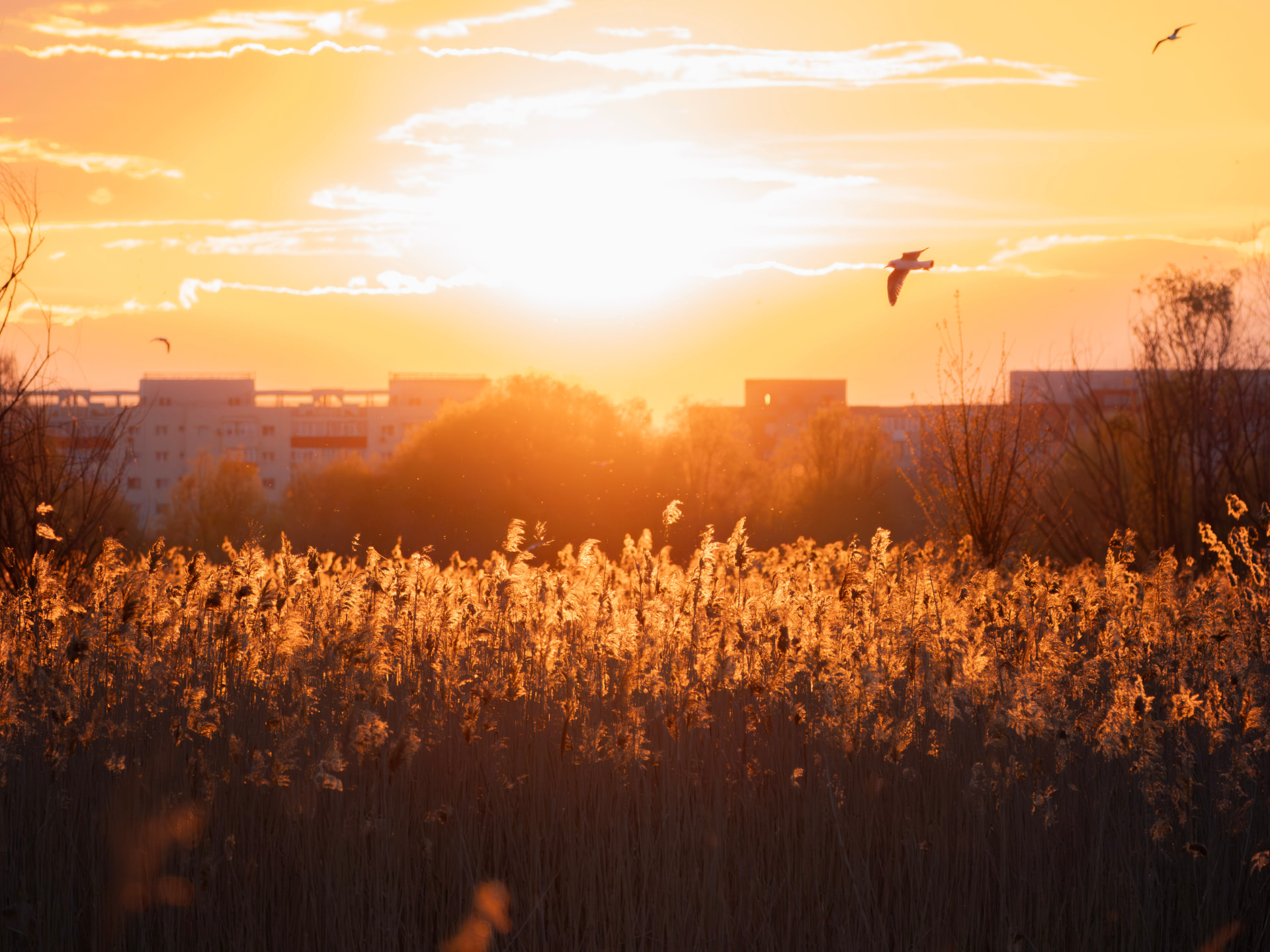
The last fifteen minutes of light over a reedbed are the best and the most unforgiving in wildlife photography. This photograph — birds in flight over the reeds, the sky gold — came from those fifteen minutes.
Why sunset is worth the difficulty
At sunset the light turns warm and low, and birds become silhouettes or rim-lit shapes against the sky. The scene does half the composition work for you. But the light is falling fast, and every decision has to be made in advance.
The settings
- Shutter speed: for birds in flight I start at 1/2000–1/2500 sec and only go lower if I want wing blur
- Aperture: usually wide open or near it, to keep the shutter fast as light drops
- ISO: I let ISO rise rather than drop the shutter — a sunset silhouette at ISO 1600 is fine, and I set my ceiling at 10000
- Exposure: for silhouettes, I underexpose and aim for the environment — expose for the sky, not the bird; the bird goes dark and the sky keeps its colour
Timing is the real skill
Birds over a reedbed at dusk are often heading somewhere — to roost, to feed, home. That means their flight lines repeat. Watch for a few minutes before you raise the camera:
- Where are they coming from and going to?
- Which line puts them against the brightest part of the sky?
- Where in that line do you want them — high against the sky, or low against the reeds?
Once you know the line, you stop chasing birds and start waiting for them to enter your frame. That's when the keepers come.
The light changes every minute
The colour did change — but gradually, so you have time to adapt. There's no single decisive moment to chase; you watch the sky deepen, re-check your exposure as it goes, and keep shooting. The birds don't stop flying while you adjust, so I re-meter between bursts rather than stopping to think about it.
What I'd tell someone trying this
- Arrive early. The best light is short, and you need to know the flight lines before it peaks.
- Expose for the sky. Silhouettes forgive underexposure; blown-out skies forgive nothing.
- Keep the shutter fast and let ISO do the work — I set my limit at 10000.
- Stay after the sun dips. Some of the best colour comes in the ten minutes after.
Wild By Nick — Field Notes. Photographs and words by Nick Ungureanu.