How I Photographed This Swan — Settings, Light, and Patience
A mute swan raising its wings is one of the most elegant forms in European wildlife — but you can't ask for it. You can only be ready. This is how the photograph happened.
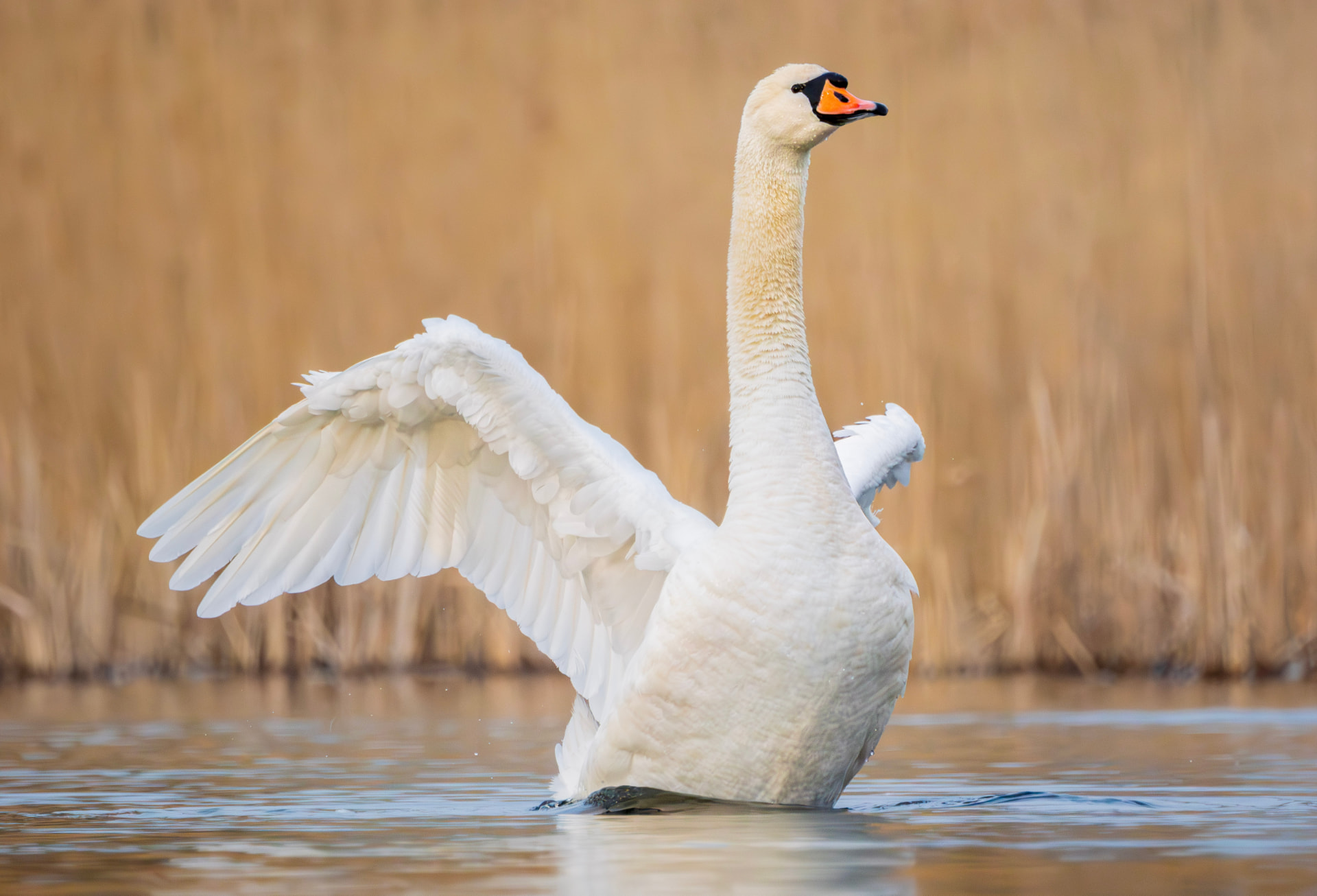
There's a moment when a mute swan stops being a white shape on the water and becomes something else entirely. This photograph — wings raised, water calm, the bird holding its display — came from waiting for exactly that moment.
The scene
I found the swan in shallow, calm water. Mute swans raise their wings in a display posture, and when they do, the whole shape of the bird changes: the wings become a sail, the neck curves, and for a few seconds you have one of the most elegant forms in European wildlife.
The hard part is that you can't ask for it. You can only be ready.
The settings
- Shutter speed: 1/6400 sec
- Aperture: f/6.3 at 400mm
- ISO: 10000 — I don't chase low ISO at the cost of shutter speed
- Focus mode: continuous autofocus with bird/subject detection, keeping the focus point on the eye
The one rule I never break with birds: shutter speed first. A slightly noisy sharp photo beats a clean blurry one every time.
The light
Soft morning light under an overcast sky. No hard shadows, no glare off the water — just even, gentle light that let the white feathers hold their detail instead of blowing out.
The patience
I waited two hours for this display. Swans telegraph the moment: the bird draws itself up, the wings begin to lift, and you have perhaps two seconds. Because I was already framed up and focused, those two seconds were enough.
That's the real lesson of this photograph: the settings matter, but readiness matters more. Get your exposure right for the scene before the moment happens, because the moment will not wait for you.
What I'd tell someone trying this
- Find swans in calm, shallow water — reflections and clean backgrounds make the image.
- Set your exposure for the bird, not the water. White feathers blow out easily; I use slight negative exposure compensation to protect them.
- Watch the bird, not the screen. The display is coming — your job is to already be ready.
Wild By Nick — Field Notes. Photographs and words by Nick Ungureanu.