Birds
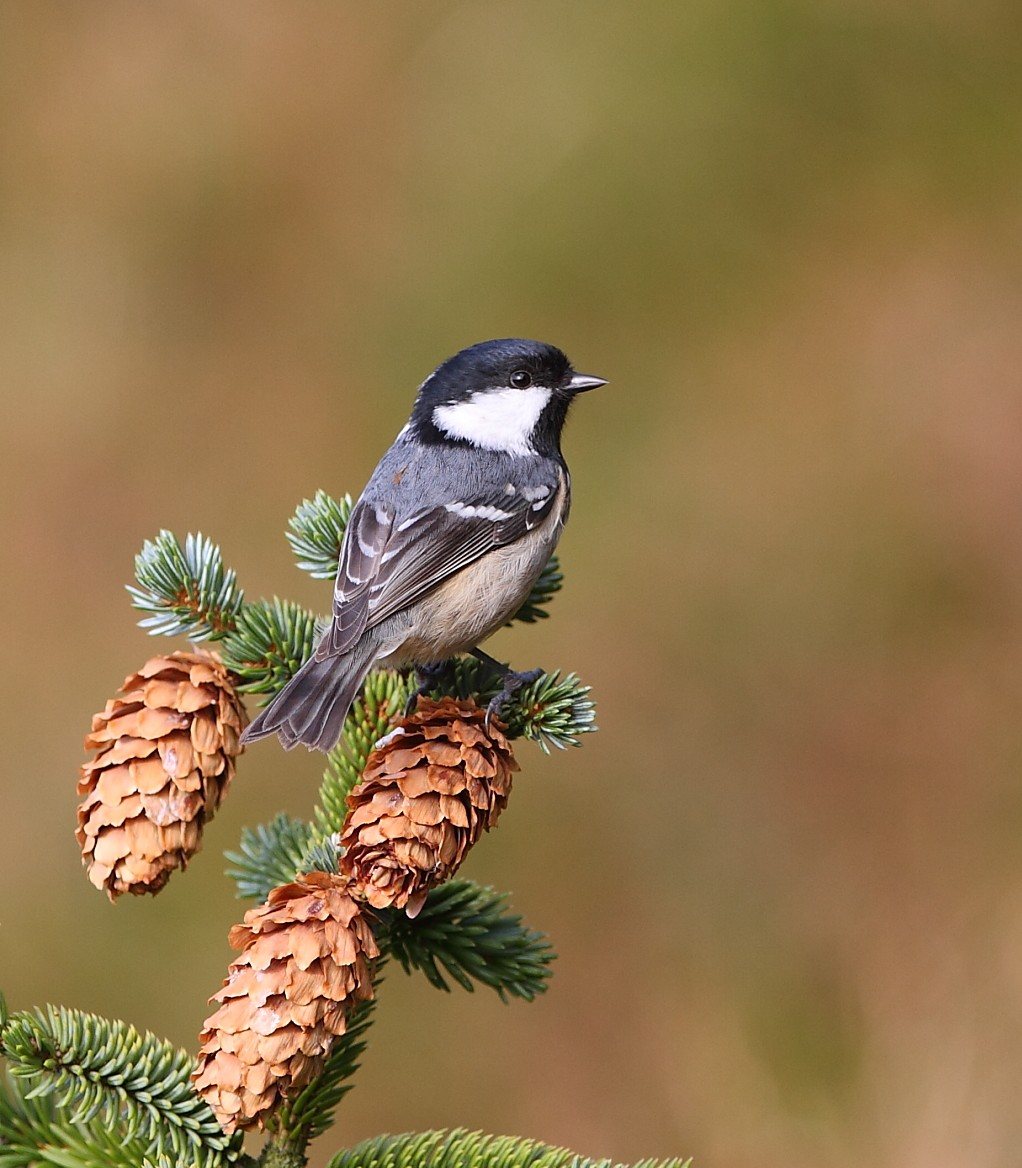
Coal Tit
Periparus ater · Pițigoi de brădet
A tiny conifer-loving tit with a white patch on the nape.
At a glance
- Status in Romania
- Resident
- Habitat
- Forest / Mountain
- Activity
- Morning · Daytime
- Diet
- Mainly insects and other invertebrates; occasionally conifer seeds, other seeds and buds.
- Conservation status
- Least Concern (IUCN)
- Photography difficulty
- Moderate
Photography Guide
Practical starting points based on the species’ behaviour and habitat, not fixed rules.
- Where and how to look
- Spruce and fir forest; listen for high, thin calls in the treetops.
- Best time / activity
- Morning · Daytime
- Photography difficulty
- Moderate
- Starting shutter speed
- 1/1000 sec or faster — it rarely stays still.
- Ethics
- Keep away from nests, do not use playback in the breeding season, and let the bird decide how close it comes.
Identification
Small tit with a black cap and bib, white cheeks and a white nape patch; grey back and buff underparts.
Habitat
Conifer and mixed forest, conifer plantations, gardens and parks; a wider range of habitats outside the breeding season.
Distribution
All mountain and submontane areas of the Carpathians, and almost all of Transylvania thanks to conifer plantations.
Approximate range in Romania
Diet
Mainly insects and other invertebrates; occasionally conifer seeds, other seeds and buds.
Behaviour
Outside the breeding season it uses a wider range of habitats.
Seasonality in Romania
Breeds in Romania and is resident; in winter there can be an influx of birds from the north.
- JanPresent
- FebPresent
- MarPresent
- AprPresent
- MayPresent
- JunPresent
- JulPresent
- AugPresent
- SepPresent
- OctPresent
- NovPresent
- DecPresent
Source-verified months inform the seasonal filters. Local timing can vary. Unconfirmed months do not imply absence. * Event timing retained from the earlier entry, not yet source-verified.
Breeding
Breeds March–July; 5–13 eggs incubated by the female for 14–16 days.