Birds
Collared Flycatcher
Ficedula albicollis · Muscar gulerat
A striking black-and-white flycatcher of mature broadleaf forest.
At a glance
- Status in Romania
- Summer visitor
- Habitat
- Forest
- Activity
- Morning · Daytime
- Diet
- Catches flying insects in short sallies from the canopy; also other invertebrates, occasionally fruit or seeds.
- Conservation status
- Least Concern (IUCN)
- Photography difficulty
- Moderate
Photography Guide
Practical starting points based on the species’ behaviour and habitat, not fixed rules.
- Where and how to look
- Old beech and oak woods in late April and May, when males sing from the canopy.
- Best time / activity
- Morning · Daytime
- Photography difficulty
- Moderate
- Starting shutter speed
- Around 1/1000 sec; faster for sallies.
- Fieldcraft
- Expose for the white plumage so detail is not lost.
- Ethics
- Keep away from nests, do not use playback in the breeding season, and let the bird decide how close it comes.
Identification
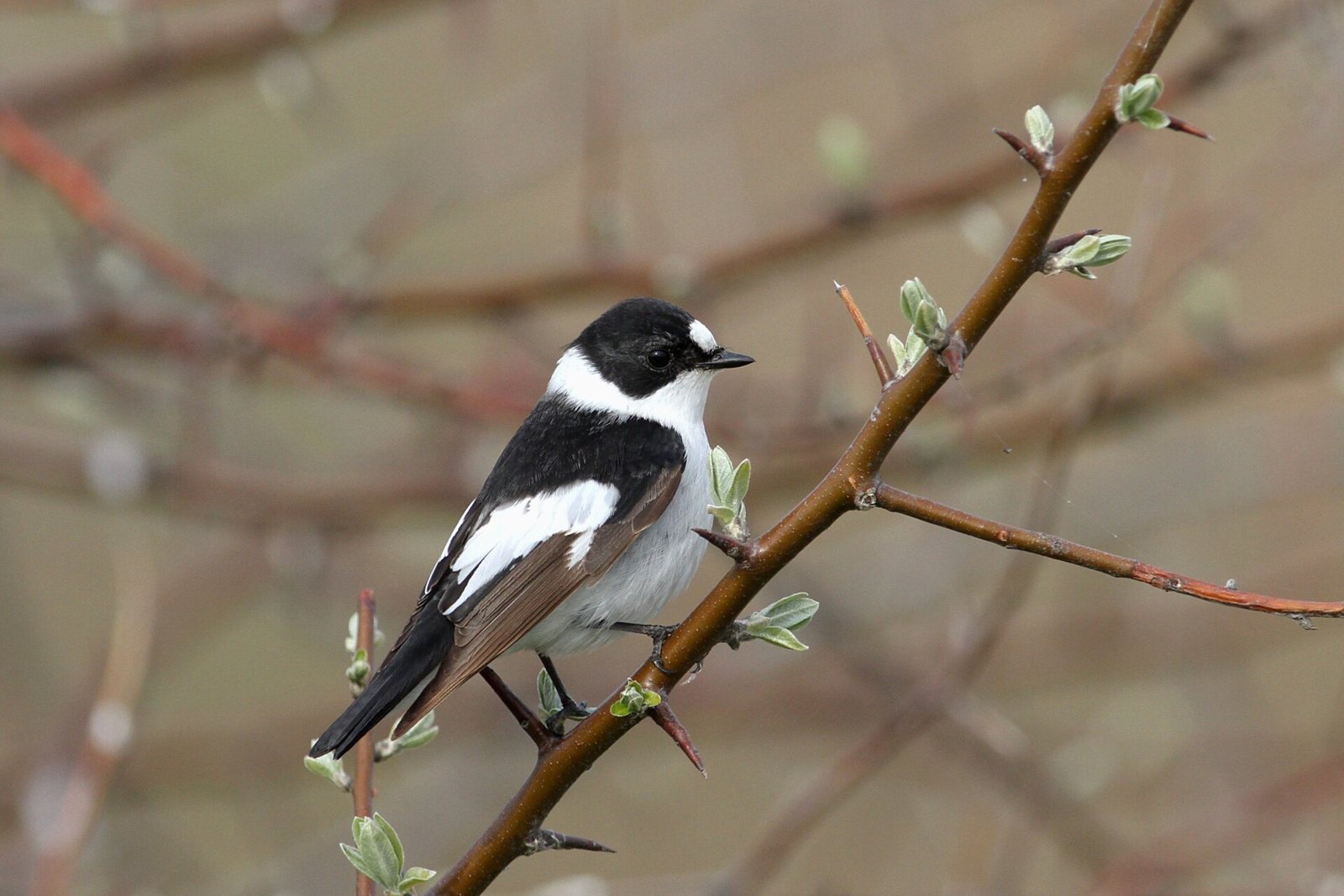
The breeding male is black and white with a full white collar, white forehead and large white wing patch; the female is grey-brown.
Habitat
Mature deciduous forest with extensive clearings, forest edges, sometimes old orchards and large parks with natural cavities for nesting.
Distribution
Breeds across Romania in woodland, except plains dominated by extensive farmland.
Approximate range in Romania
Diet
Catches flying insects in short sallies from the canopy; also other invertebrates, occasionally fruit or seeds.
Behaviour
Feeds mainly in the tree canopy, catching flying insects in short sallies.
Seasonality in Romania
Breeds in Romania as a summer visitor. Arrives mainly in April and leaves for the wintering grounds in southern Africa in late August or early September.
- JanUnknown
- FebUnknown
- MarUnknown
- AprPresent
- MayPresent
- JunPresent
- JulPresent
- AugPresent
- SepUnknown
- OctUnknown
- NovUnknown
- DecUnknown
Source-verified months inform the seasonal filters. Local timing can vary. Unconfirmed months do not imply absence. * Event timing retained from the earlier entry, not yet source-verified.
Breeding
Breeds April–July; usually 5–7 eggs, incubated by the female for 12–14 days.