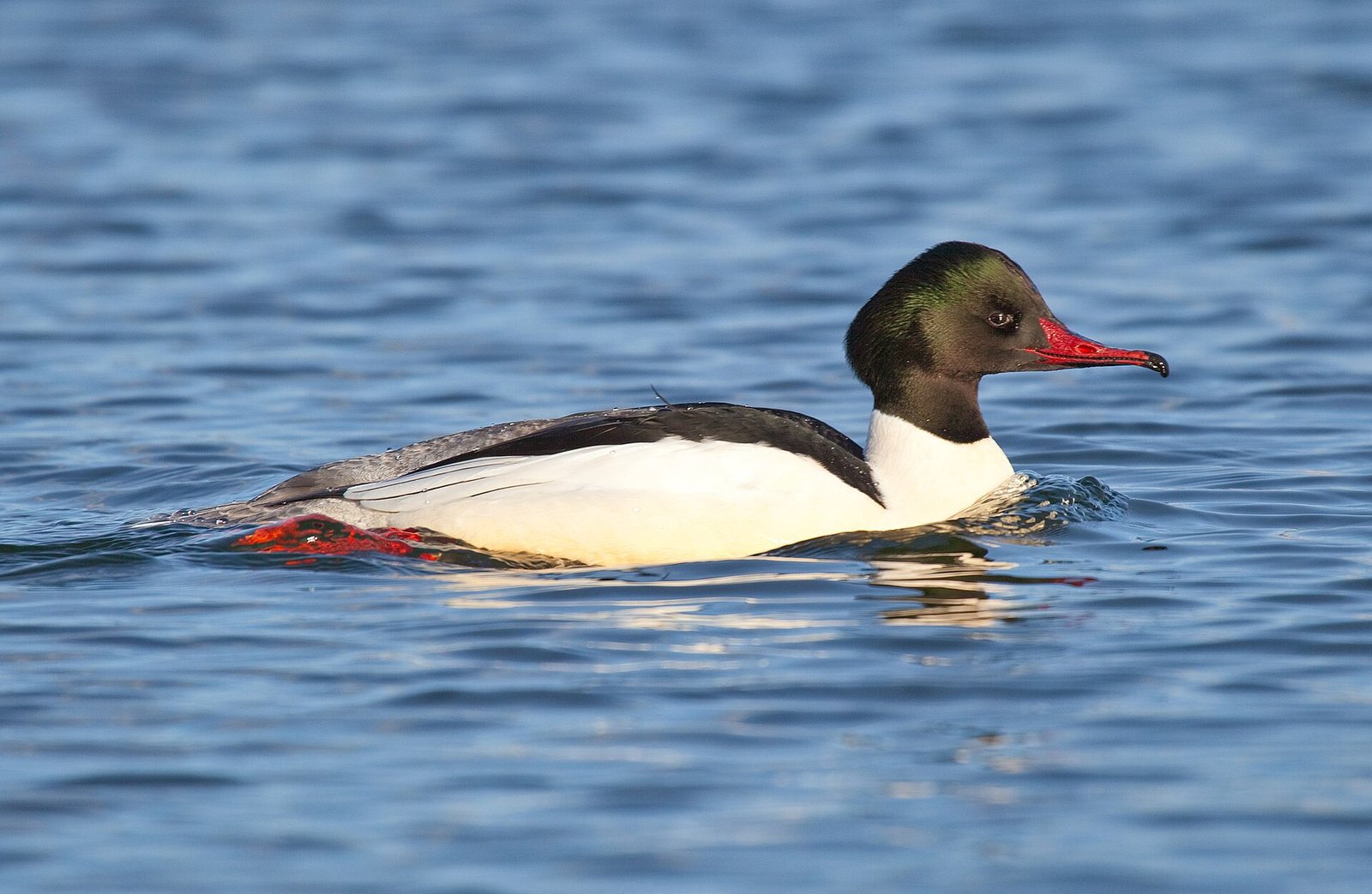
Common Merganser
Mergus merganser · Ferestraș mare
A large, streamlined fish-eating duck that breeds locally on Carpathian reservoirs and rivers and spreads to large lakes and rivers in winter.
At a glance
- Status in Romania
- Resident
- Habitat
- Wetland / Mountain / Forest
- Activity
- Morning · Daytime · Evening
- Diet
- Mainly small fish, plus aquatic invertebrates, amphibians, small mammals and birds; only small amounts of plant matter.
- Conservation status
- Least Concern (IUCN)
- Photography difficulty
- Moderate
Photograph this species
- Best months
- All year
- Best time / activity
- Morning · Daytime · Evening
- Photography difficulty
- Moderate
- Where to look
- Scan large lakes and rivers in the cold season; in summer, mountain reservoirs and rivers with mature forest nearby.
Months confirmed by a Romanian source. General guidance, not local sightings.
Photography Guide
Practical starting points based on the species’ behaviour and habitat, not fixed rules.
- Where and how to look
- Scan large lakes and rivers in the cold season; in summer, mountain reservoirs and rivers with mature forest nearby.
- Best time / activity
- Morning · Daytime · Evening
- Behaviour to anticipate
- Diving for fish and running take-offs along the water.
- Photography difficulty
- Moderate
- Starting shutter speed
- 1/1600 sec or faster for take-offs.
- Fieldcraft
- Work from the bank with cover behind you; mergansers swim off quickly if approached.
- Ethics
- Keep well away from nests, never use playback, and leave if the bird changes behaviour because of you.
Identification
Habitat
Distribution
Approximate range in Romania
Diet
Behaviour
Seasonality in Romania
Breeds in Romania and is resident. In the cold season birds from the north of the range arrive as well.
Presence
Breeding
Migration
Wintering
About this data
Source-verified months inform the seasonal filters. Local timing can vary. Unconfirmed months do not imply absence. Presence verification is separate from monthly status; each month's details identify its verification. Lighter bands mark estimated timing. Empty event rows mean no event is recorded, not confirmed absence.