Birds
Common Moorhen
Gallinula chloropus · Găinușă de baltă
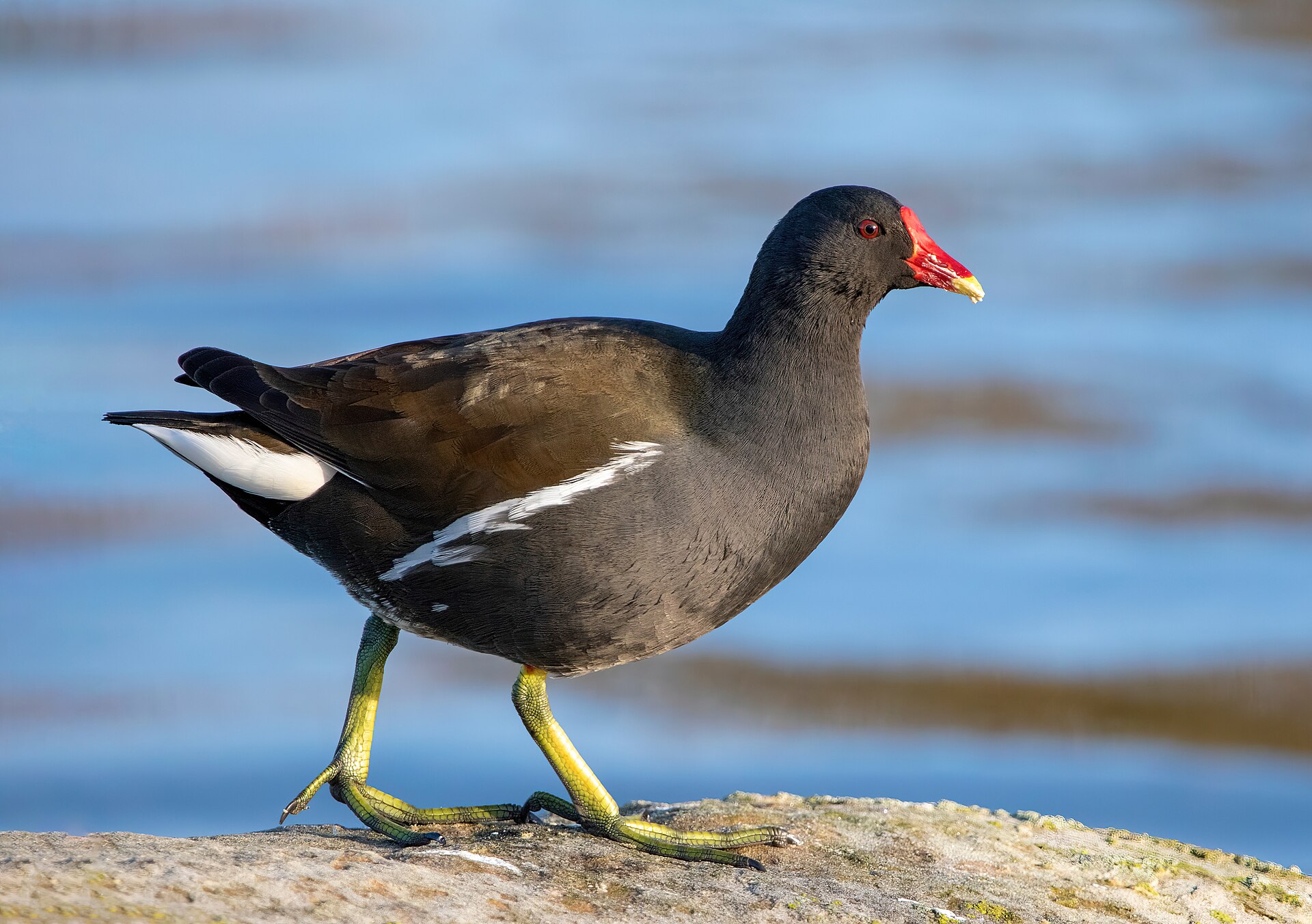
A dark waterbird with a red-and-yellow bill, constantly flicking its white undertail.
At a glance
- Status in Romania
- Migratory
- Habitat
- Wetland / Urban
- Activity
- Morning · Daytime
- Diet
- Omnivorous: aquatic invertebrates, aquatic plants and their seeds.
- Conservation status
- Least Concern (IUCN)
- Photography difficulty
- Easy to observe
Identification
Dark slate-grey with a brown back, a white line along the flanks and white undertail. Adults have a red shield and yellow-tipped bill.
Habitat
Marshes and wetlands with plenty of vegetation: lakes, ponds, canals, irrigation channels and slow rivers.
Approximate range in Romania
When it is active
Morning · Daytime
Diet
Omnivorous: aquatic invertebrates, aquatic plants and their seeds.
Behaviour
Swims with a jerking head and walks on floating vegetation; quickly retreats into cover.
Seasonality in Romania
Breeds in Romania and is partly migratory; more birds stay year-round in the south of the country.
How to find it
Vegetated edges of ponds, canals and slow rivers, including in towns.
Photography
General guidance based on the species’ behaviour, not a report of Nick’s personal field experience.
- Difficulty
- Easy to observe
- Starting shutter speed
- Around 1/800–1/1000 sec for walking or swimming birds.
- Fieldcraft
- A low angle at the water's edge; wait for it to step out of the vegetation.
- Ethics
- Keep well away from nests and colonies, never use playback, and leave if the birds change behaviour because of you.
Practical starting points, not fixed rules.