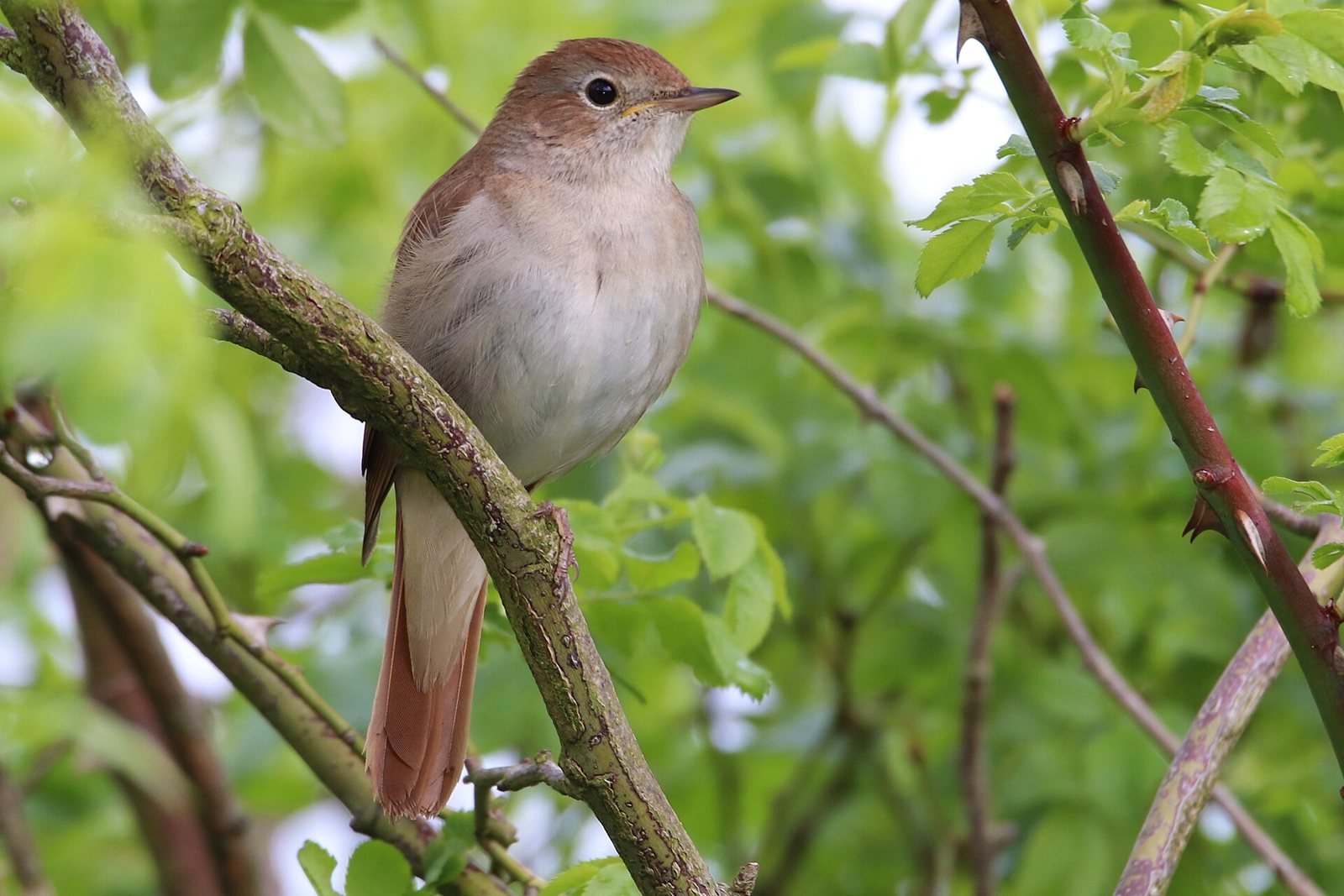
Common Nightingale
Luscinia megarhynchos · Privighetoare roșcată
A plain brown songbird famous for its powerful song, heard by day and night.
At a glance
- Status in Romania
- Summer visitor
- Habitat
- Forest / Meadow
- Activity
- Morning · Daytime
- Diet
- Mainly insects such as beetles and ants, plus other invertebrates; occasionally small fruit, especially in autumn.
- Conservation status
- Least Concern (IUCN)
- Photography difficulty
- Difficult
Photograph this species
- Best months
- April, May, June, July, August
- Best time / activity
- Morning · Daytime
- Photography difficulty
- Difficult
- Where to look
- Thickets and woodland edges in May, when the song is loudest.
Months confirmed by a Romanian source. General guidance, not local sightings.
Photography Guide
Practical starting points based on the species’ behaviour and habitat, not fixed rules.
- Where and how to look
- Thickets and woodland edges in May, when the song is loudest.
- Best time / activity
- Morning · Daytime
- Photography difficulty
- Difficult
- Fieldcraft
- It sings from deep cover; patience at a gap in the bushes works better than approaching.
- Ethics
- Keep away from nests, do not use playback in the breeding season, and let the bird decide how close it comes.
Identification
Habitat
Approximate range in Romania
Diet
Behaviour
Seasonality in Romania
Breeds in Romania and is migratory. Usually arrives from April and leaves in late August–early September; winters in Africa south of the Sahara (Sahel).
Presence
Estimated from existing data
Breeding
Migration
Wintering
Data note. Some monthly timing is based on existing estimates and has not yet been verified against a Romanian source.
About this data
Source-verified months inform the seasonal filters. Local timing can vary. Unconfirmed months do not imply absence. Presence verification is separate from monthly status; each month's details identify its verification. Lighter bands mark estimated timing. Empty event rows mean no event is recorded, not confirmed absence.