Birds
Eastern Imperial Eagle
Aquila heliaca · Acvilă de câmp
A large, rare eagle of open plains and steppe, breeding in only a few areas of Romania.
At a glance
- Status in Romania
- Resident
- Habitat
- Meadow / Forest
- Activity
- Morning · Daytime
- Diet
- A wide range of animals depending on the area, especially medium-sized mammals and birds.
- Conservation status
- Vulnerable (IUCN)
- Photography difficulty
- Difficult
Identification
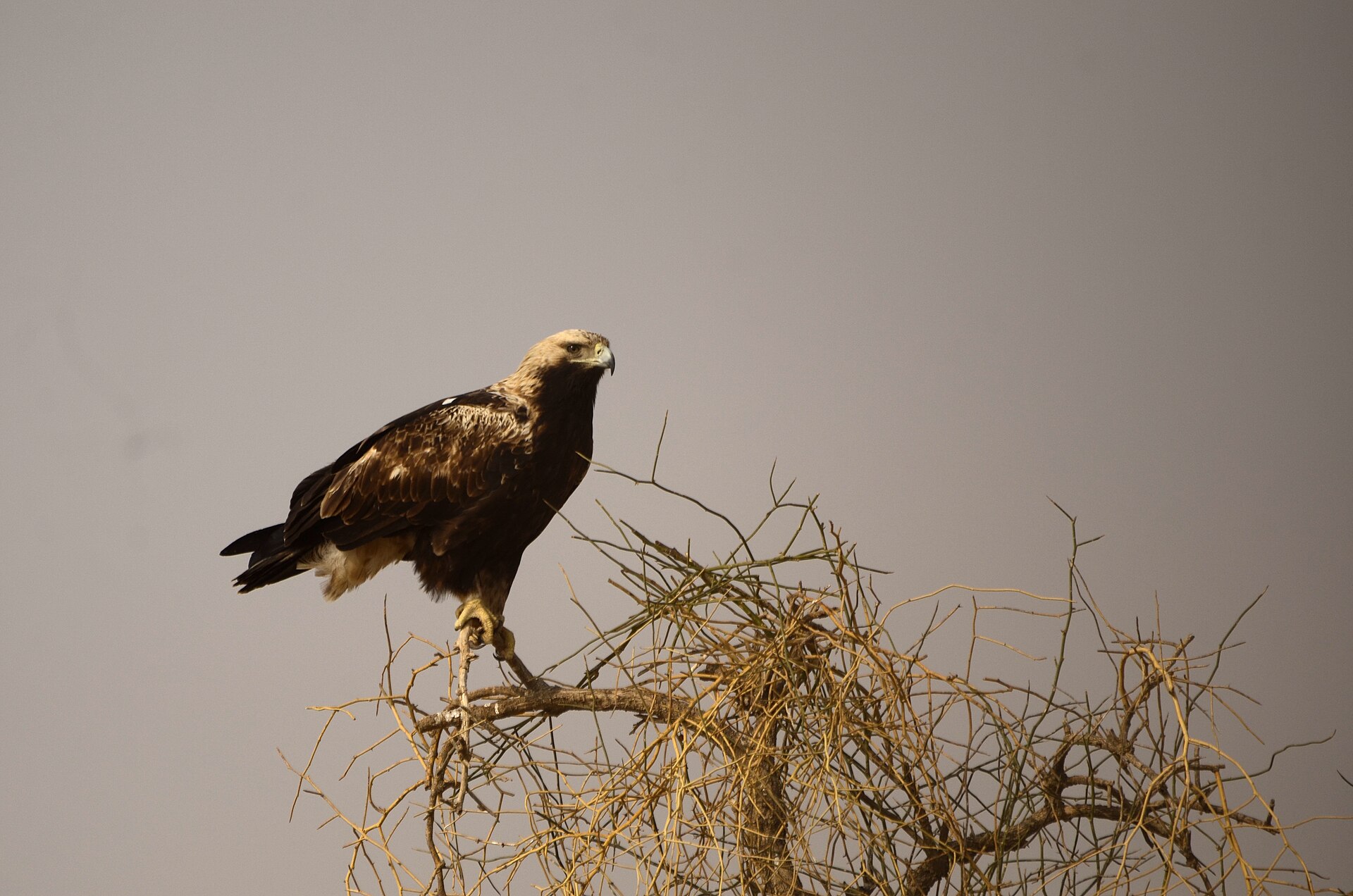
Large, very dark eagle with a golden-buff crown and nape and white patches on the shoulders in adults.
Habitat
Nests in forests or tree clumps in steppe and open plains, sometimes hills, often near water. Hunts over open, often cultivated land.
Distribution
Breeds in the west (Western Plain) and probably in the south-east (Dobrogea). Very rare elsewhere, with only sporadic records.
Approximate range in Romania
When it is active
Morning · Daytime
Diet
A wide range of animals depending on the area, especially medium-sized mammals and birds.
Behaviour
Hunts over open, often cultivated land; young birds in particular wander widely outside the breeding season.
Seasonality in Romania
Breeds in Romania and can be present all year, but is very mobile outside the breeding period, especially young birds.
How to find it
A rare bird; most observations come from open plains in the west and south-east.
Photography
General guidance based on the species’ behaviour, not a report of Nick’s personal field experience.
- Difficulty
- Difficult
- Ethics
- Threatened and highly sensitive. Never search for or approach nest sites, and never share locations.
Practical starting points, not fixed rules.