Birds
Eurasian Bittern
Botaurus stellaris · Buhai de baltă
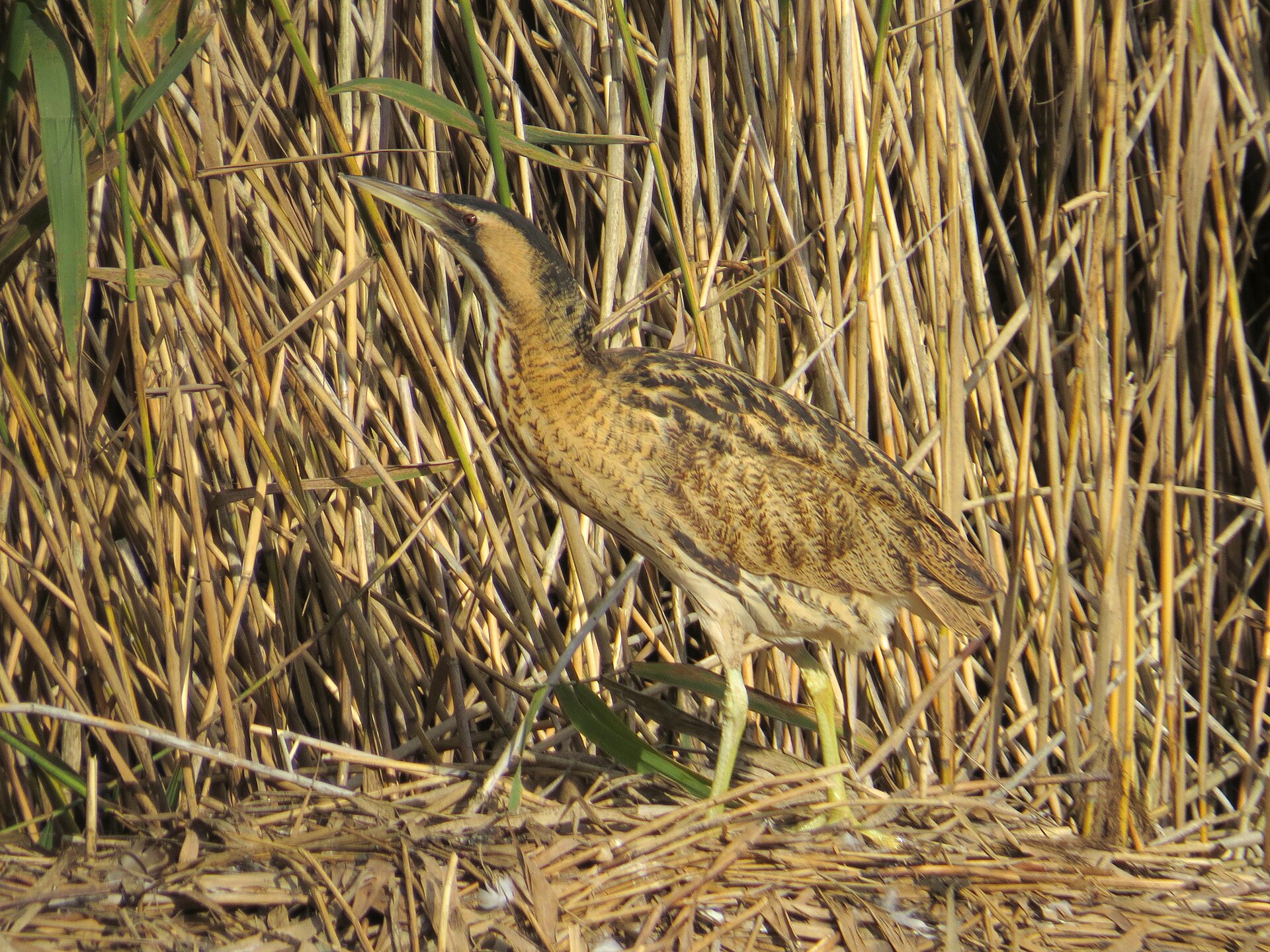
A secretive, camouflaged heron of dense reedbeds, far more often heard than seen thanks to its deep booming call.
At a glance
- Status in Romania
- Migratory
- Habitat
- Wetland
- Activity
- Morning · Evening
- Diet
- Mainly fish, also amphibians, reptiles, insects and their larvae.
- Conservation status
- Least Concern (IUCN)
- Photography difficulty
- Difficult
Identification
Stocky, golden-brown heron heavily streaked with dark brown. When alarmed it freezes with its bill pointing upwards.
Habitat
Extensive marshes with isolated pools, stable water levels and little human disturbance.
Distribution
Breeds in most low-altitude wetlands.
Approximate range in Romania
When it is active
Morning · Evening
Diet
Mainly fish, also amphibians, reptiles, insects and their larvae.
Behaviour
Males boom in spring. Rarely leaves cover.
Seasonality in Romania
Breeds in Romania and is partly migratory; populations in the Danube Delta are resident. Migrants arrive from March and leave the breeding sites between July and September.
How to find it
Listen for booming at dawn and dusk in spring; look along reed edges in calm weather.
Photography
General guidance based on the species’ behaviour, not a report of Nick’s personal field experience.
- Difficulty
- Difficult
- Autofocus
- Reeds in front of the bird easily steal focus; use a small focus area or manual focus.
- Fieldcraft
- Mostly a matter of luck and long waits at a reed edge.
- Ethics
- Never use playback or enter reedbeds to find booming males.
Practical starting points, not fixed rules.