Birds
Eurasian Blackcap
Sylvia atricapilla · Silvie cu cap negru
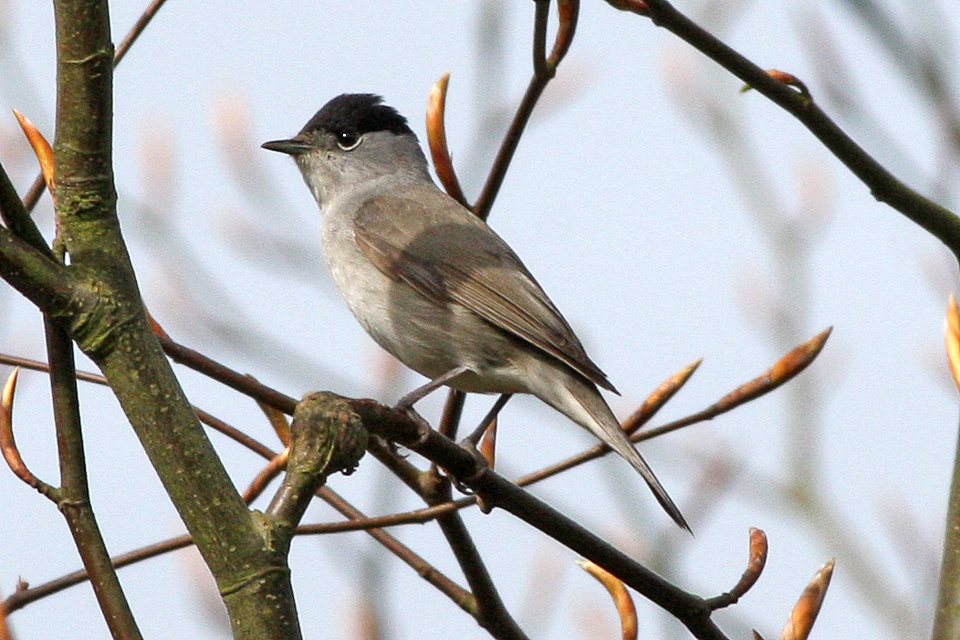
A grey warbler with a rich song; the male has a black cap and the female a brown one.
At a glance
- Status in Romania
- Summer visitor
- Habitat
- Forest / Urban
- Activity
- Morning · Daytime
- Diet
- Omnivorous; mainly insects and other invertebrates in the breeding season, more fruit outside it.
- Conservation status
- Least Concern (IUCN)
- Photography difficulty
- Moderate
Photography Guide
Practical starting points based on the species’ behaviour and habitat, not fixed rules.
- Where and how to look
- Shrubby woodland edges and parks from April.
- Best time / activity
- Morning · Daytime
- Photography difficulty
- Moderate
- Ethics
- Keep away from nests, do not use playback in the breeding season, and let the bird decide how close it comes.
Identification
Grey-brown warbler with a neat cap — black in the male, reddish-brown in the female.
Habitat
Woodland with a well-developed shrub layer, especially deciduous and mixed forest edges rich in scrub.
Distribution
Across Romania, including the mountains, but not in compact conifer forest.
Approximate range in Romania
Diet
Omnivorous; mainly insects and other invertebrates in the breeding season, more fruit outside it.
Behaviour
Sings from inside cover, often hard to see.
Seasonality in Romania
Migratory in Romania; isolated birds may stay in mild winters. Arrives early, in late March–early April, and leaves for the wintering grounds in September.
- JanUnknown
- FebUnknown
- MarPresent
- AprPresent
- MayPresent
- JunPresent
- JulPresent
- AugPresent
- SepPresent
- OctUnknown
- NovUnknown
- DecUnknown
Source-verified months inform the seasonal filters. Local timing can vary. Unconfirmed months do not imply absence. * Event timing retained from the earlier entry, not yet source-verified.
Breeding
Breeds from mid-April to June; 2–7 eggs.