Birds
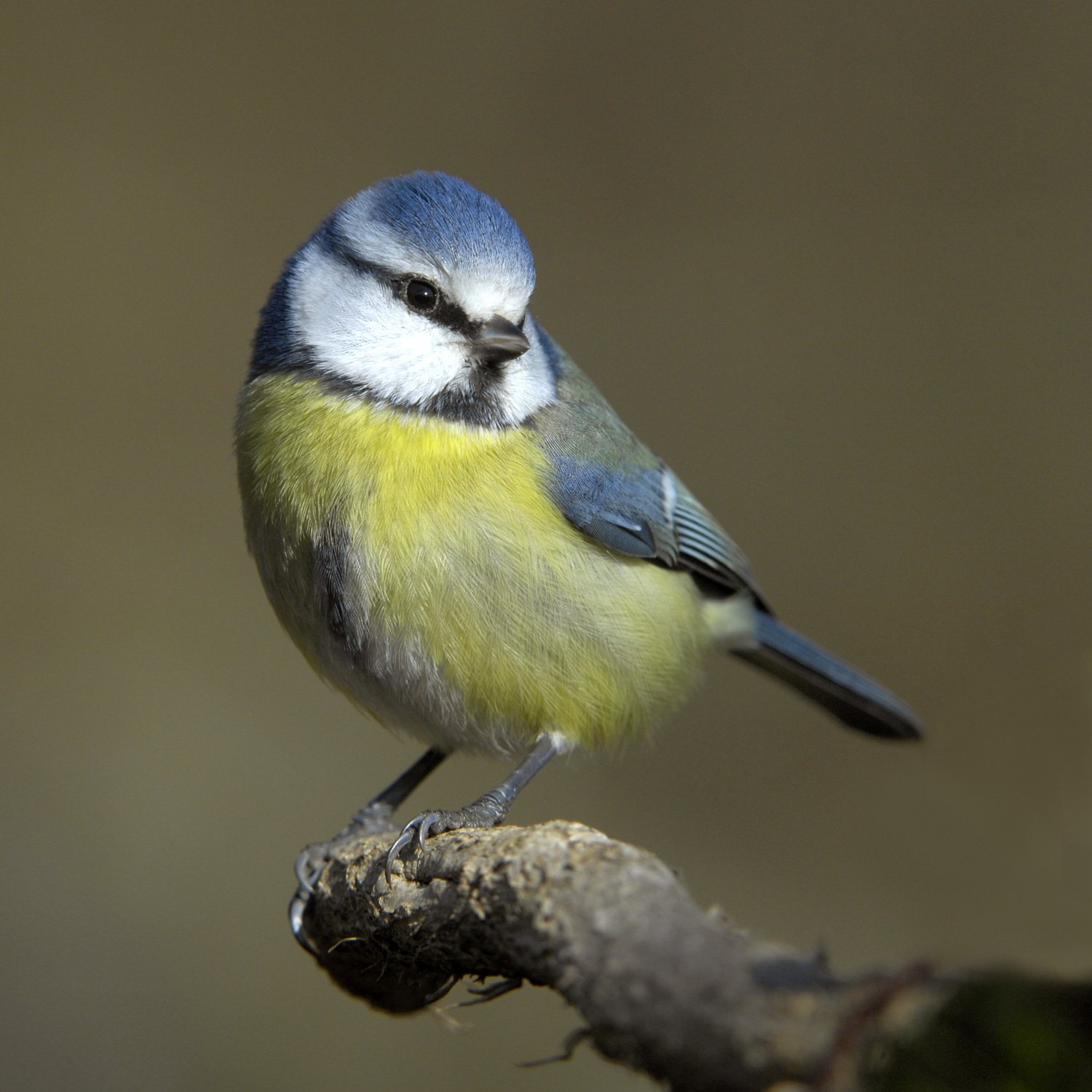
Eurasian Blue Tit
Cyanistes caeruleus · Pițigoi albastru
A small, bright blue-and-yellow tit of woods, orchards and gardens.
At a glance
- Status in Romania
- Resident
- Habitat
- Forest / Urban
- Activity
- Morning · Daytime
- Diet
- Small invertebrates such as insects, spiders and snails, plus small fruit and seeds, which matter more in the cold season.
- Conservation status
- Least Concern (IUCN)
- Photography difficulty
- Easy to observe
Photography Guide
Practical starting points based on the species’ behaviour and habitat, not fixed rules.
- Where and how to look
- Gardens, parks and woodland edges all year.
- Best time / activity
- Morning · Daytime
- Photography difficulty
- Easy to observe
- Starting shutter speed
- 1/1000 sec or faster.
- Ethics
- Keep away from nests, do not use playback in the breeding season, and let the bird decide how close it comes.
Identification
Small tit with a blue cap, wings and tail, white face with a dark eye-stripe, and yellow underparts.
Habitat
A wide range of habitats with trees: deciduous and conifer forest, riverside woods, orchards, parks and gardens.
Distribution
Across Romania, including the mountains up to the edge of the alpine zone.
Approximate range in Romania
Diet
Small invertebrates such as insects, spiders and snails, plus small fruit and seeds, which matter more in the cold season.
Behaviour
Acrobatic, often feeding upside down at the tips of branches.
Seasonality in Romania
Resident throughout its range, including Romania.
- JanPresent
- FebPresent
- MarPresent
- AprPresent
- MayPresent
- JunPresent
- JulPresent
- AugPresent
- SepPresent
- OctPresent
- NovPresent
- DecPresent
Source-verified months inform the seasonal filters. Local timing can vary. Unconfirmed months do not imply absence. * Event timing retained from the earlier entry, not yet source-verified.
Breeding
Breeding can begin in April; usually 7–13 eggs incubated by the female while the male feeds her.