Birds
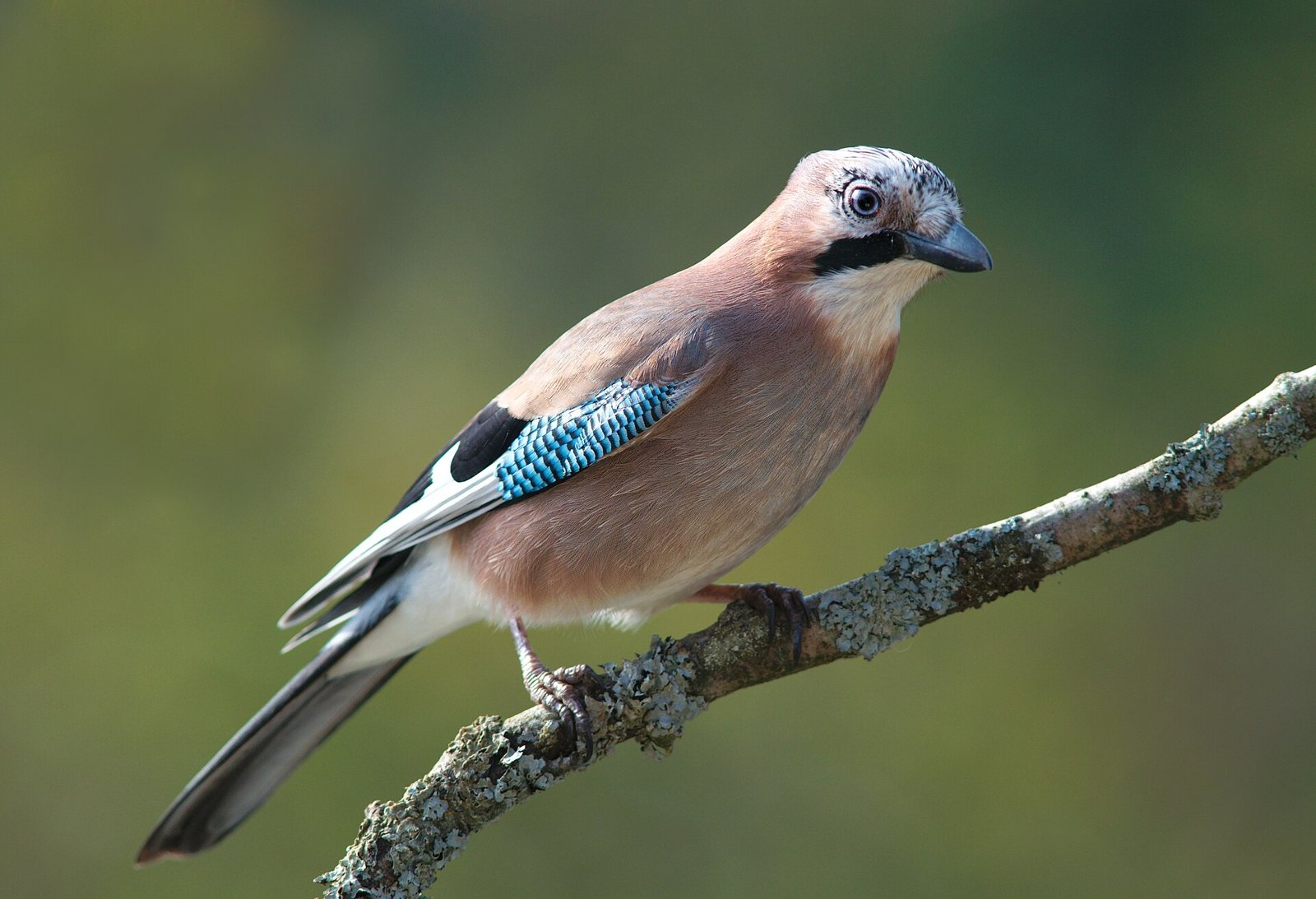
Eurasian Jay
Garrulus glandarius · Gaiță
A colourful, wary woodland crow with bright blue wing patches.
At a glance
- Status in Romania
- Resident
- Habitat
- Forest / Urban
- Activity
- Morning · Daytime
- Diet
- Omnivorous and seasonal: insects and larvae from the canopy in the breeding season, often raiding other birds' nests; plant food at other times.
- Conservation status
- Least Concern (IUCN)
- Photography difficulty
- Moderate
Photography Guide
Practical starting points based on the species’ behaviour and habitat, not fixed rules.
- Where and how to look
- Oak woods in autumn, when jays carry acorns to store.
- Best time / activity
- Morning · Daytime
- Photography difficulty
- Moderate
- Fieldcraft
- Jays are wary; a hide or natural cover at a woodland edge works better than approaching.
- Ethics
- Keep away from nests, do not use playback in the breeding season, and let the bird decide how close it comes.
Identification
Pinkish-brown crow with a black moustache, white rump and barred blue patch on the wing.
Habitat
Woodland, especially deciduous, but also meadows with trees, orchards, parks, gardens and cemeteries. Generally avoids open country.
Distribution
Present across Romania.
Approximate range in Romania
Diet
Omnivorous and seasonal: insects and larvae from the canopy in the breeding season, often raiding other birds' nests; plant food at other times.
Behaviour
Often raids other birds’ nests in the breeding season.
Seasonality in Romania
Breeds in Romania and is resident.
- JanPresent
- FebPresent
- MarPresent
- AprPresent
- MayPresent
- JunPresent
- JulPresent
- AugPresent
- SepPresent
- OctPresent
- NovPresent
- DecPresent
Source-verified months inform the seasonal filters. Local timing can vary. Unconfirmed months do not imply absence. * Event timing retained from the earlier entry, not yet source-verified.
Breeding
Breeding usually begins in mid-April; 3–10 eggs incubated by the female for 16–19 days.