Birds
Eurasian Penduline Tit
Remiz pendulinus · Boicuș
A small wetland bird that weaves a hanging, flask-shaped nest at the tip of a branch.
At a glance
- Status in Romania
- Migratory
- Habitat
- Wetland
- Activity
- Morning · Daytime
- Diet
- Mainly invertebrates, especially insects and their larvae and small spiders; also seeds, particularly in the cold season.
- Conservation status
- Least Concern (IUCN)
- Photography difficulty
- Moderate
Photography Guide
Practical starting points based on the species’ behaviour and habitat, not fixed rules.
- Where and how to look
- Willows and poplars beside reedbeds and lakes; listen for its thin, descending call.
- Best time / activity
- Morning · Daytime
- Photography difficulty
- Moderate
- Ethics
- Never approach or handle the hanging nest; watch from a distance.
Identification
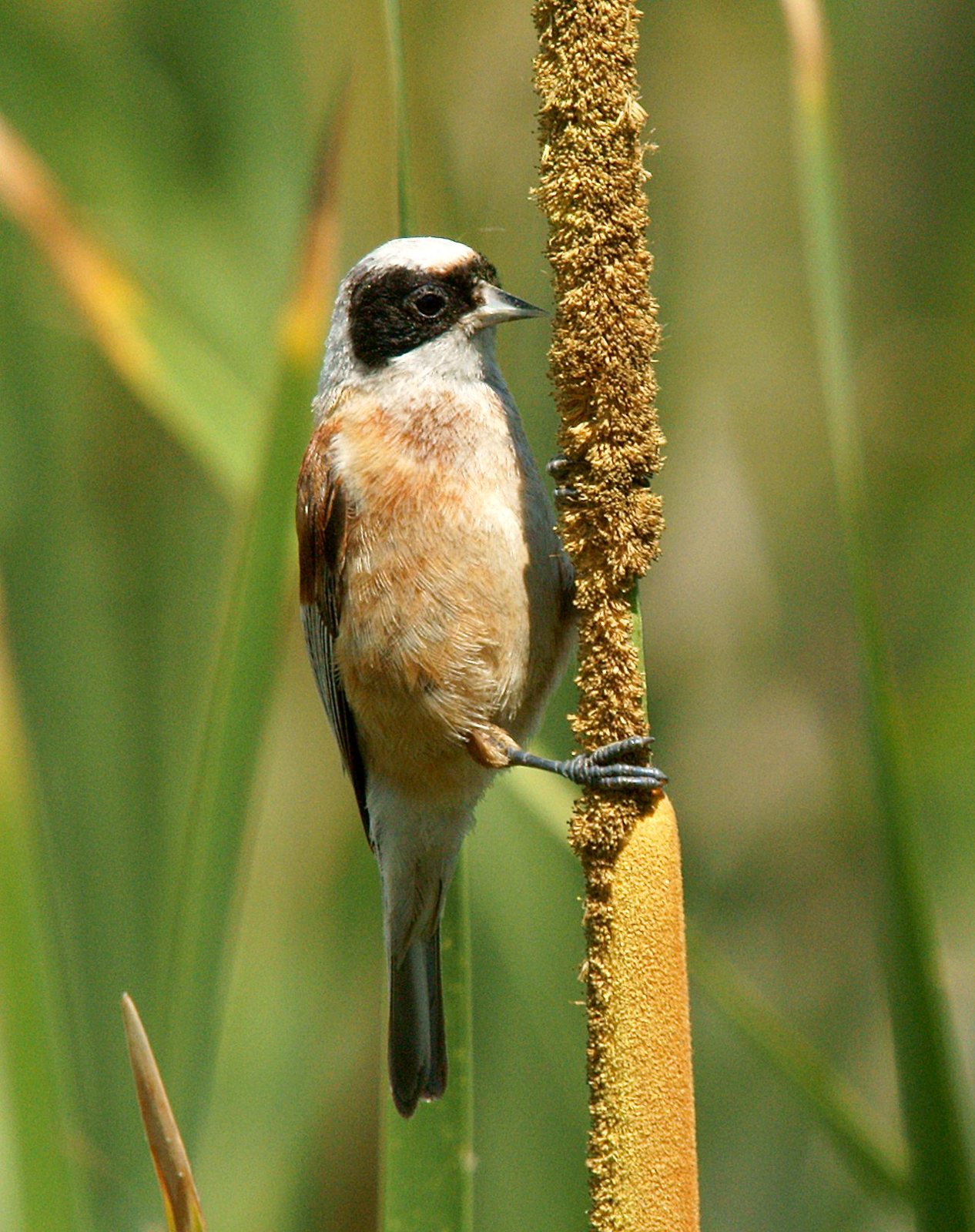
Small bird with a grey head, black 'bandit' mask and chestnut back.
Habitat
Low-lying areas next to water — lakes, rivers, marshes, fishponds and large reedbeds — with trees suitable for its hanging nest.
Distribution
Across Romania wherever wetlands are bordered by riverside woods, except the mountains and areas of extensive arable land.
Approximate range in Romania
Diet
Mainly invertebrates, especially insects and their larvae and small spiders; also seeds, particularly in the cold season.
Behaviour
Both monogamy and polygamy have been recorded in this species.
Seasonality in Romania
Considered a short-distance migrant in Romania, but some individuals stay through the cold season.
Monthly presence has not yet been source-verified.
Breeding
Breeding usually begins in May.