Birds
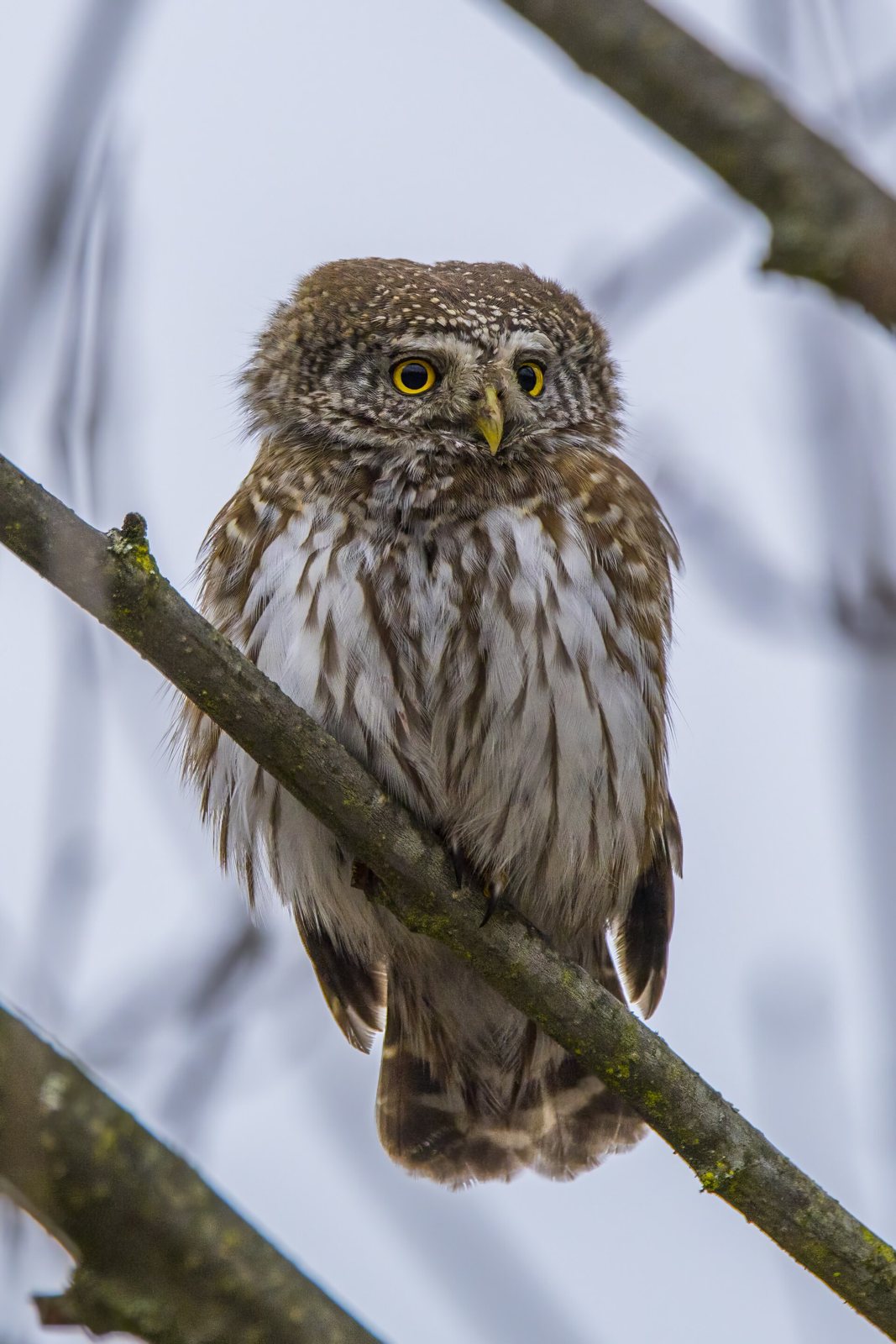
Eurasian Pygmy Owl
Glaucidium passerinum · Ciuvică
Europe's smallest owl, a starling-sized predator of Carpathian conifer forests.
At a glance
- Status in Romania
- Resident
- Habitat
- Forest / Mountain
- Activity
- Morning · Evening
- Diet
- Small mammals such as mice and bats, and small birds such as tits and finches; also attacks larger birds. Often stores food in cavities.
- Conservation status
- Least Concern (IUCN)
- Photography difficulty
- Difficult
Photography Guide
Practical starting points based on the species’ behaviour and habitat, not fixed rules.
- Where and how to look
- Mature mountain conifer forest; listen for whistled calls at dusk in early spring.
- Best time / activity
- Morning · Evening
- Photography difficulty
- Difficult
- Starting shutter speed
- Light is often low in conifer forest; around 1/500 sec is a reasonable start for a still bird.
- Ethics
- Never use playback or flash at roosts or nests, keep visits short, and do not share roost or nest locations.
Identification
Tiny owl with a small head, yellow eyes, short white brows and a relatively long tail that it often flicks.
Habitat
Extensive conifer or mixed forest, preferring mature fir or spruce close to meadows, clearings or bogs.
Distribution
Tied to the Carpathian chain, in all high mountain massifs with conifer or conifer–beech forest.
Approximate range in Romania
Diet
Small mammals such as mice and bats, and small birds such as tits and finches; also attacks larger birds. Often stores food in cavities.
Behaviour
Active at dusk and dawn as well as by day; small birds often mob it.
Seasonality in Romania
A resident breeding species in Romania.
- JanPresent
- FebPresent
- MarPresent
- AprPresent
- MayPresent
- JunPresent
- JulPresent
- AugPresent
- SepPresent
- OctPresent
- NovPresent
- DecPresent
Source-verified months inform the seasonal filters. Local timing can vary. Unconfirmed months do not imply absence. * Event timing retained from the earlier entry, not yet source-verified.
Breeding
Breeds April–July; 4–7 eggs incubated by the female for 28–30 days while the male feeds her.