Birds
Eurasian Spoonbill
Platalea leucorodia · Lopătar
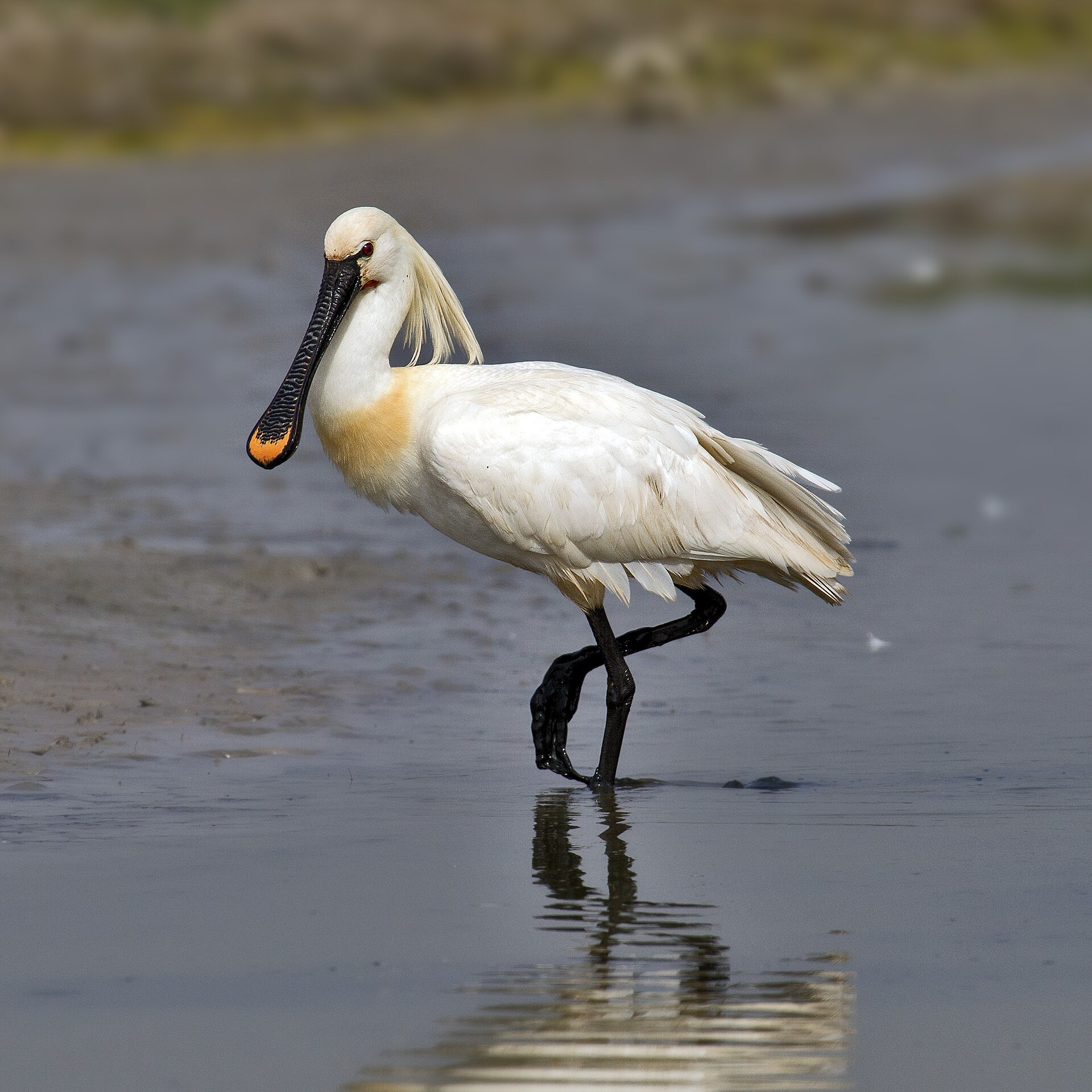
A white wading bird with a unique spoon-shaped bill, swept side to side through shallow water.
At a glance
- Status in Romania
- Summer visitor
- Habitat
- Wetland
- Activity
- Daytime
- Diet
- Small fish, crustaceans and aquatic insects.
- Conservation status
- Least Concern (IUCN)
- Photography difficulty
- Moderate
Identification
All white with a long, flat bill widened at the tip; adults have a crest in the breeding season.
Habitat
Shallow lakes, lagoons and marshes.
Approximate range in Romania
When it is active
Daytime
Diet
Small fish, crustaceans and aquatic insects.
Behaviour
Feeds by sweeping the bill sideways through water, often in groups.
Seasonality in Romania
SOR records arrival from February or March and departure in late autumn, October–November.
- JanUnknown
- FebPresent
- MarPresent
- AprPresentMigration*
- MayPresentBreeding*
- JunPresentBreeding*
- JulPresentBreeding*
- AugPresentBreeding*
- SepPresentMigration*
- OctPresent
- NovPresent
- DecUnknown
Source-verified months inform the seasonal filters. Local timing can vary. Unconfirmed months do not imply absence. * Event timing retained from the earlier entry, not yet source-verified.
Breeding
Nests in colonies in reedbeds or trees.
How to find it
Shallow lagoons and lakes in the Danube Delta in summer.
Photography
General guidance based on the species’ behaviour, not a report of Nick’s personal field experience.
- Difficulty
- Moderate
Practical starting points, not fixed rules.