Birds
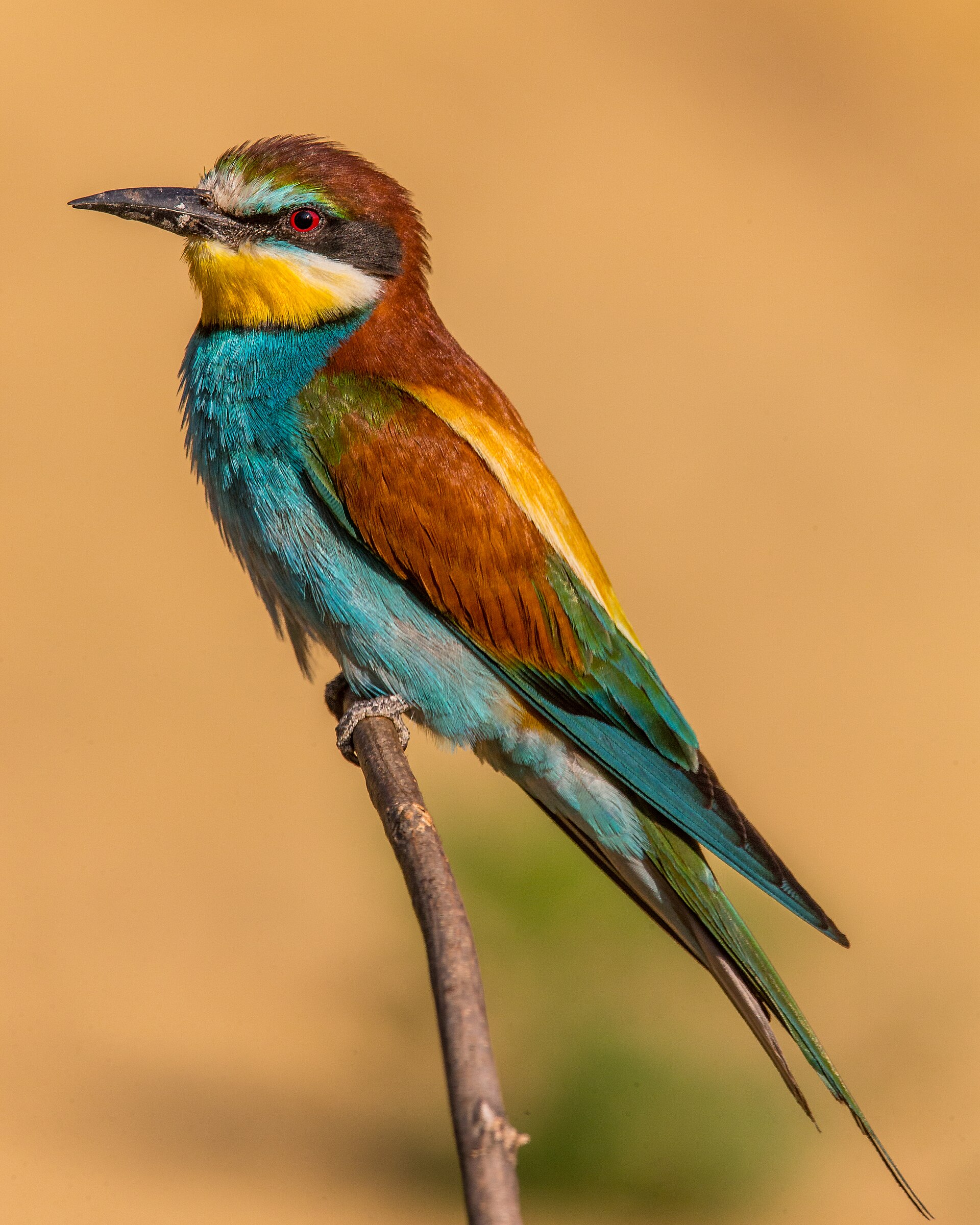
European Bee-eater
Merops apiaster · Prigorie
One of Europe's most colourful birds, catching bees and dragonflies in flight over warm open country.
At a glance
- Status in Romania
- Summer visitor
- Habitat
- Meadow
- Activity
- Daytime
- Diet
- Flying insects, especially bees, wasps and dragonflies.
- Conservation status
- Least Concern (IUCN)
- Photography difficulty
- Moderate
Identification
Chestnut crown and back, yellow throat, turquoise underparts, slender curved bill and pointed central tail feathers.
Habitat
Warm, open landscapes with sandy or earth banks, pastures and river valleys.
Distribution
Breeds in southern and eastern Europe and winters in Africa. A summer visitor to Romania.
Approximate range in Romania
When it is active
Daytime
Diet
Flying insects, especially bees, wasps and dragonflies.
Behaviour
Social; hunts from wires and dead branches and calls constantly with a liquid 'prruip'.
Seasonality in Romania
SOR records arrival in late April or early May and departure in August.
- JanUnknown
- FebUnknown
- MarUnknown
- AprPresent
- MayPresentMigration*
- JunPresentBreeding*
- JulPresentBreeding*
- AugPresentBreeding*
- SepPresentMigration*
- OctUnknown
- NovUnknown
- DecUnknown
Source-verified months inform the seasonal filters. Local timing can vary. Unconfirmed months do not imply absence. * Event timing retained from the earlier entry, not yet source-verified.
Breeding
Nests in colonies, digging tunnels into sandy or earth banks.
How to find it
Listen for the call over open valleys and look for birds lined up on wires in summer.
Photography
General guidance based on the species’ behaviour, not a report of Nick’s personal field experience.
- Difficulty
- Moderate
- Starting shutter speed
- For birds catching insects in flight, start at 1/2000 sec or faster.
- Ethics
- Stay far from nesting banks; birds abandon burrows if disturbed.
Practical starting points, not fixed rules.