Birds
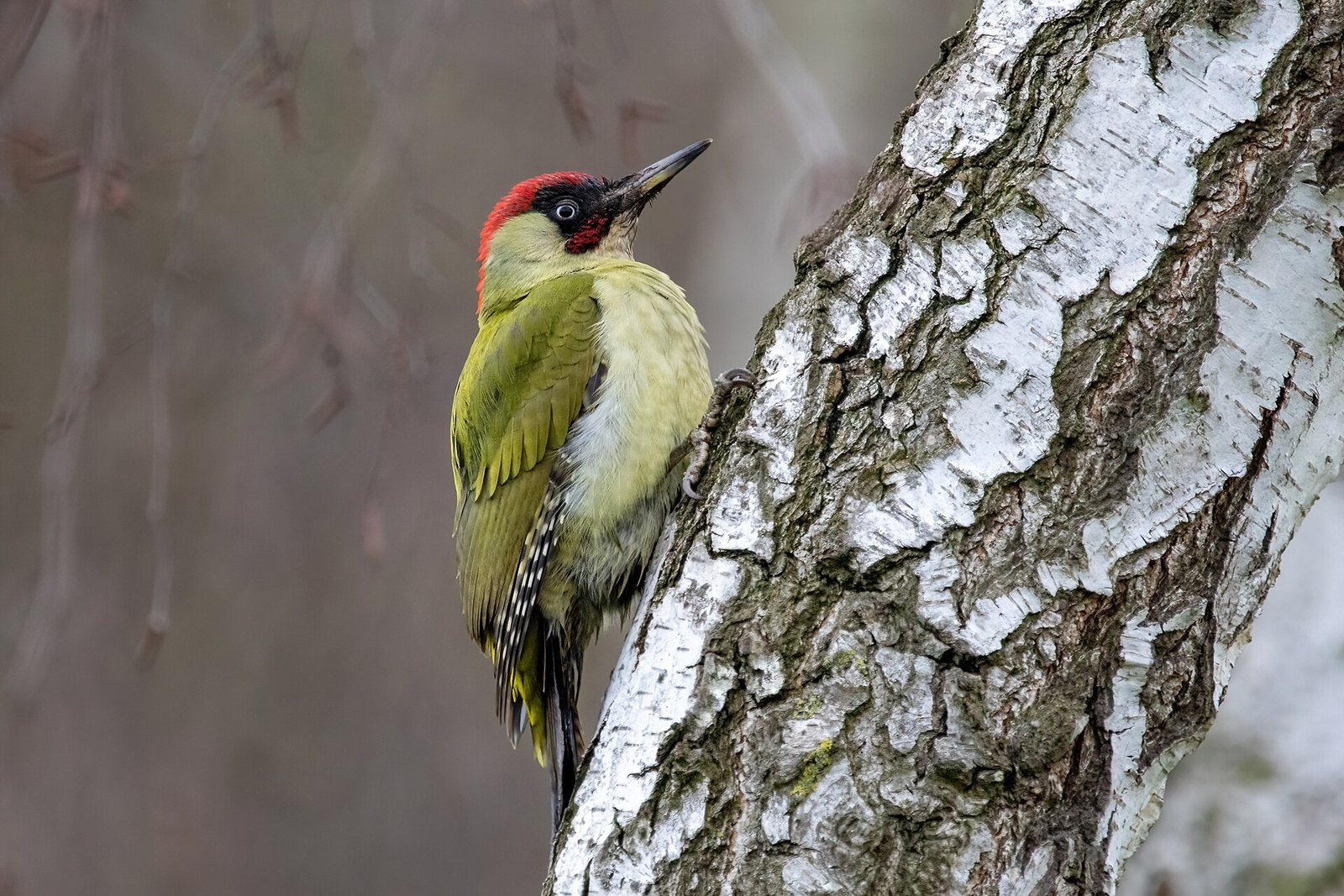
European Green Woodpecker
Picus viridis · Ghionoaie verde
A large green woodpecker that spends much of its time feeding on ants in open grassland.
At a glance
- Status in Romania
- Resident
- Habitat
- Forest / Meadow
- Activity
- Morning · Daytime
- Diet
- Mainly ants, adults and larvae, especially from anthills in meadows.
- Conservation status
- Least Concern (IUCN)
- Photography difficulty
- Moderate
Photography Guide
Practical starting points based on the species’ behaviour and habitat, not fixed rules.
- Where and how to look
- Meadows and pastures next to old trees, where it digs into anthills.
- Best time / activity
- Morning · Daytime
- Behaviour to anticipate
- Birds feeding on the ground lift their heads regularly to check for danger.
- Photography difficulty
- Moderate
- Starting shutter speed
- Around 1/1000 sec on the ground; 1/2500 sec or faster for flight.
- Fieldcraft
- Stay low at the edge of the meadow; the bird is wary and flies to the nearest tree.
- Ethics
- Never wait beside an occupied nest hole, never use playback, and move on if the birds stop feeding or start alarm-calling.
Identification
Large green woodpecker with a red crown, black around the pale eye and a yellow rump visible in flight.
Habitat
Deciduous woodland next to clearings and open ground; avoids large unbroken forest. Also riverside woods and parks with mature trees.
Distribution
Widespread from the lowlands, where it is scarcer, up to the high hills. Absent from the Danube Delta.
Approximate range in Romania
Diet
Mainly ants, adults and larvae, especially from anthills in meadows.
Behaviour
Feeds on the ground more than most woodpeckers; flight is deeply undulating.
Seasonality in Romania
Breeds in Romania and is resident, moving little apart from young birds dispersing.
- JanPresent
- FebPresent
- MarPresent
- AprPresent
- MayPresent
- JunPresent
- JulPresent
- AugPresent
- SepPresent
- OctPresent
- NovPresent
- DecPresent
Source-verified months inform the seasonal filters. Local timing can vary. Unconfirmed months do not imply absence. * Event timing retained from the earlier entry, not yet source-verified.