Birds
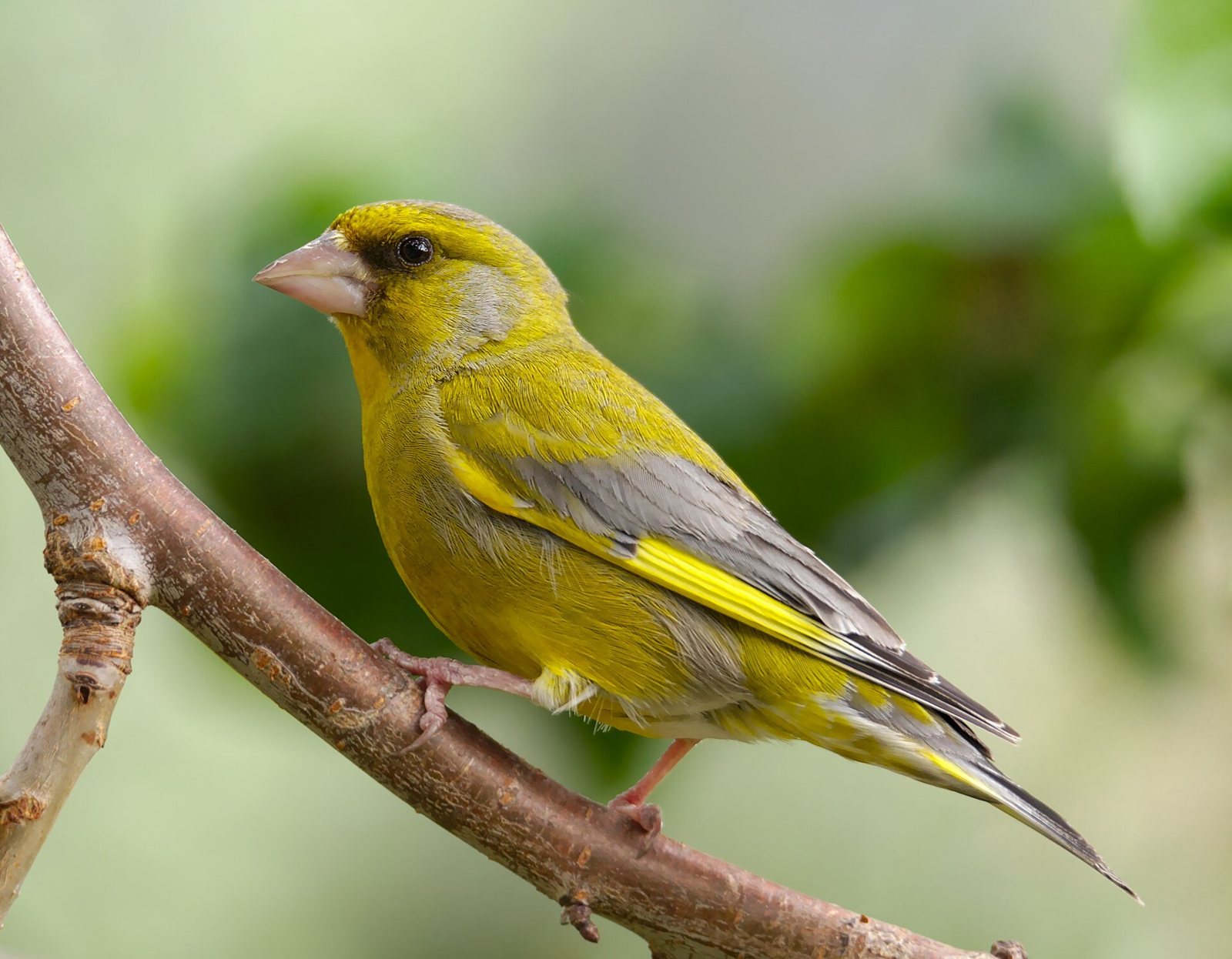
European Greenfinch
Chloris chloris · Florinte
A stocky olive-green finch of gardens, parks and woodland edges.
At a glance
- Status in Romania
- Resident
- Habitat
- Urban / Forest
- Activity
- Morning · Daytime
- Diet
- Mainly plant food — buds, flowers, fruit, including dry seeds of ash and hornbeam; also invertebrates, especially in the breeding season.
- Conservation status
- Least Concern (IUCN)
- Photography difficulty
- Easy to observe
Photography Guide
Practical starting points based on the species’ behaviour and habitat, not fixed rules.
- Where and how to look
- Gardens and parks all year.
- Best time / activity
- Morning · Daytime
- Photography difficulty
- Easy to observe
- Ethics
- Keep away from nests, do not use playback in the breeding season, and let the bird decide how close it comes.
Identification
Olive-green finch with a heavy pale bill and bright yellow flashes in the wings and tail.
Habitat
A wide range of habitats with trees or bushes: open woodland, settlements, parks, orchards, gardens and tree lines.
Distribution
Across Romania, from the plains to the low mountains.
Approximate range in Romania
Diet
Mainly plant food — buds, flowers, fruit, including dry seeds of ash and hornbeam; also invertebrates, especially in the breeding season.
Behaviour
Males perform a slow, bat-like display flight in spring.
Seasonality in Romania
Breeds in Romania and is generally resident, making large movements in severe winters, sometimes moving south in large numbers.
- JanPresent
- FebPresent
- MarPresent
- AprPresent
- MayPresent
- JunPresent
- JulPresent
- AugPresent
- SepPresent
- OctPresent
- NovPresent
- DecPresent
Source-verified months inform the seasonal filters. Local timing can vary. Unconfirmed months do not imply absence. * Event timing retained from the earlier entry, not yet source-verified.
Breeding
Breeding begins in March; usually 4–6 eggs incubated by the female for 11–15 days.