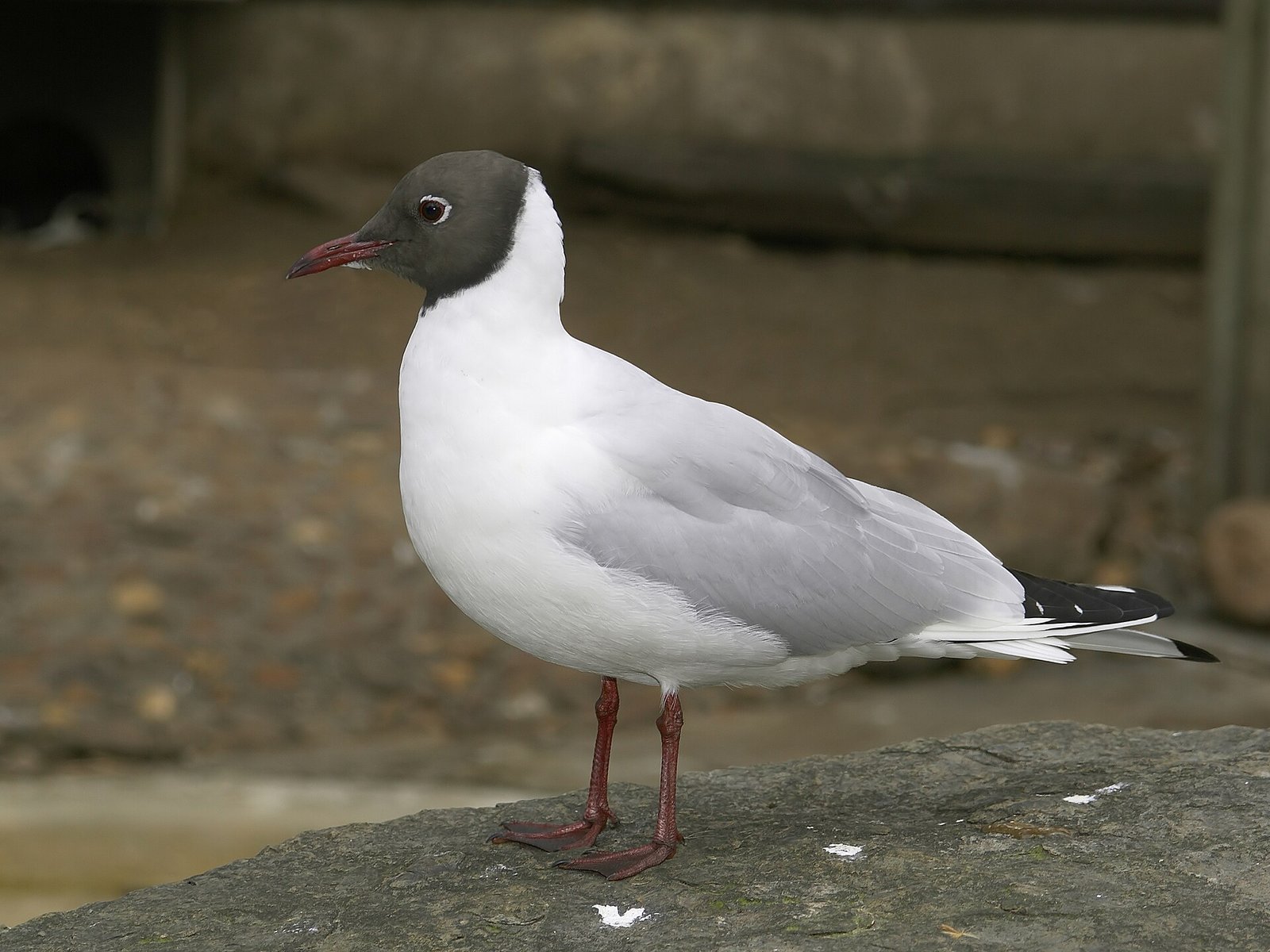
Black-headed Gull
Chroicocephalus ridibundus · Pescăruș râzător
A small, noisy gull of lakes and slow rivers, with a chocolate-brown hood in summer and a common winter visitor to towns.
At a glance
- Status in Romania
- Resident
- Habitat
- Wetland / Urban
- Activity
- Morning · Daytime · Evening
- Diet
- Mainly insects and other invertebrates, aquatic and terrestrial, with some small fish. Opportunistic, especially in winter, when it also feeds at rubbish dumps.
- Conservation status
- Least Concern (IUCN)
- Photography difficulty
- Easy to observe
Photograph this species
- Best months
- All year
- Best time / activity
- Morning · Daytime · Evening
- Photography difficulty
- Easy to observe
- Where to look
- Town rivers and lakes in winter; wetland colonies in the Danube Delta and lowland lakes in spring and summer.
Months confirmed by a Romanian source. General guidance, not local sightings.
Photography Guide
Practical starting points based on the species’ behaviour and habitat, not fixed rules.
- Where and how to look
- Town rivers and lakes in winter; wetland colonies in the Danube Delta and lowland lakes in spring and summer.
- Best time / activity
- Morning · Daytime · Evening
- Behaviour to anticipate
- Birds hovering and dipping to pick food from the water surface.
- Photography difficulty
- Easy to observe
- Starting shutter speed
- 1/2000 sec or faster for flight.
- Fieldcraft
- City riverbanks give close, natural views of birds used to people.
- Ethics
- Keep well away from breeding colonies and never land on colony islands.
Identification
Habitat
Distribution
Approximate range in Romania
Diet
Behaviour
Seasonality in Romania
Resident in Romania but very mobile outside the breeding season. In winter gulls from elsewhere arrive, while some Romanian breeders winter abroad.
Presence
Breeding
Migration
Wintering
About this data
Source-verified months inform the seasonal filters. Local timing can vary. Unconfirmed months do not imply absence. Presence verification is separate from monthly status; each month's details identify its verification. Lighter bands mark estimated timing. Empty event rows mean no event is recorded, not confirmed absence.