Birds
European Nightjar
Caprimulgus europaeus · Caprimulg
A cryptic nocturnal bird that looks like a piece of bark, best found by its long churring song at dusk.
At a glance
- Status in Romania
- Summer visitor
- Habitat
- Forest
- Activity
- Evening · Night
- Diet
- Insects flying at dusk or at night, caught in flight.
- Conservation status
- Least Concern (IUCN)
- Photography difficulty
- Difficult
Photograph this species
- Best time / activity
- Evening · Night
- Photography difficulty
- Difficult
- Where to look
- Listen at dusk in early summer at forest clearings and young plantations in North Dobrogea.
Photography Guide
Practical starting points based on the species’ behaviour and habitat, not fixed rules.
- Where and how to look
- Listen at dusk in early summer at forest clearings and young plantations in North Dobrogea.
- Best time / activity
- Evening · Night
- Behaviour to anticipate
- A singing male on a raised perch in the last light.
- Photography difficulty
- Difficult
- Starting shutter speed
- 1/250 sec or faster in low light; raise ISO rather than using flash.
- Fieldcraft
- Locate the song from the track and wait quietly; do not walk into the clearing.
- Ethics
- Never use playback or flash, and never search the ground for nests or chicks.
Identification
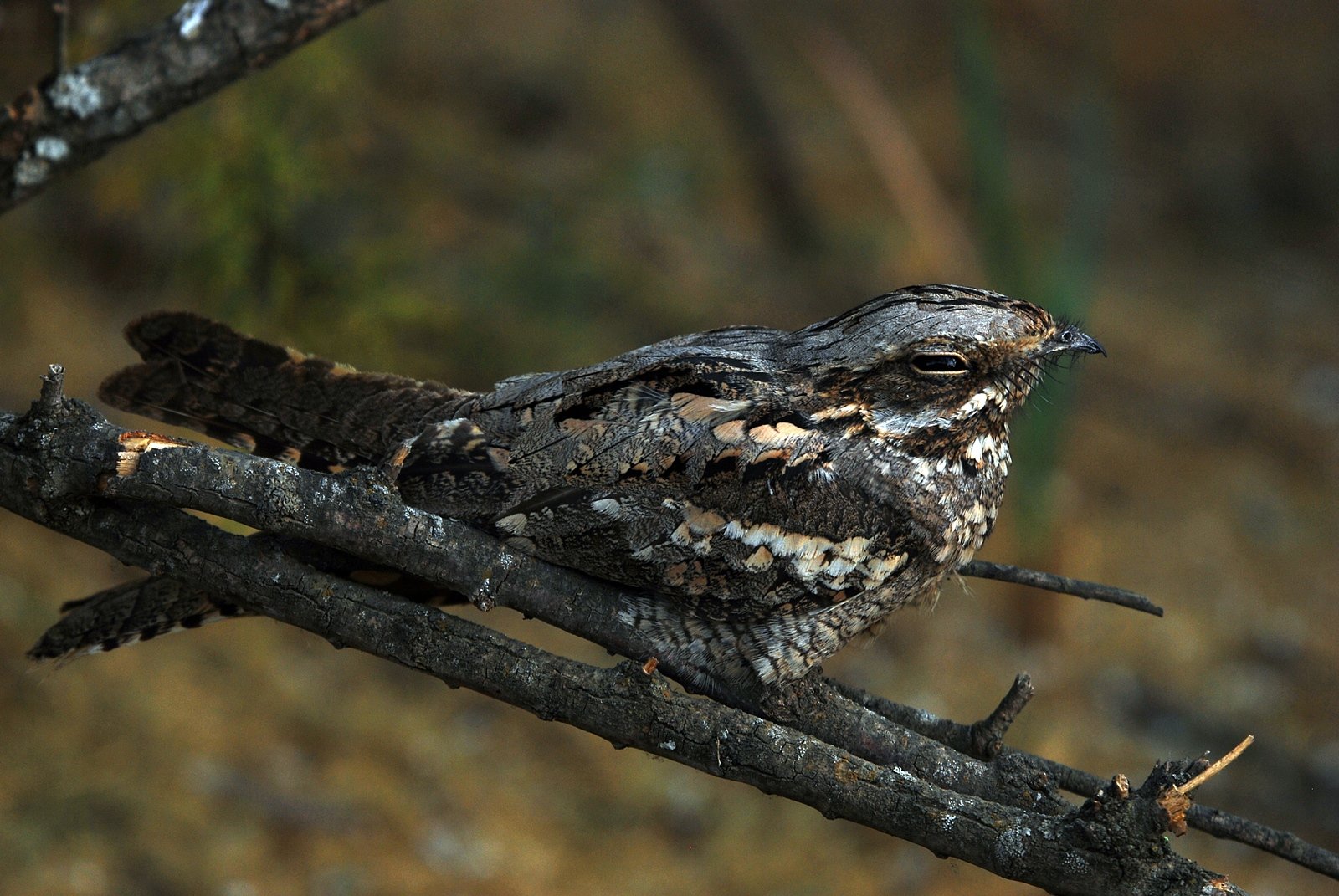
25–30 cm long with a wingspan of about 53–61 cm. Mottled brown and grey plumage that looks like a large chip of tree bark. Males have white spots on the throat, wings and tail. Short bill but a very wide gape.
Habitat
Small clearings on bare ground in uncultivated areas, forests, clearings with old trees, young plantations and sometimes sand dunes.
Distribution
A conservation target in the ROSPA0091 Pădurea Babadag and ROSPA0040 Dunărea Veche–Brațul Măcin Natura 2000 sites in North Dobrogea.
Approximate range in Romania
Diet
Insects flying at dusk or at night, caught in flight.
Behaviour
Nocturnal and solitary, though small flocks can form on migration, which takes place at night. Most often detected by its continuous song in early summer, at dusk and at night, usually from a raised perch. Territorial and long-term monogamous.
Seasonality in Romania
A migrant that winters in Africa, reaching Babadag Forest at the end of April.
Monthly presence has not yet been source-verified.
Breeding
Nests on the ground, usually beside a fallen, decaying trunk that serves as a landmark, or in the shelter of bushes. The same pair may use a nest site for several years.