Birds
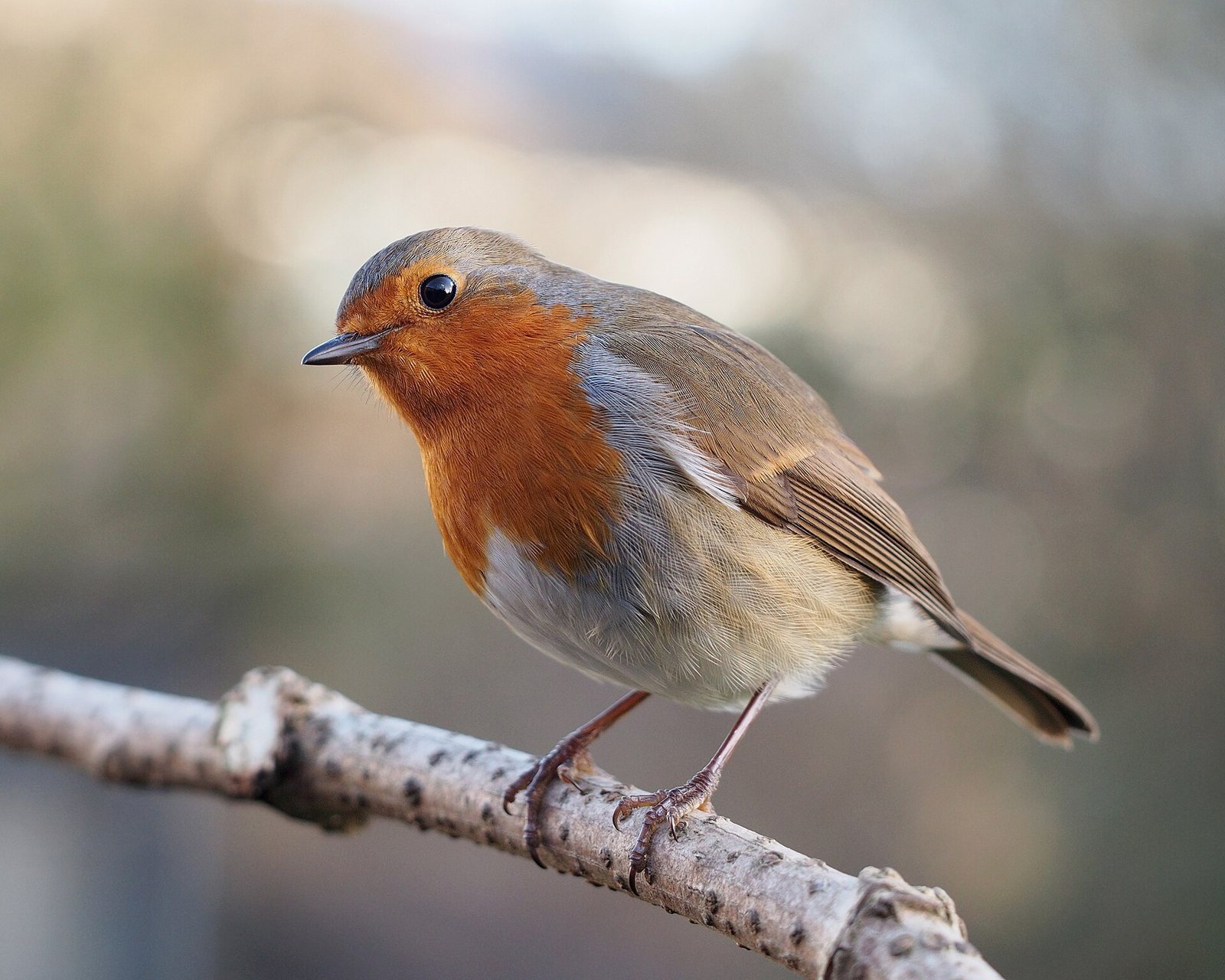
European Robin
Erithacus rubecula · Măcăleandru
A familiar orange-breasted songbird of woodland edges, parks and hedges.
At a glance
- Status in Romania
- Migratory
- Habitat
- Forest / Urban
- Activity
- Morning · Daytime · Evening
- Diet
- Invertebrates, seeds and small fruit such as elderberries, blackberries and bilberries.
- Conservation status
- Least Concern (IUCN)
- Photography difficulty
- Easy to observe
Photography Guide
Practical starting points based on the species’ behaviour and habitat, not fixed rules.
- Where and how to look
- Shrubby woodland edges and parks; it often comes close to people working in gardens.
- Best time / activity
- Morning · Daytime · Evening
- Photography difficulty
- Easy to observe
- Starting shutter speed
- Around 1/500–1/1000 sec for a perched bird in shade.
- Fieldcraft
- Pick a clean perch in good light and wait; robins return to favourite song posts.
- Ethics
- Keep away from nests, do not use playback in the breeding season, and let the bird decide how close it comes.
Identification
Small, round songbird with an orange face and breast edged in grey, brown upperparts and a pale belly.
Habitat
A wide variety of habitats rich in shrubs: woodland (including conifer forest near edges and clearings), natural-looking parks, riverside woods and hedges.
Distribution
Across Romania, from the lowlands to the high mountains.
Approximate range in Romania
Diet
Invertebrates, seeds and small fruit such as elderberries, blackberries and bilberries.
Behaviour
Males hold territories and mark them by song from March.
Seasonality in Romania
Breeds in Romania and is partly migratory. Birds in the northern half of the country are almost all migratory, with very few staying in mild winters; more stay through winter in the southern half.
Monthly presence has not yet been source-verified.
Breeding
Eggs from April; 4–7 eggs per clutch.