Birds
Ferruginous Duck
Aythya nyroca · Rață roșie
A compact, dark chestnut diving duck of reed-fringed lakes, most numerous in the Danube Delta.
At a glance
- Status in Romania
- Resident
- Habitat
- Wetland
- Activity
- Morning · Daytime · Evening
- Diet
- Omnivorous, mostly aquatic plants, with aquatic invertebrates making up a good part of the diet.
- Conservation status
- Near Threatened (IUCN)
- Photography difficulty
- Moderate
Identification
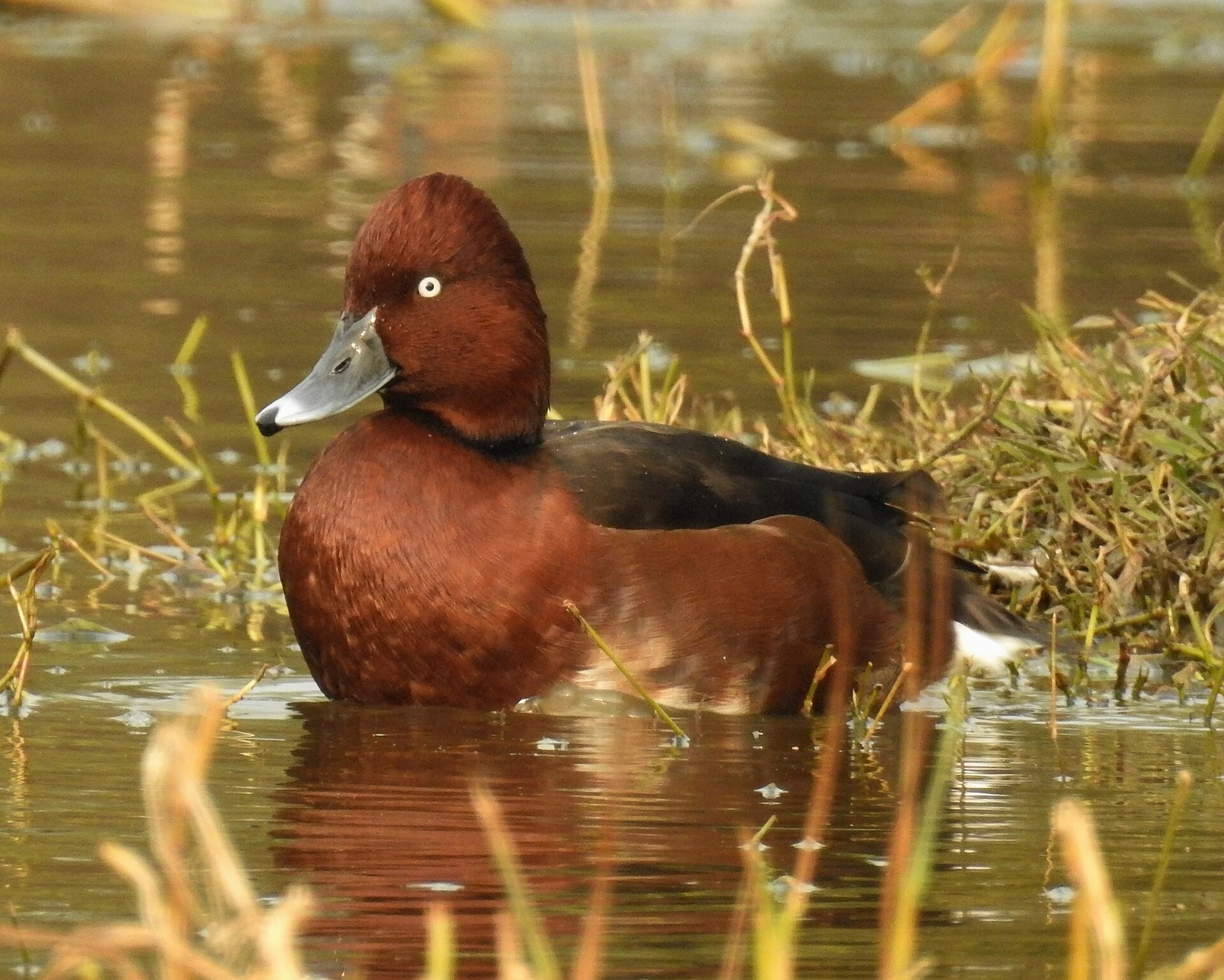
Rich chestnut with a white patch under the tail. Males have white eyes; females are browner with dark eyes. Broad white wing bar in flight.
Habitat
Extensive lowland wetlands with rich aquatic and reed vegetation and muddy edges; most abundant in the Danube Delta and large river floodplains.
Distribution
Breeds in the lower regions of the country, from the Danube Delta up to the hill zone.
Approximate range in Romania
When it is active
Morning · Daytime · Evening
Diet
Omnivorous, mostly aquatic plants, with aquatic invertebrates making up a good part of the diet.
Behaviour
Stays close to cover at the edge of reedbeds; gathers in groups on open water in autumn.
Seasonality in Romania
Breeds in Romania and is present all year, but in varying numbers. It gathers in groups in autumn; far fewer birds remain over winter.
- JanPresent
- FebPresent
- MarPresent
- AprPresent
- MayPresent
- JunPresent
- JulPresent
- AugPresent
- SepPresent
- OctPresent
- NovPresent
- DecPresent
Source-verified months inform the seasonal filters. Local timing can vary. Unconfirmed months do not imply absence. * Event timing retained from the earlier entry, not yet source-verified.
Breeding
Breeding begins in April and egg-laying from May. The female usually lays 8–10 eggs and incubates alone.
How to find it
Reed-fringed lakes and channels in the Danube Delta and floodplain wetlands.
Photography
General guidance based on the species’ behaviour, not a report of Nick’s personal field experience.
- Difficulty
- Moderate
- Behaviour to anticipate
- Birds often swim out briefly from the reed edge; wait at a quiet channel.
- Starting shutter speed
- Around 1/1000 sec for swimming birds.
- Fieldcraft
- A quiet boat or a fixed spot along a channel works better than walking the banks.
- Ethics
- Keep well away from nests and colonies, never use playback, and leave if the birds change behaviour because of you.
Practical starting points, not fixed rules.