Mammals
Forest Dormouse
Dryomys nitedula · Pârș cu coada stufoasă
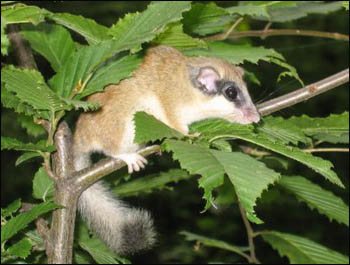
A grey, bushy-tailed dormouse with a dark eye mask, living in oak and mixed woods.
At a glance
- Status in Romania
- Resident
- Habitat
- Forest
- Activity
- Night
- Diet
- Mainly plants — forest fruit, seeds, buds and shoots — supplemented, especially in spring, with insects and sometimes songbird eggs and chicks.
- Conservation status
- Least Concern (IUCN)
- Photography difficulty
- Difficult
Photography Guide
Practical starting points based on the species’ behaviour and habitat, not fixed rules.
- Where and how to look
- Very hard to see; old oak woods and orchards at night.
- Best time / activity
- Night
- Photography difficulty
- Difficult
- Ethics
- Do not dig at, block or stand on burrows and nests, never bait, and avoid handling nest boxes.
Identification
Light grey to reddish-brown above with a dark, often faint mask from the eye to the ear; long bushy tail and relatively small rounded ears.
Habitat
Arboreal, in deciduous or mixed woods, preferably with a rich shrub layer, up to about 1,300 m. Nests high up in tree holes, forks or old bird nests.
Distribution
Common and widespread in almost all oak and other mixed broadleaf woods of the lowlands and hills, most common in old oak woods; regular in old orchards.
Approximate range in Romania
Diet
Mainly plants — forest fruit, seeds, buds and shoots — supplemented, especially in spring, with insects and sometimes songbird eggs and chicks.
Behaviour
Nocturnal. Hibernates from October to April in underground nests.
Seasonality in Romania
Monthly presence has not yet been source-verified.
Breeding
Mates in April after hibernation; one litter a year of 2–6 young.