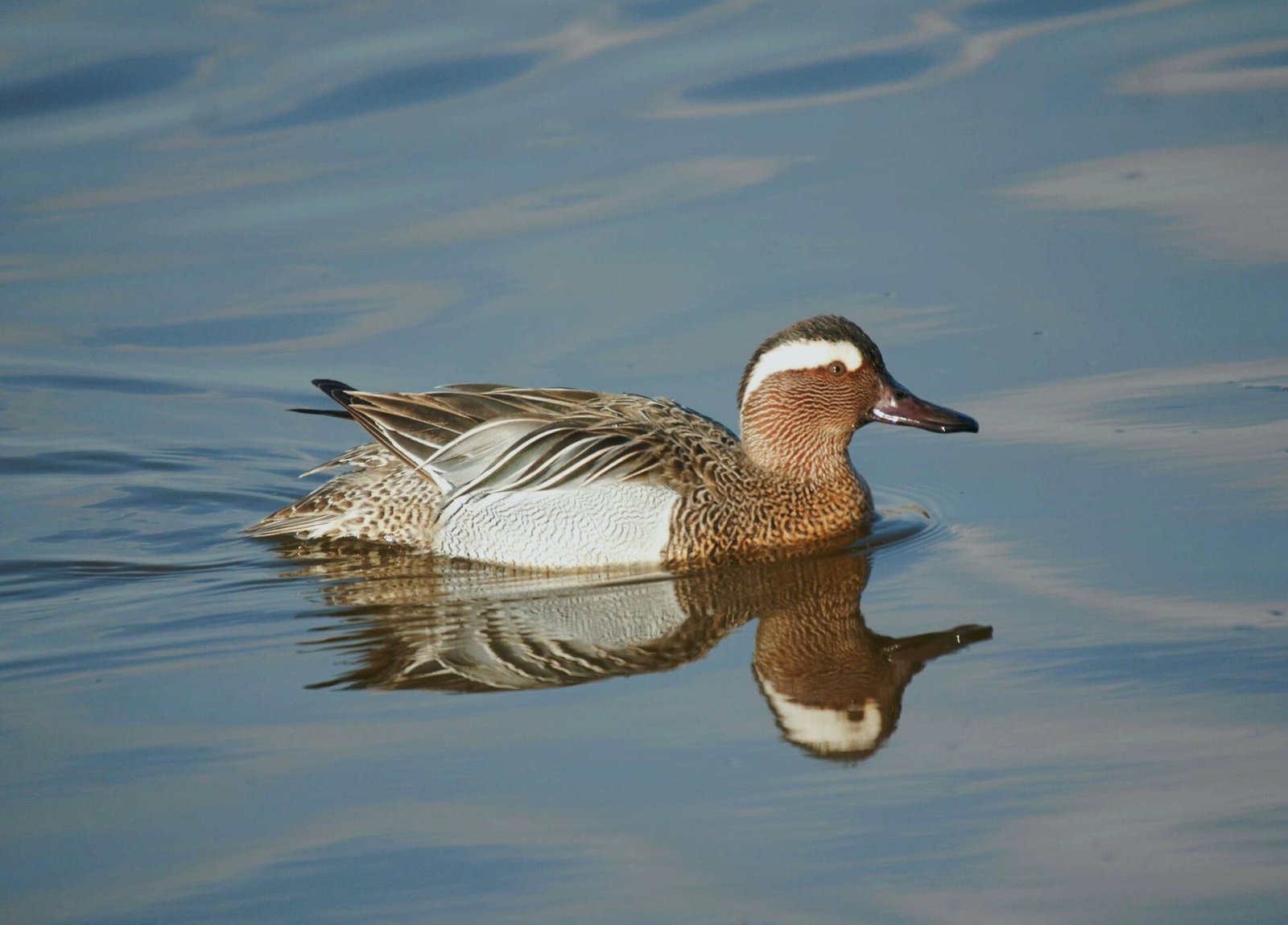
Garganey
Spatula querquedula · Rață cârâitoare
A small dabbling duck that winters in Africa and returns early to Romanian wetlands.
At a glance
- Status in Romania
- Summer visitor
- Habitat
- Wetland
- Activity
- Morning · Evening
- Diet
- Mainly aquatic invertebrates, also plant material. Often feeds at night, or by day if undisturbed.
- Conservation status
- Least Concern (IUCN)
- Photography difficulty
- Moderate
Photograph this species
- Best months
- March, April, May, June, July, August, September
- Best time / activity
- Morning · Evening
- Photography difficulty
- Moderate
- Where to look
- Flooded meadows and shallow marshes in spring migration, especially in March and April.
Months confirmed by a Romanian source. General guidance, not local sightings.
Photography Guide
Practical starting points based on the species’ behaviour and habitat, not fixed rules.
- Where and how to look
- Flooded meadows and shallow marshes in spring migration, especially in March and April.
- Best time / activity
- Morning · Evening
- Photography difficulty
- Moderate
- Starting shutter speed
- Around 1/1000 sec for swimming birds; faster for take-off.
- Fieldcraft
- Use natural cover at the edge of shallow pools and wait.
- Ethics
- Keep well away from nests and colonies, never use playback, and leave if the birds change behaviour because of you.
Identification
Habitat
Distribution
Approximate range in Romania
Diet
Behaviour
Seasonality in Romania
Breeds in Romania and is migratory. Arrives early, from February or March, and leaves for wintering areas in Africa around late September or early October.
Presence
Estimated from existing data
Breeding
Migration
Wintering
Data note. Some monthly timing is based on existing estimates and has not yet been verified against a Romanian source.
About this data
Source-verified months inform the seasonal filters. Local timing can vary. Unconfirmed months do not imply absence. Presence verification is separate from monthly status; each month's details identify its verification. Lighter bands mark estimated timing. Empty event rows mean no event is recorded, not confirmed absence.