Birds
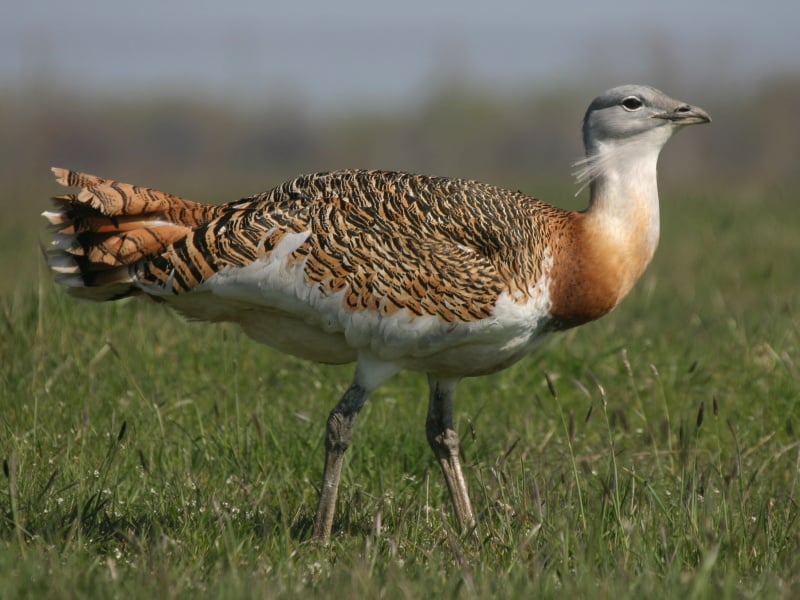
Great Bustard
Otis tarda · Dropie
One of the heaviest flying birds in the world, now very rare in Romania and found only in a few open plains in the west.
At a glance
- Habitat
- Meadow
- Activity
- Morning · Daytime
- Diet
- Plants, seeds and insects.
- Conservation status
- Vulnerable (IUCN)
- Photography difficulty
- Difficult
Photograph this species
- Best time / activity
- Morning · Daytime
- Photography difficulty
- Difficult
- Where to look
- Only with conservation projects or local guides.
Photography Guide
Practical starting points based on the species’ behaviour and habitat, not fixed rules.
- Where and how to look
- Only with conservation projects or local guides.
- Best time / activity
- Morning · Daytime
- Photography difficulty
- Difficult
- Ethics
- Extremely rare and sensitive: never approach, and never share locations.
Identification
Very large, barred brown above and white below; males have whiskers and a rufous breast band.
Habitat
Wide, open grasslands and farmland.
Approximate range in Romania
Diet
Plants, seeds and insects.
Behaviour
Males perform a dramatic 'foam bath' display in spring.