Birds
Greater White-fronted Goose
Anser albifrons · Gârliță mare
An Arctic-breeding goose that winters in Romania, often in very large numbers on the south-eastern plains.
At a glance
- Status in Romania
- Winter visitor
- Habitat
- Meadow / Wetland
- Activity
- Morning · Daytime · Evening
- Diet
- In winter, mainly plant material from farmland crops.
- Conservation status
- Least Concern (IUCN)
- Photography difficulty
- Moderate
Identification
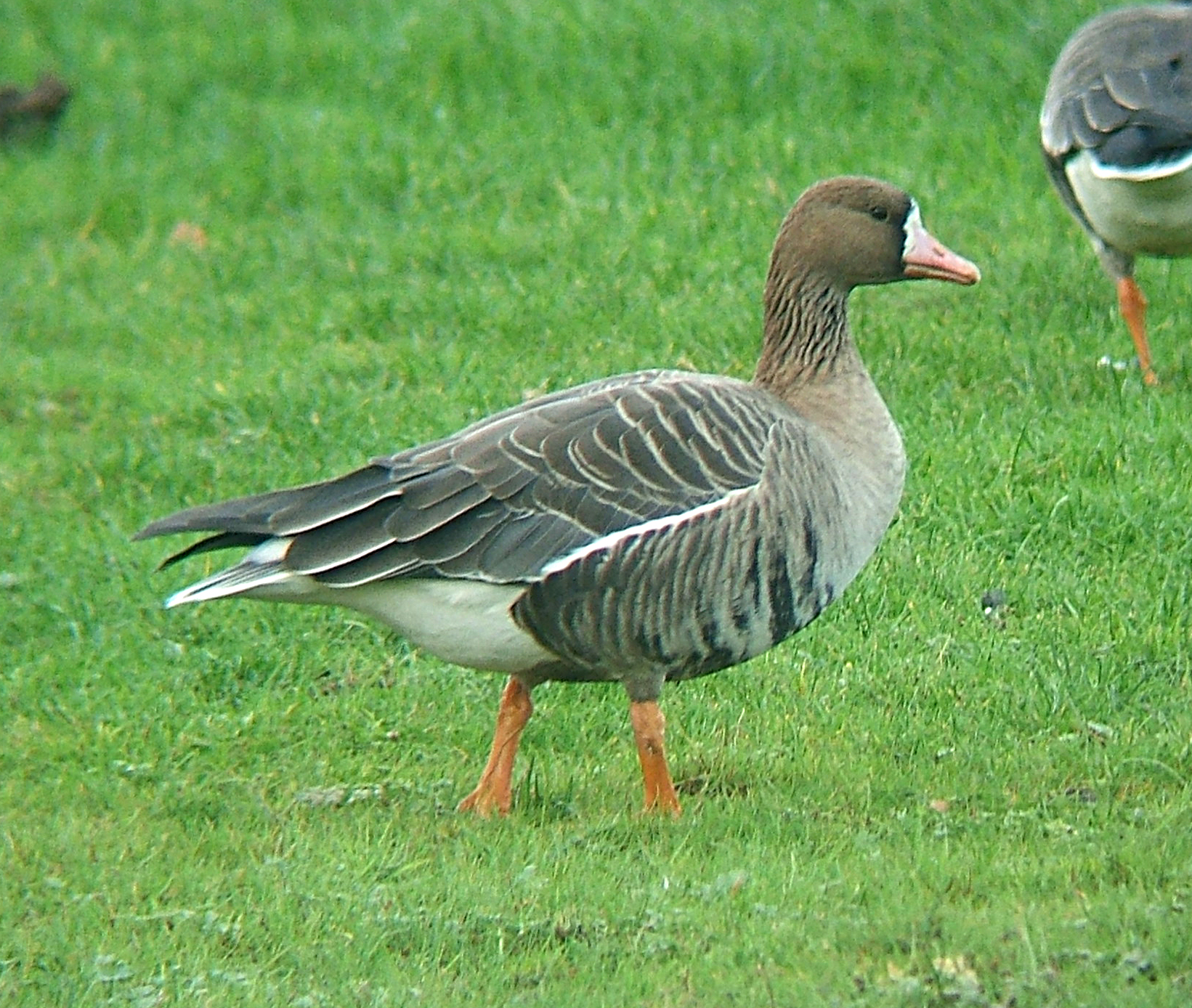
Grey-brown goose with a white patch at the base of the bill and black bars across the belly in adults. Orange legs.
Habitat
In winter, open lowland plains rich in crops, near lakes used for roosting.
Distribution
Winters in very large numbers on the plains, especially in the south-east; in smaller numbers in the Western Plain.
Approximate range in Romania
When it is active
Morning · Daytime · Evening
Diet
In winter, mainly plant material from farmland crops.
Behaviour
Highly social; feeds in large flocks and flies between fields and roosting lakes.
Seasonality in Romania
Does not breed in Romania; present only in winter. Arrives from October and returns to the breeding grounds in March.
- JanPresent
- FebPresent
- MarPresent
- AprUnknown
- MayUnknown
- JunUnknown
- JulUnknown
- AugUnknown
- SepUnknown
- OctPresent
- NovPresent
- DecPresent
Source-verified months inform the seasonal filters. Local timing can vary. Unconfirmed months do not imply absence. * Event timing retained from the earlier entry, not yet source-verified.
Breeding
Breeds in the tundra; does not breed in Romania.
How to find it
Open farmland in Dobrogea and the south-eastern plains between October and March.
Photography
General guidance based on the species’ behaviour, not a report of Nick’s personal field experience.
- Difficulty
- Moderate
- Behaviour to anticipate
- Morning departures from roosting lakes are often the most dramatic moments.
- Starting shutter speed
- 1/2000 sec or faster for flocks in flight.
- Fieldcraft
- Watch from a distance with a long lens; flocks flush easily on open fields.
- Ethics
- Do not walk towards feeding flocks. Wintering geese need undisturbed feeding time.
Practical starting points, not fixed rules.