Birds
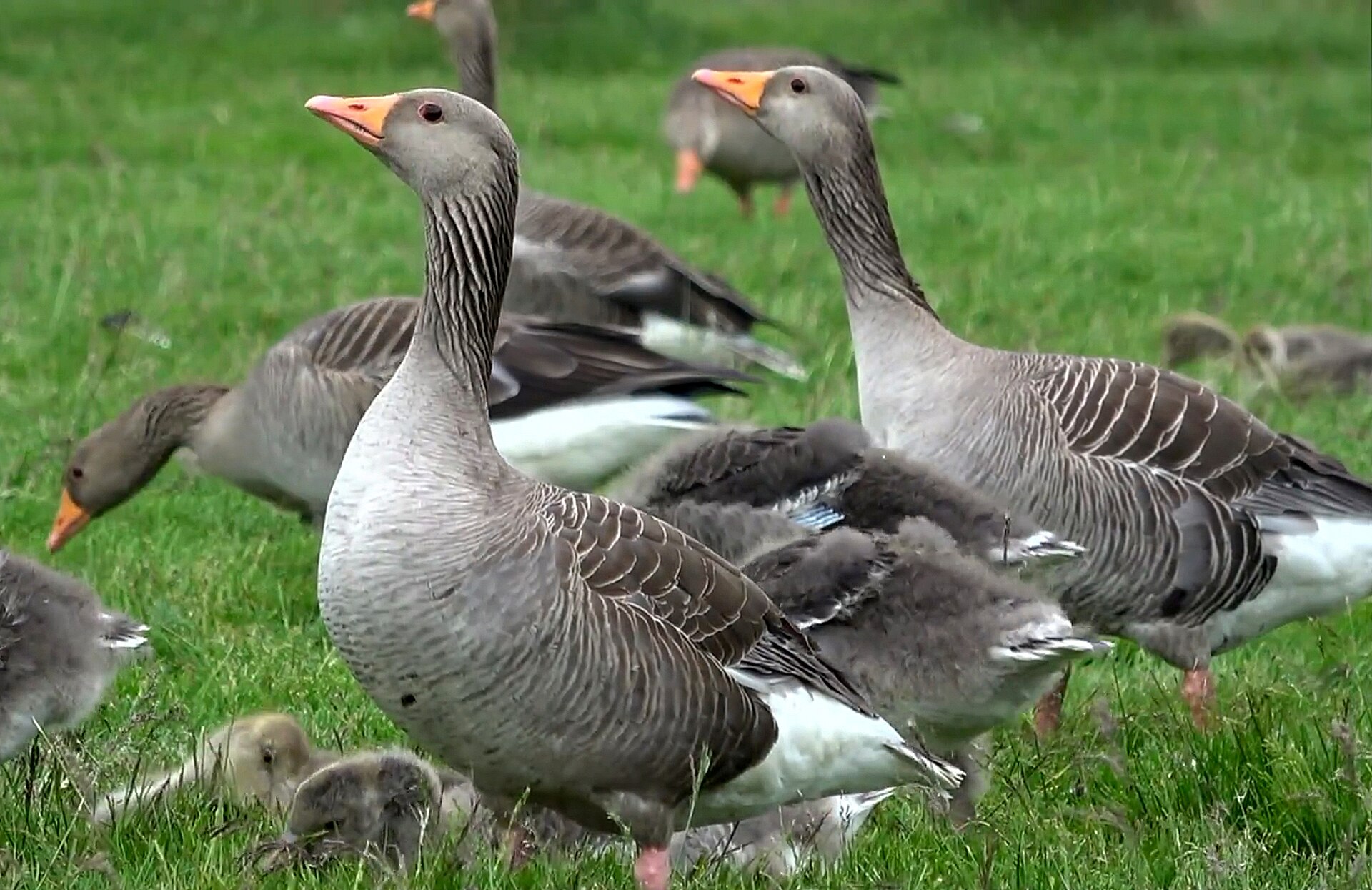
Greylag Goose
Anser anser · Gâscă de vară
The wild ancestor of the farmyard goose, breeding in the large wetlands of the Romanian lowlands.
At a glance
- Status in Romania
- Resident
- Habitat
- Wetland / Meadow
- Activity
- Morning · Daytime · Evening
- Diet
- Herbivorous: grasses, shoots, roots and other plant material, including crops on farmland.
- Conservation status
- Least Concern (IUCN)
- Photography difficulty
- Moderate
Identification
Large, heavy grey-brown goose with a thick orange bill and pink legs. Pale grey forewing visible in flight.
Habitat
Breeds in extensive wetlands along the large lowland rivers, at highest density in the Danube Delta and lagoon system. In winter it uses lowland farmland, especially winter crops.
Distribution
Mainly the Danube Delta, the lagoon system and wetlands along large lowland rivers.
Approximate range in Romania
When it is active
Morning · Daytime · Evening
Diet
Herbivorous: grasses, shoots, roots and other plant material, including crops on farmland.
Behaviour
Gathers in flocks after breeding for moulting and over winter.
Seasonality in Romania
Breeds in Romania and is present all year. Dispersed in the breeding season; from summer it gathers in larger groups for raising young and moulting, and later for wintering.
- JanPresent
- FebPresent
- MarPresent
- AprPresent
- MayPresent
- JunPresent
- JulPresent
- AugPresent
- SepPresent
- OctPresent
- NovPresent
- DecPresent
Source-verified months inform the seasonal filters. Local timing can vary. Unconfirmed months do not imply absence. * Event timing retained from the earlier entry, not yet source-verified.
Breeding
Breeding begins in late March or early April. The female usually lays 4–6 eggs and incubates alone while the male guards the area.
How to find it
Wetlands of the Danube Delta and lower Danube; flocks on farmland in winter.
Photography
General guidance based on the species’ behaviour, not a report of Nick’s personal field experience.
- Difficulty
- Moderate
- Behaviour to anticipate
- Flocks lifting off fields at dawn and returning to roost at dusk.
- Starting shutter speed
- 1/2000 sec or faster for flocks in flight.
- Fieldcraft
- Geese are wary in open country; use a vehicle or natural cover and stay put.
- Ethics
- Never flush feeding or roosting flocks; disturbance costs them energy in winter.
Practical starting points, not fixed rules.