Mammals
Hazel Dormouse
Muscardinus avellanarius · Pârș de alun
A tiny golden-orange dormouse of hazel thickets, nocturnal and hibernating half the year.
At a glance
- Status in Romania
- Resident
- Habitat
- Forest
- Activity
- Night
- Diet
- Mainly plant food — seeds, fruit and buds of trees and shrubs; occasionally insects and larvae.
- Conservation status
- Least Concern (IUCN)
- Photography difficulty
- Difficult
Photography Guide
Practical starting points based on the species’ behaviour and habitat, not fixed rules.
- Where and how to look
- Very hard to see; signs include hazelnuts opened with a neat round hole.
- Best time / activity
- Night
- Photography difficulty
- Difficult
- Ethics
- Do not dig at, block or stand on burrows and nests, never bait, and avoid handling nest boxes.
Identification
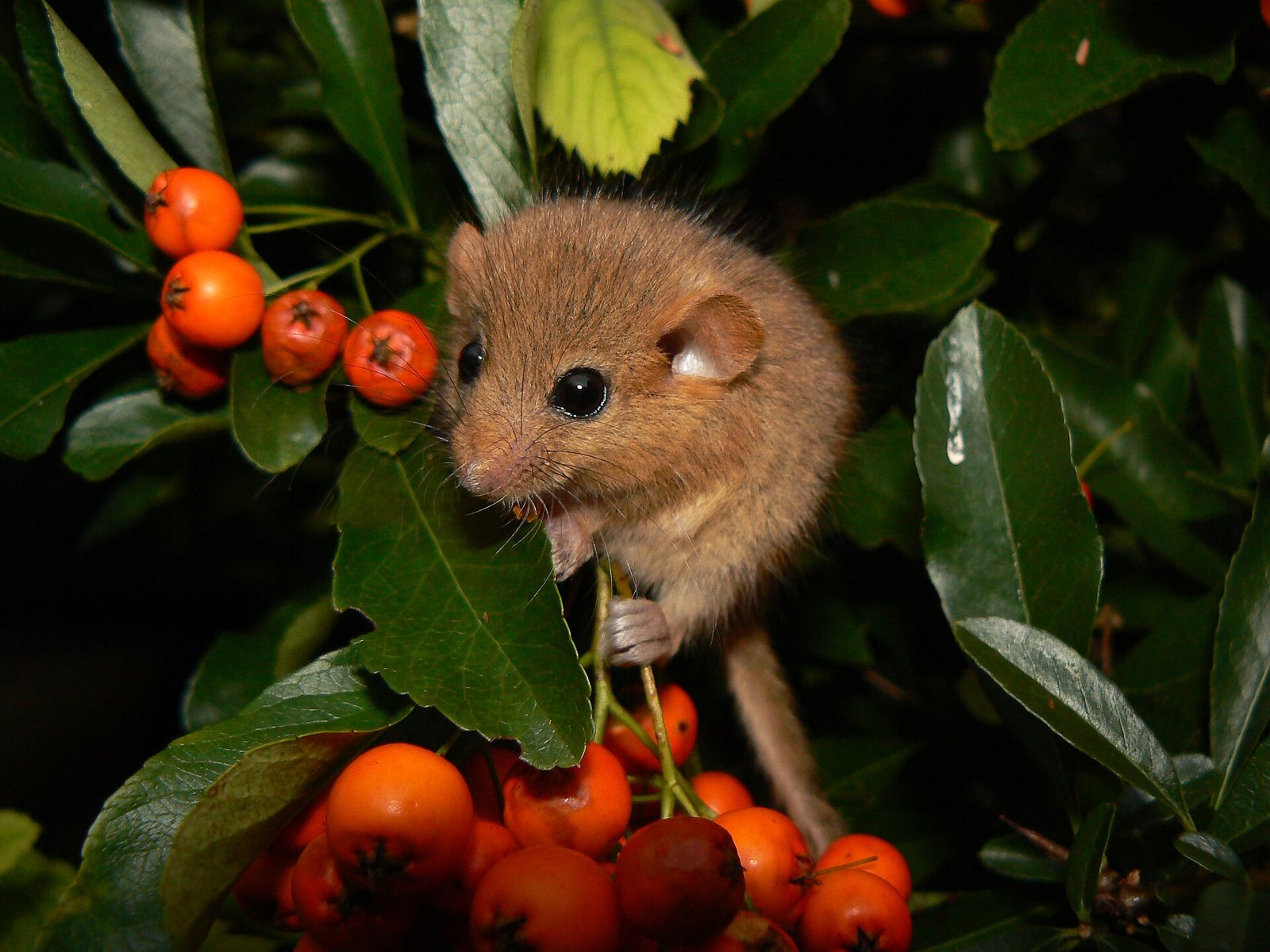
Small rodent, slightly smaller than a wood mouse. Dense chestnut-red to orange fur above, yellowish below with a white throat patch; evenly furred tail and rounded ears, no dark face stripes.
Habitat
Deciduous woods (oak, beech) with hazel, from the lowlands up to 1,500–1,800 m; also clearings, forest edges, scrub, abandoned gardens and old orchards connected to woodland. Builds spherical nests in shrubs 0.3–2 m above ground.
Distribution
Common and widespread in almost all deciduous woods with hazel; absent from poplar and locust plantations and from the gallery forests of the Danube floodplain and Delta.
Approximate range in Romania
Diet
Mainly plant food — seeds, fruit and buds of trees and shrubs; occasionally insects and larvae.
Behaviour
Nocturnal. Hibernates from November to April in tightly woven nests on the ground.
Seasonality in Romania
Monthly presence has not yet been source-verified.
Breeding
One or two litters a year of usually 4–6 young, born between early June and late September.