Birds
Little Grebe
Tachybaptus ruficollis · Corcodel mic
The smallest European grebe, a round little diver of ponds and marshes.
At a glance
- Status in Romania
- Resident
- Habitat
- Wetland
- Activity
- Morning · Daytime
- Diet
- Aquatic insects and larvae, amphibians, molluscs and small fish.
- Conservation status
- Least Concern (IUCN)
- Photography difficulty
- Moderate
Identification
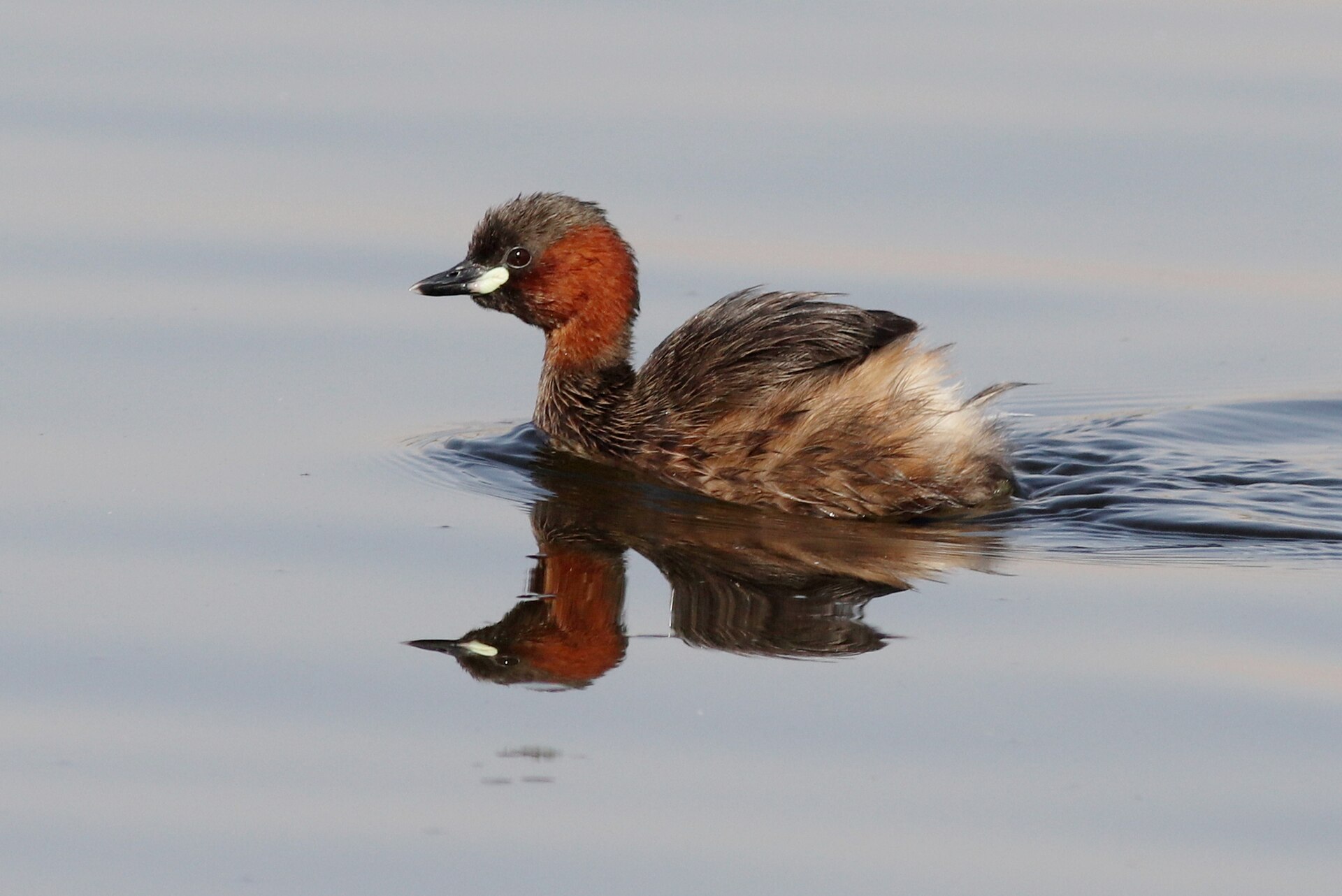
Small and round-bodied with a fluffy rear. In breeding plumage it has chestnut cheeks and neck and a pale spot at the base of the bill; plainer brown in winter.
Habitat
Natural wetlands with rich vegetation: ponds, marshes and lake edges. In winter, groups gather on water that stays open.
Distribution
Breeds in hill and lowland areas across the whole country.
Approximate range in Romania
When it is active
Morning · Daytime
Diet
Aquatic insects and larvae, amphibians, molluscs and small fish.
Behaviour
Dives frequently and often disappears into vegetation. Has a loud trilling call.
Seasonality in Romania
Breeds in Romania and is resident. In winter it gathers in large numbers on water that does not freeze.
- JanPresent
- FebPresent
- MarPresent
- AprPresent
- MayPresent
- JunPresent
- JulPresent
- AugPresent
- SepPresent
- OctPresent
- NovPresent
- DecPresent
Source-verified months inform the seasonal filters. Local timing can vary. Unconfirmed months do not imply absence. * Event timing retained from the earlier entry, not yet source-verified.
Breeding
Breeding begins in April. The female usually lays 3–5 eggs; incubation lasts 20–25 days.
How to find it
Listen for its trill from vegetated ponds in spring; easier to see on open water in winter.
Photography
General guidance based on the species’ behaviour, not a report of Nick’s personal field experience.
- Difficulty
- Moderate
- Behaviour to anticipate
- It dives repeatedly; note where it surfaces and pre-focus on that area.
- Starting shutter speed
- Around 1/1000 sec; faster for wing-flapping or chases.
- Fieldcraft
- A low position at the water's edge, still and concealed.
- Ethics
- Keep well away from nests and colonies, never use playback, and leave if the birds change behaviour because of you.
Practical starting points, not fixed rules.