Birds
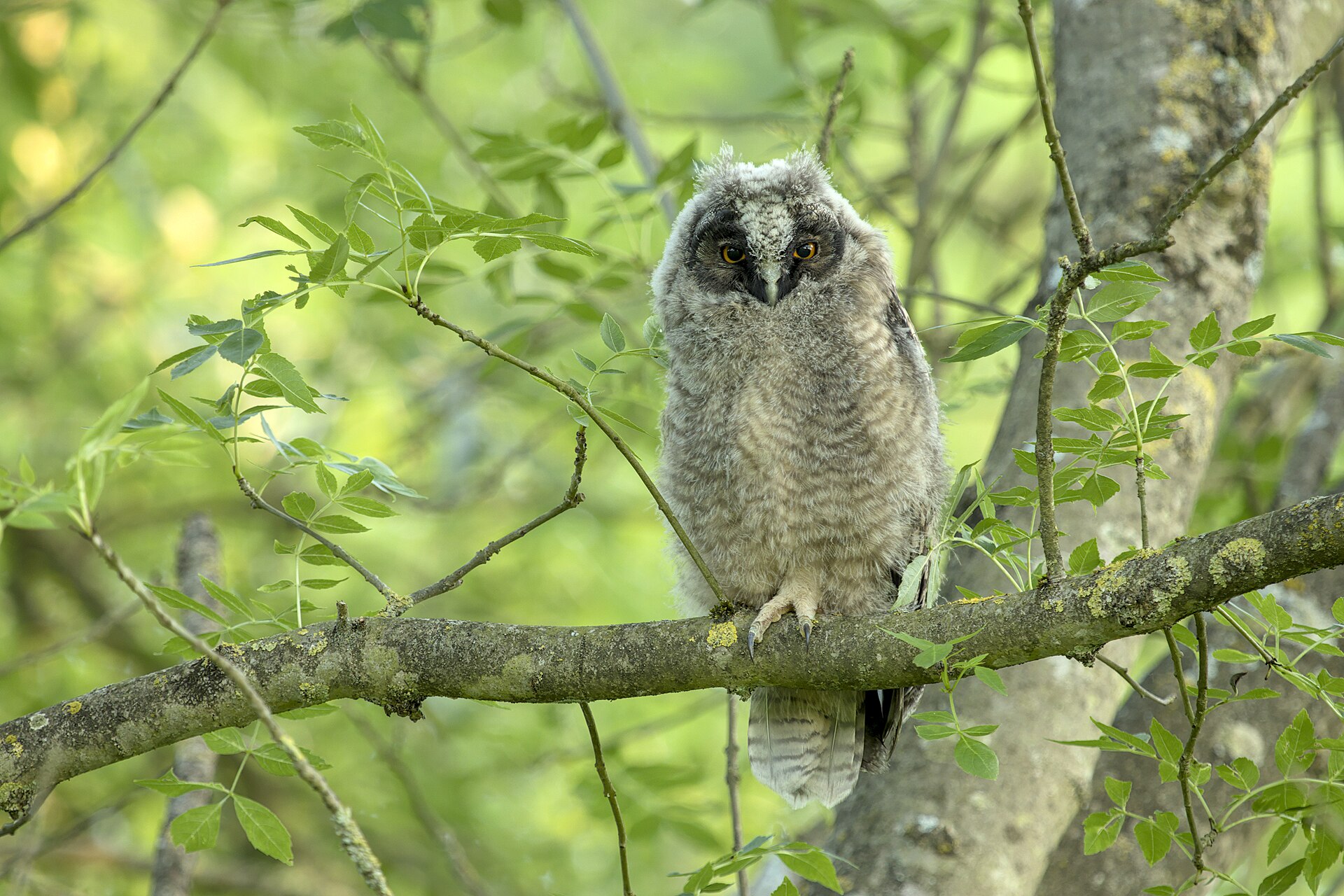
Long-eared Owl
Asio otus · Ciuf de pădure
A slim owl with long ear tufts and orange eyes, known for gathering in communal winter roosts.
At a glance
- Status in Romania
- Resident
- Habitat
- Forest / Urban / Meadow
- Activity
- Night · Evening
- Diet
- Mainly small mammals, especially voles.
- Conservation status
- Least Concern (IUCN)
- Photography difficulty
- Moderate
Identification
Medium-sized, slim owl with long ear tufts, orange eyes and streaked buff-brown plumage.
Habitat
Woodland edges, tree lines and copses near open land; also parks and trees in towns.
Approximate range in Romania
When it is active
Night · Evening
Diet
Mainly small mammals, especially voles.
Behaviour
In winter several birds may roost together in dense trees, including in towns.
Seasonality in Romania
A resident species in Romania.
- JanPresent
- FebPresent
- MarPresent
- AprPresent
- MayPresent
- JunPresent
- JulPresent
- AugPresent
- SepPresent
- OctPresent
- NovPresent
- DecPresent
Source-verified months inform the seasonal filters. Local timing can vary. Unconfirmed months do not imply absence. * Event timing retained from the earlier entry, not yet source-verified.
How to find it
Winter roosts in dense trees or conifers in parks, cemeteries and villages.
Photography
General guidance based on the species’ behaviour, not a report of Nick’s personal field experience.
- Difficulty
- Moderate
- Fieldcraft
- Photograph roosting birds from a distance with a long lens and keep the visit short.
- Ethics
- Never use playback or flash at roosts or nests, keep visits short, and do not share roost locations.
Practical starting points, not fixed rules.