Birds
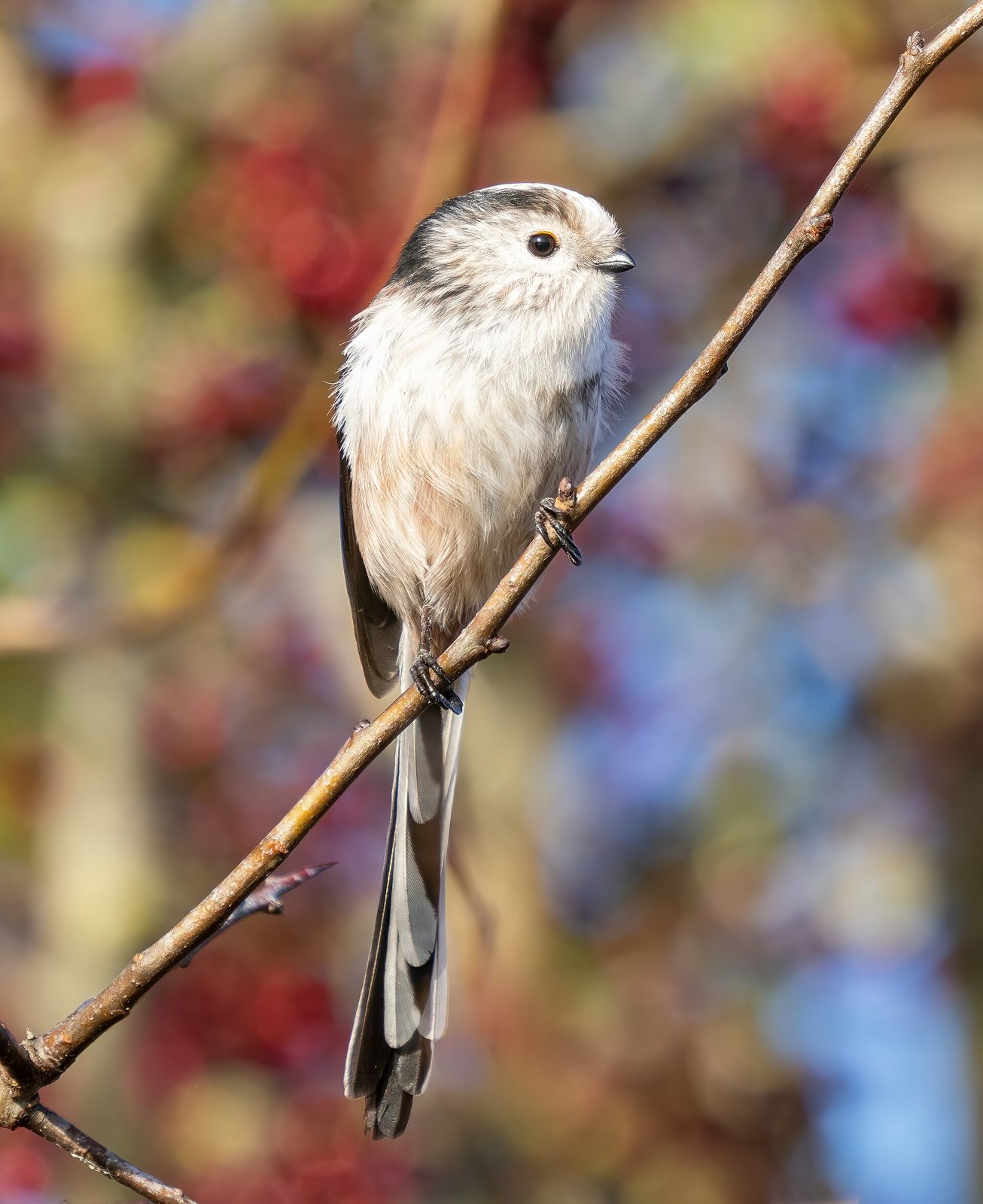
Long-tailed Tit
Aegithalos caudatus · Pițigoi codat
A tiny, round bird with a very long tail that moves through trees in chattering groups.
At a glance
- Status in Romania
- Resident
- Habitat
- Forest / Wetland
- Activity
- Morning · Daytime
- Diet
- Mainly small invertebrates; also seeds, buds or tree sap. Forages in the canopy and shrubs.
- Conservation status
- Least Concern (IUCN)
- Photography difficulty
- Moderate
Photography Guide
Practical starting points based on the species’ behaviour and habitat, not fixed rules.
- Where and how to look
- Riverside woods and hedges; listen for thin, trilling contact calls.
- Best time / activity
- Morning · Daytime
- Photography difficulty
- Moderate
- Starting shutter speed
- 1/1000–1/2000 sec — the flock never stops moving.
- Fieldcraft
- Wait at the edge of the flock's route rather than chasing it.
- Ethics
- Keep away from nests, do not use playback in the breeding season, and let the bird decide how close it comes.
Identification
Tiny pink, black and white bird with a stubby bill and a tail longer than its body. Birds in eastern Europe often have an all-white head.
Habitat
Woodland with a well-developed shrub layer: deciduous and mixed forest, especially riverside woods and forest edges.
Distribution
Evenly distributed across Romania.
Approximate range in Romania
Diet
Mainly small invertebrates; also seeds, buds or tree sap. Forages in the canopy and shrubs.
Behaviour
Moves in small, restless flocks outside the breeding season.
Seasonality in Romania
Breeds in Romania and is resident throughout its range.
- JanPresent
- FebPresent
- MarPresent
- AprPresent
- MayPresent
- JunPresent
- JulPresent
- AugPresent
- SepPresent
- OctPresent
- NovPresent
- DecPresent
Source-verified months inform the seasonal filters. Local timing can vary. Unconfirmed months do not imply absence. * Event timing retained from the earlier entry, not yet source-verified.
Breeding
Breeds from mid-March to June; 6–15 eggs incubated by the female.