Mammals
Marbled Polecat
Vormela peregusna · Dihor pătat
A strikingly marbled steppe mustelid, found in Romania only in Dobrogea.
At a glance
- Status in Romania
- Resident
- Habitat
- Meadow
- Activity
- Evening · Night
- Diet
- Small rodents, birds and reptiles; insects when necessary.
- Conservation status
- Vulnerable (IUCN)
- Photography difficulty
- Difficult
Photography Guide
Practical starting points based on the species’ behaviour and habitat, not fixed rules.
- Where and how to look
- Not a species to look for deliberately; encounters in Dobrogea steppe are rare.
- Best time / activity
- Evening · Night
- Photography difficulty
- Difficult
- Ethics
- Never wait at dens or resting sites, never bait, and keep any encounter short — these animals are easily disturbed. Do not publish locations of this rare species.
Identification
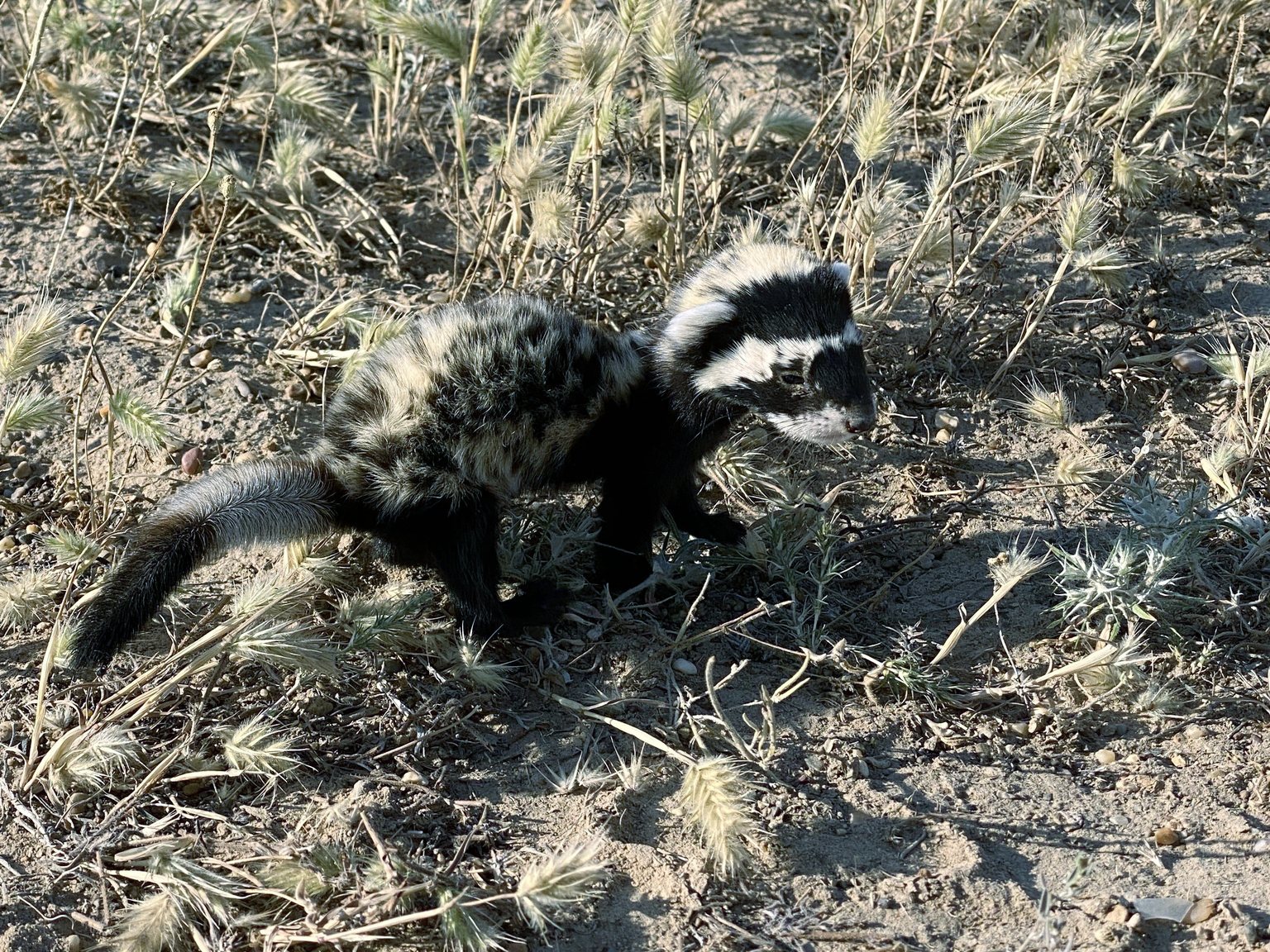
Very slender, agile mustelid with a pointed muzzle, marbled yellow-and-brown back, black underparts and a black-and-white face mask.
Habitat
In Romania a typical steppe species, preferring land with ground squirrels and more regular in rocky areas; also open plains and lowland woods.
Distribution
Only in Dobrogea, fragmented into small populations in the far south and north of Constanța county and in the north, south-west and east of Tulcea county.
Approximate range in Romania
Diet
Small rodents, birds and reptiles; insects when necessary.
Behaviour
Rare and declining with the loss of steppe habitats.
Seasonality in Romania
Monthly presence has not yet been source-verified.
Breeding
Mates in January–February; 4–6 young born in March to mid-May.