Birds
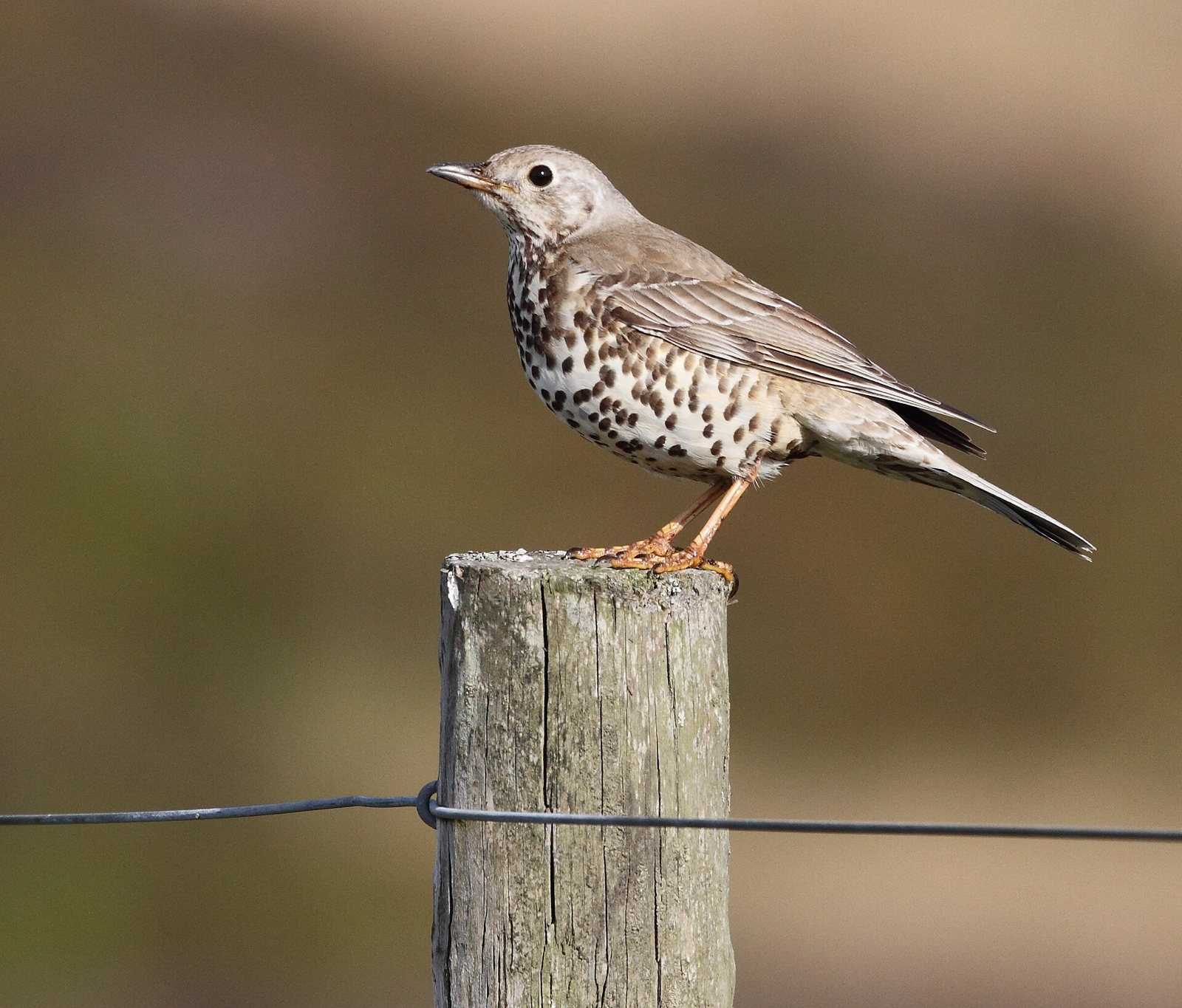
Mistle Thrush
Turdus viscivorus · Sturz de vâsc
A large, pale, upright thrush of mature forest edges and mountain clearings.
At a glance
- Status in Romania
- Resident
- Habitat
- Forest / Mountain
- Activity
- Morning · Daytime
- Diet
- Mainly invertebrates, rarely other birds' chicks; fruit and seeds in the cold season.
- Conservation status
- Least Concern (IUCN)
- Photography difficulty
- Moderate
Photography Guide
Practical starting points based on the species’ behaviour and habitat, not fixed rules.
- Where and how to look
- Mountain pastures and forest edges; in winter, fruiting trees and mistletoe.
- Best time / activity
- Morning · Daytime
- Photography difficulty
- Moderate
- Ethics
- Keep away from nests, do not use playback in the breeding season, and let the bird decide how close it comes.
Identification
Large greyish-brown thrush with bold round spots on a pale breast and white corners to the tail.
Habitat
Breeds in mature deciduous, mixed and conifer forest at middle and high altitudes, where there are clearings, open stands or forest edges.
Distribution
Mountain and submontane areas and parts of the Transylvanian plateau; in winter almost nationwide.
Approximate range in Romania
Diet
Mainly invertebrates, rarely other birds' chicks; fruit and seeds in the cold season.
Behaviour
In winter it is often seen in towns.
Seasonality in Romania
Resident in Romania, with birds from northern populations arriving in the cold season. In winter it can be seen across almost the whole country and often in towns.
- JanPresent
- FebPresent
- MarPresent
- AprPresent
- MayPresent
- JunPresent
- JulPresent
- AugPresent
- SepPresent
- OctPresent
- NovPresent
- DecPresent
Source-verified months inform the seasonal filters. Local timing can vary. Unconfirmed months do not imply absence. * Event timing retained from the earlier entry, not yet source-verified.
Breeding
Breeding usually begins in late March; may lay two clutches a year of 2–5 eggs.