Birds
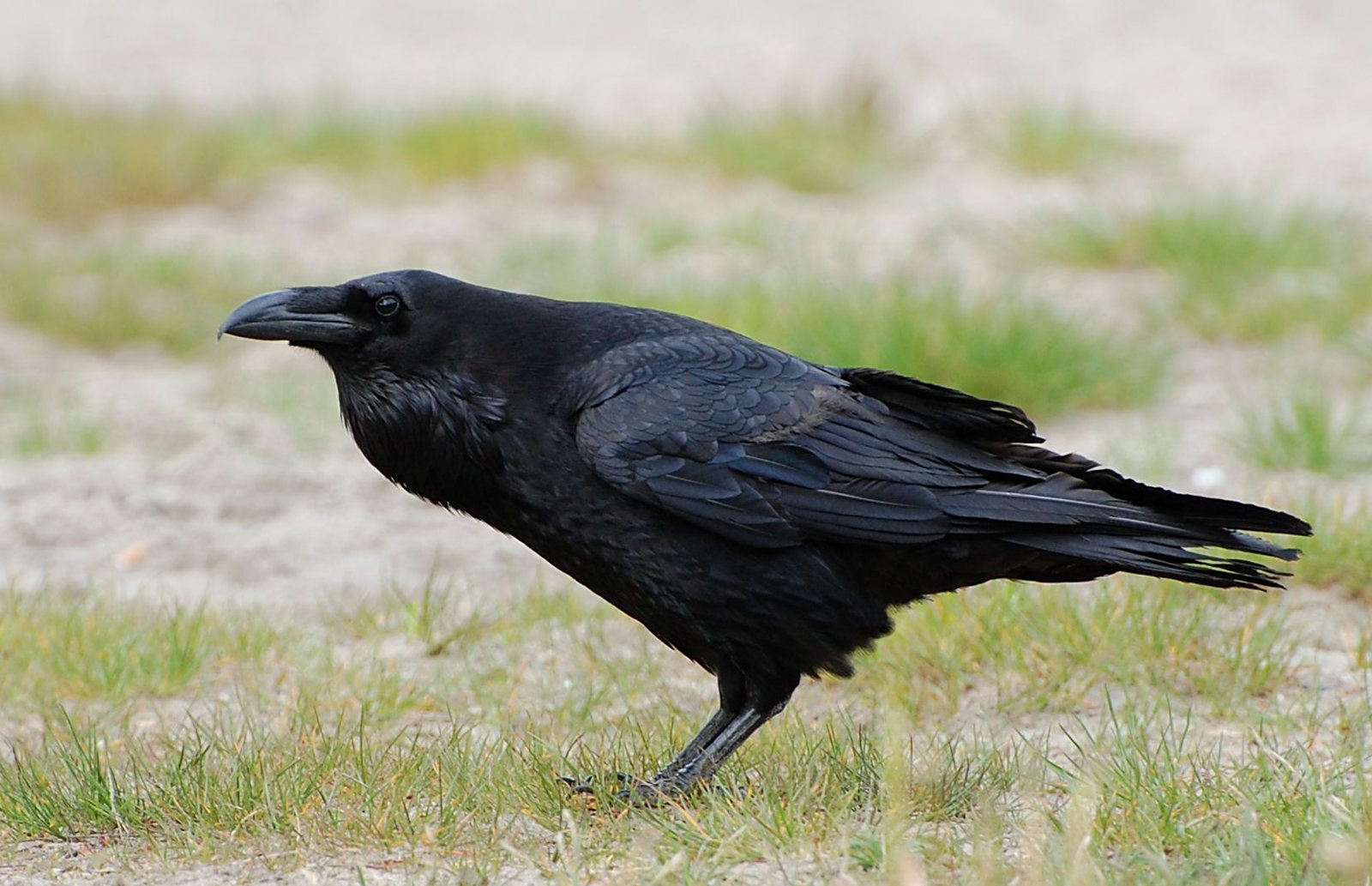
Northern Raven
Corvus corax · Corb
The largest crow, a powerful bird of forests and mountains.
At a glance
- Status in Romania
- Resident
- Habitat
- Forest / Mountain
- Activity
- Morning · Daytime
- Diet
- Omnivorous and opportunistic, mainly animal food: invertebrates, birds and eggs, mammals and reptiles; frequently at carrion.
- Conservation status
- Least Concern (IUCN)
- Photography difficulty
- Moderate
Photography Guide
Practical starting points based on the species’ behaviour and habitat, not fixed rules.
- Where and how to look
- Mountain ridges and forest edges; listen for the deep croak.
- Best time / activity
- Morning · Daytime
- Photography difficulty
- Moderate
- Ethics
- Keep away from nests, do not use playback in the breeding season, and let the bird decide how close it comes.
Identification
Very large all-black crow with a heavy bill, shaggy throat and wedge-shaped tail.
Habitat
Uses a very wide range of habitats globally, but in Romania it is mainly a forest bird.
Distribution
Across almost all of Romania; absent from the agricultural lowlands of the south-east.
Approximate range in Romania
Diet
Omnivorous and opportunistic, mainly animal food: invertebrates, birds and eggs, mammals and reptiles; frequently at carrion.
Behaviour
Pairs perform tumbling display flights; deep croaking call.
Seasonality in Romania
Breeds in Romania and is resident.
- JanPresent
- FebPresent
- MarPresent
- AprPresent
- MayPresent
- JunPresent
- JulPresent
- AugPresent
- SepPresent
- OctPresent
- NovPresent
- DecPresent
Source-verified months inform the seasonal filters. Local timing can vary. Unconfirmed months do not imply absence. * Event timing retained from the earlier entry, not yet source-verified.
Breeding
Nests very early, from February; usually 4–6 eggs, incubated mostly by the female.