Birds
Northern Wheatear
Oenanthe oenanthe · Pietrar sur
A ground-dwelling chat of open stony country, with a white rump flashing in flight.
At a glance
- Status in Romania
- Summer visitor
- Habitat
- Meadow / Mountain
- Activity
- Morning · Daytime
- Diet
- Mainly insects — beetles, butterflies and moths, bees and wasps, grasshoppers — plus spiders, worms and small snails.
- Conservation status
- Least Concern (IUCN)
- Photography difficulty
- Moderate
Photography Guide
Practical starting points based on the species’ behaviour and habitat, not fixed rules.
- Where and how to look
- Stony pastures and mountain grassland from April.
- Best time / activity
- Morning · Daytime
- Photography difficulty
- Moderate
- Fieldcraft
- Wheatears return to favourite stones; stay low and wait nearby.
- Ethics
- Ground-nesting bird: stay on tracks and field edges in the breeding season and never search grass for nests.
Identification
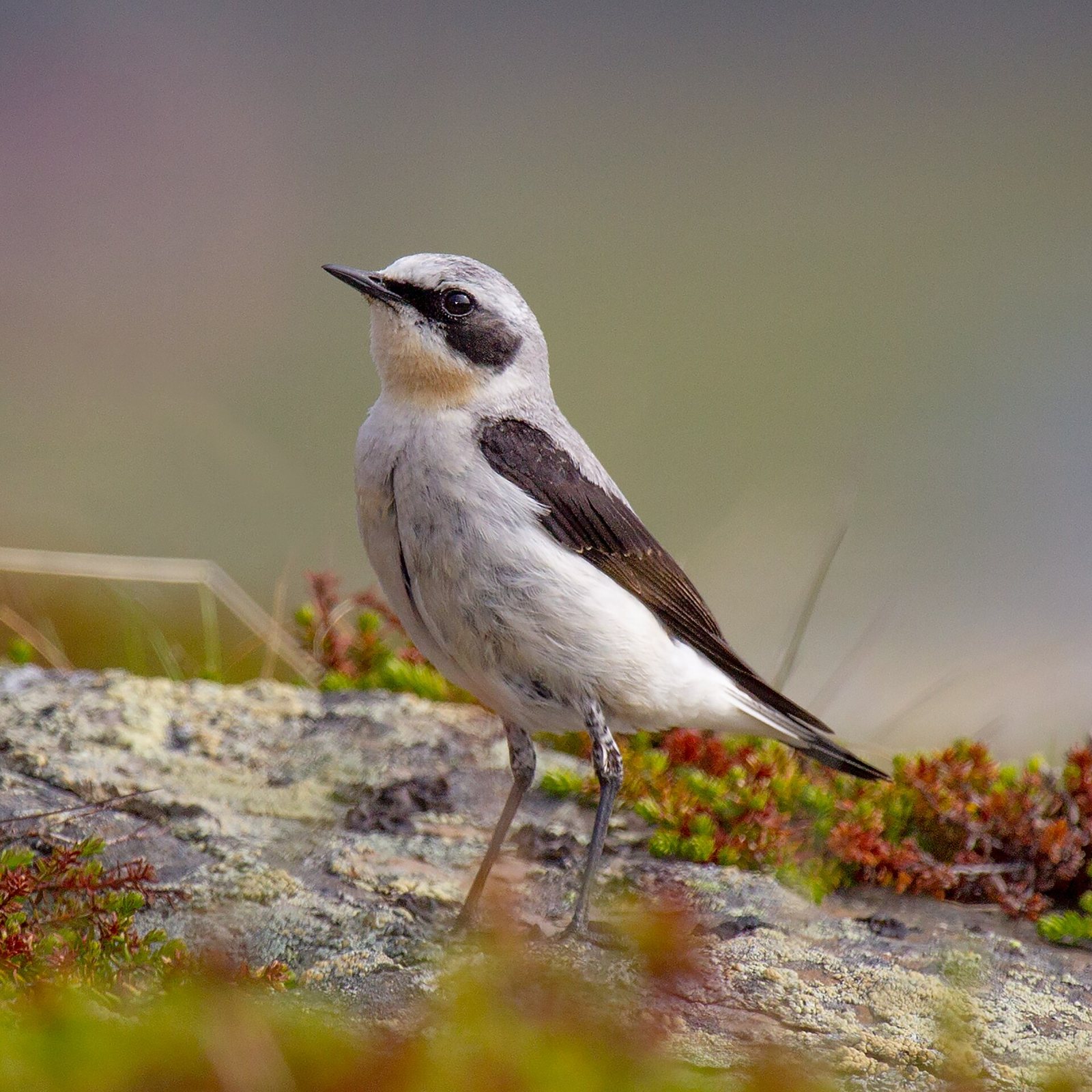
The male has a grey back, black mask and wings, and buff breast; both sexes show a white rump and black 'T' on the tail.
Habitat
Open, stony areas with grassland and pasture, often uncultivated land, coastal grassland and farms with stone walls.
Distribution
Breeds across almost all of Romania where suitable habitat exists; avoids only wooded areas.
Approximate range in Romania
Diet
Mainly insects — beetles, butterflies and moths, bees and wasps, grasshoppers — plus spiders, worms and small snails.
Behaviour
Perches on stones and earth mounds, bobbing and flicking its tail.
Seasonality in Romania
Breeds in Romania and is migratory. Usually arrives in late March–early April and leaves for the wintering grounds in September.
- JanUnknown
- FebUnknown
- MarUnknown
- AprPresent
- MayPresent
- JunPresent
- JulPresent
- AugPresent
- SepPresent
- OctUnknown
- NovUnknown
- DecUnknown
Source-verified months inform the seasonal filters. Local timing can vary. Unconfirmed months do not imply absence. * Event timing retained from the earlier entry, not yet source-verified.