Birds
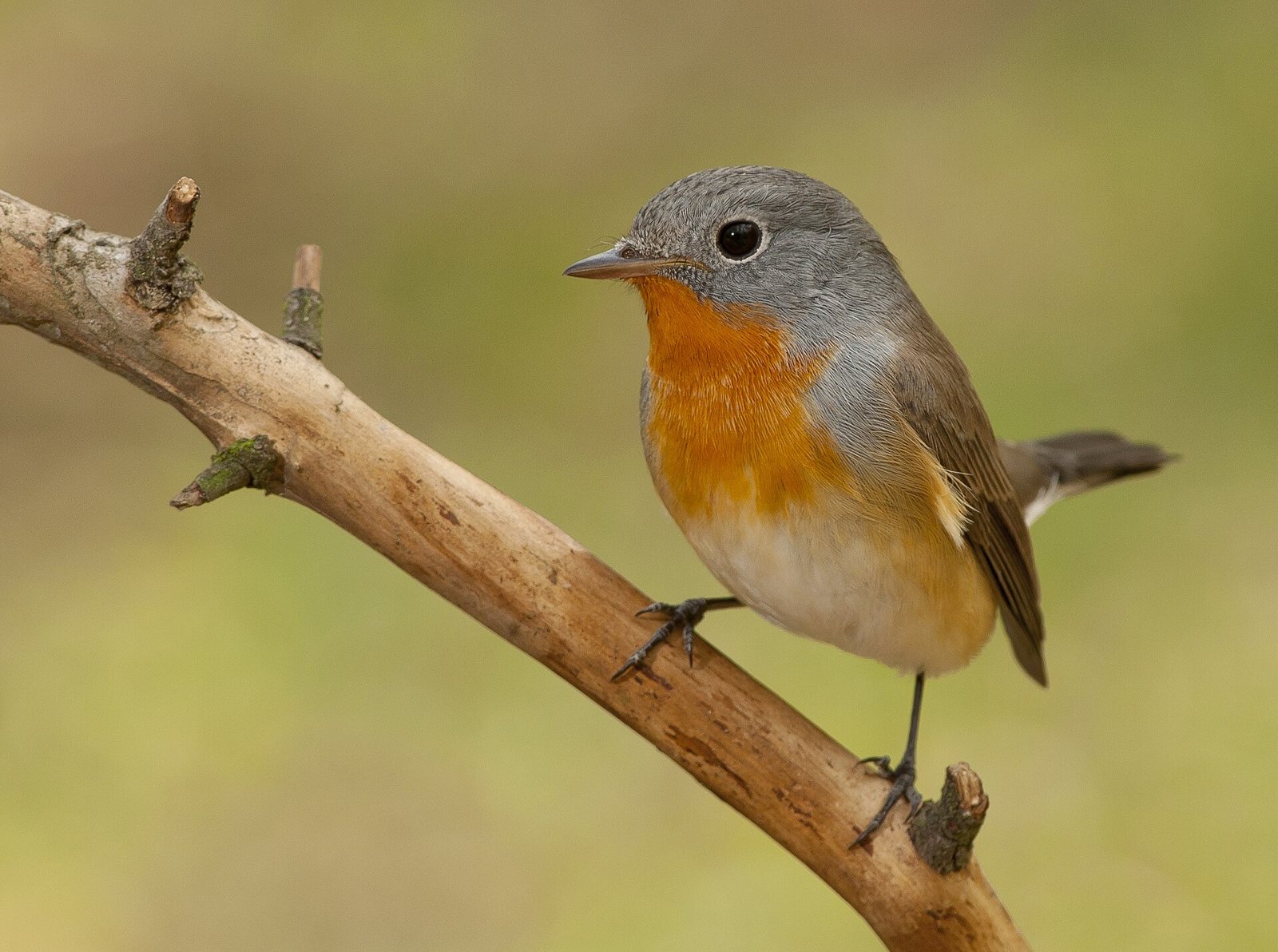
Red-breasted Flycatcher
Ficedula parva · Muscar mic
A small flycatcher of mature beech forest; the male has an orange-red throat.
At a glance
- Status in Romania
- Summer visitor
- Habitat
- Forest / Mountain
- Activity
- Morning · Daytime
- Diet
- Mainly insects caught in flight in the canopy or dense shrub layer; also spiders and snails.
- Conservation status
- Least Concern (IUCN)
- Photography difficulty
- Difficult
Photography Guide
Practical starting points based on the species’ behaviour and habitat, not fixed rules.
- Where and how to look
- Old beech woods along valleys in May; males sing from mid-canopy.
- Best time / activity
- Morning · Daytime
- Photography difficulty
- Difficult
- Ethics
- Keep away from nests, do not use playback in the breeding season, and let the bird decide how close it comes.
Identification
Tiny, robin-like flycatcher with white sides to the tail, often cocked; the adult male has an orange throat.
Habitat
Mature forest with a rich shrub layer, usually pure beech or beech with oak, along watercourses and valleys or with extensive clearings.
Distribution
Most low and middle mountain areas, the submontane and hill zones, and plateaus with extensive beech forest, including the Măcin Mountains.
Approximate range in Romania
Diet
Mainly insects caught in flight in the canopy or dense shrub layer; also spiders and snails.
Behaviour
Hunts in the canopy or dense shrub layer, catching insects in flight.
Seasonality in Romania
Breeds in Romania and is migratory. Arrives at the end of April and leaves the breeding areas in September–October; winters in southern Asia.
- JanUnknown
- FebUnknown
- MarUnknown
- AprPresent
- MayPresent
- JunPresent
- JulPresent
- AugPresent
- SepPresent
- OctUnknown
- NovUnknown
- DecUnknown
Source-verified months inform the seasonal filters. Local timing can vary. Unconfirmed months do not imply absence. * Event timing retained from the earlier entry, not yet source-verified.
Breeding
Breeds May–June; 4–7 eggs incubated by the female for 12–14 days.