Birds
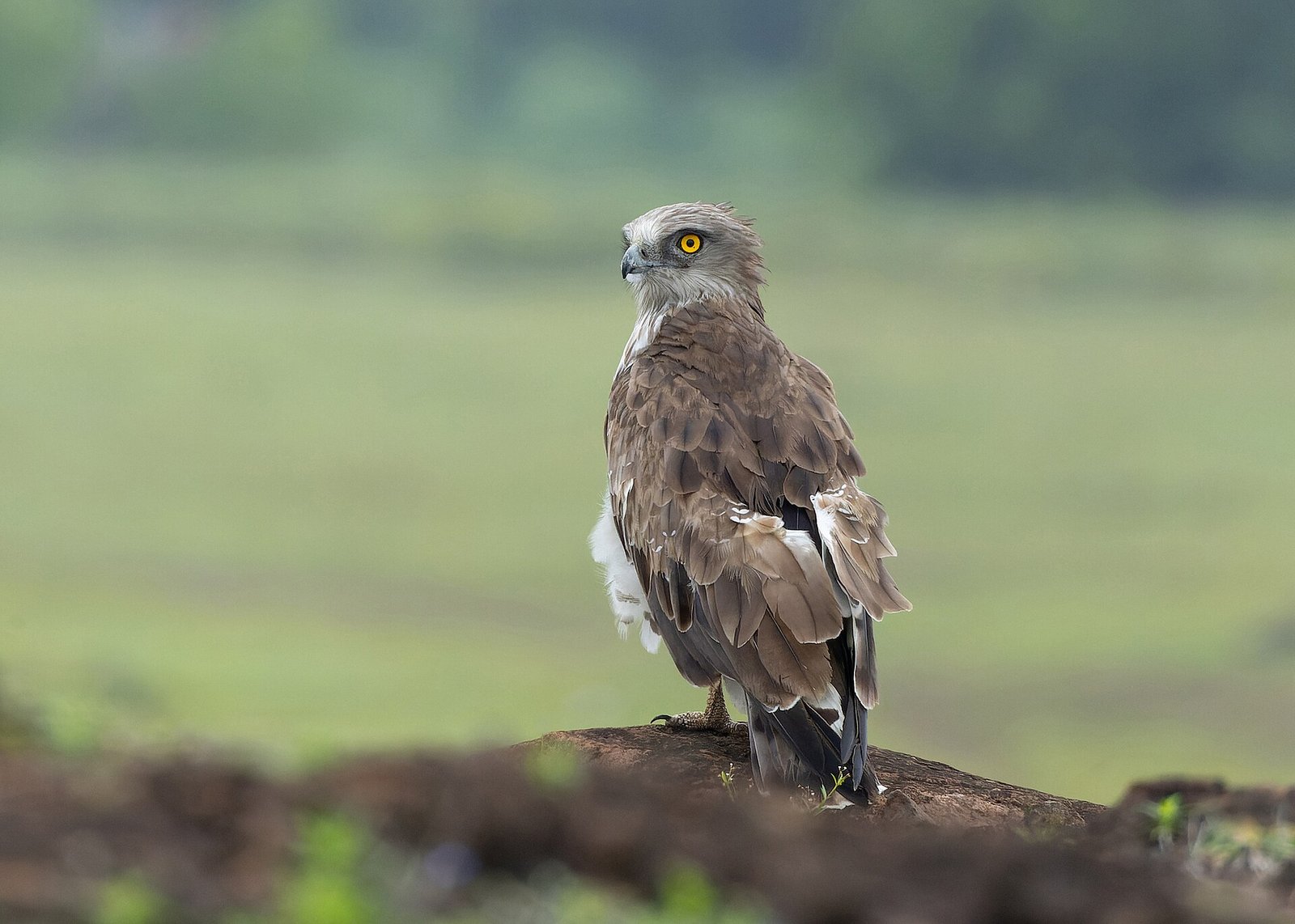
Short-toed Snake Eagle
Circaetus gallicus · Șerpar
A large, pale eagle that hunts snakes and lizards, breeding in the North Dobrogea Plateau.
At a glance
- Status in Romania
- Summer visitor
- Habitat
- Forest / Meadow
- Activity
- Daytime
- Diet
- Snakes, lizards, frogs and small mammals; more rarely birds or invertebrates.
- Conservation status
- Least Concern (IUCN)
- Photography difficulty
- Difficult
Photograph this species
- Best time / activity
- Daytime
- Photography difficulty
- Difficult
- Where to look
- In North Dobrogea, scan open slopes and steppe for a large pale eagle hovering high up.
Photography Guide
Practical starting points based on the species’ behaviour and habitat, not fixed rules.
- Where and how to look
- In North Dobrogea, scan open slopes and steppe for a large pale eagle hovering high up.
- Best time / activity
- Daytime
- Behaviour to anticipate
- Hovering in place over open ground before dropping on prey.
- Photography difficulty
- Difficult
- Starting shutter speed
- 1/2000 sec or faster.
- Fieldcraft
- Stay at a fixed viewpoint over open country rather than following the bird.
- Ethics
- Keep well away from nests and never disclose nest sites; watch from a distance and leave if the bird changes behaviour because of you.
Identification
62–69 cm long with a 162–178 cm wingspan. Variable plumage: brown back, head and breast, white belly spotted with brown, dark flight feathers and 3–4 dark bands on the tail. Sexes look alike; the female's tail is slightly longer.
Habitat
Nests in trees and much more rarely on cliffs; hunts over open ground.
Distribution
Breeds in the North Dobrogea Plateau; a conservation target in the ROSPA0091 Pădurea Babadag and ROSPA0100 Stepa Casimcea Natura 2000 sites.
Approximate range in Romania
Diet
Snakes, lizards, frogs and small mammals; more rarely birds or invertebrates.
Behaviour
Flies high and sometimes hovers in place while searching for prey. A quiet species that can live up to 17 years.
Seasonality in Romania
A migrant that winters in Africa and breeds in the North Dobrogea Plateau.
Monthly presence has not yet been source-verified.
Breeding
Builds a new nest of sticks lined with grass every year; both parents build it. The female incubates and is fed by the male throughout.