Birds
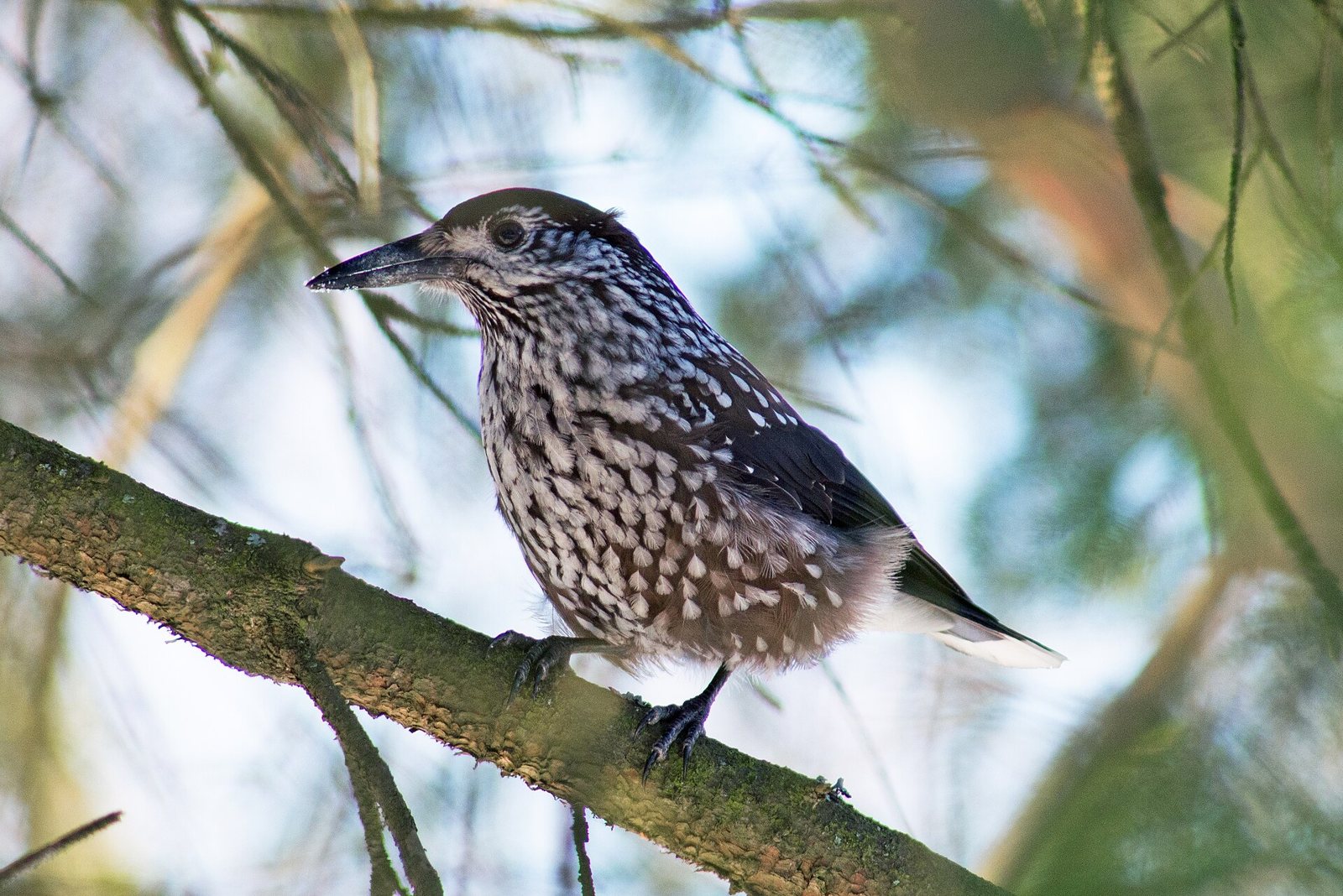
Spotted Nutcracker
Nucifraga caryocatactes · Alunar
A white-spotted mountain crow that stores seeds and nuts for winter.
At a glance
- Status in Romania
- Resident
- Habitat
- Forest / Mountain
- Activity
- Morning · Daytime
- Diet
- Omnivorous: invertebrates in the breeding season, exceptionally small rodents and birds; in winter, nuts and seeds cached in the ground in late summer and autumn.
- Conservation status
- Least Concern (IUCN)
- Photography difficulty
- Moderate
Photography Guide
Practical starting points based on the species’ behaviour and habitat, not fixed rules.
- Where and how to look
- Upper spruce forest and dwarf pine in late summer and autumn, when it is busy caching.
- Best time / activity
- Morning · Daytime
- Behaviour to anticipate
- Birds perched on spruce tops between caching flights.
- Photography difficulty
- Moderate
- Ethics
- Keep away from nests, do not use playback in the breeding season, and let the bird decide how close it comes.
Identification
Dark chocolate-brown crow densely spotted with white, with a dark cap and white under the tail.
Habitat
High-altitude conifer forest, rich in hazelnuts and seeds where it builds up stores for winter.
Distribution
Mountains, breeding in the spruce and dwarf-pine zone.
Approximate range in Romania
Diet
Omnivorous: invertebrates in the breeding season, exceptionally small rodents and birds; in winter, nuts and seeds cached in the ground in late summer and autumn.
Behaviour
Caches nuts and seeds in the ground in late summer and autumn and relies on them in winter; young stay with the adults for about three months after fledging.
Seasonality in Romania
Breeds in Romania and is resident.
- JanPresent
- FebPresent
- MarPresent
- AprPresent
- MayPresent
- JunPresent
- JulPresent
- AugPresent
- SepPresent
- OctPresent
- NovPresent
- DecPresent
Source-verified months inform the seasonal filters. Local timing can vary. Unconfirmed months do not imply absence. * Event timing retained from the earlier entry, not yet source-verified.
Breeding
Breeding starts early, from March; 2–5 eggs incubated by both parents for about 16–18 days.