Mammals
Steppe Polecat
Mustela eversmanii · Dihor de stepă
A pale polecat of steppe and dry plains, closely tied to ground squirrel colonies.
At a glance
- Status in Romania
- Resident
- Habitat
- Meadow
- Activity
- Evening · Night
- Diet
- Small mammals, especially ground squirrels and hamsters, plus voles and mice; often eggs and chicks of ground-nesting birds. Caches surplus prey.
- Conservation status
- Least Concern (IUCN)
- Photography difficulty
- Difficult
Photography Guide
Practical starting points based on the species’ behaviour and habitat, not fixed rules.
- Where and how to look
- Not a species to look for deliberately; encounters are rare and chance.
- Best time / activity
- Evening · Night
- Photography difficulty
- Difficult
- Ethics
- Never wait at dens or resting sites, never bait, and keep any encounter short — these animals are easily disturbed.
Identification
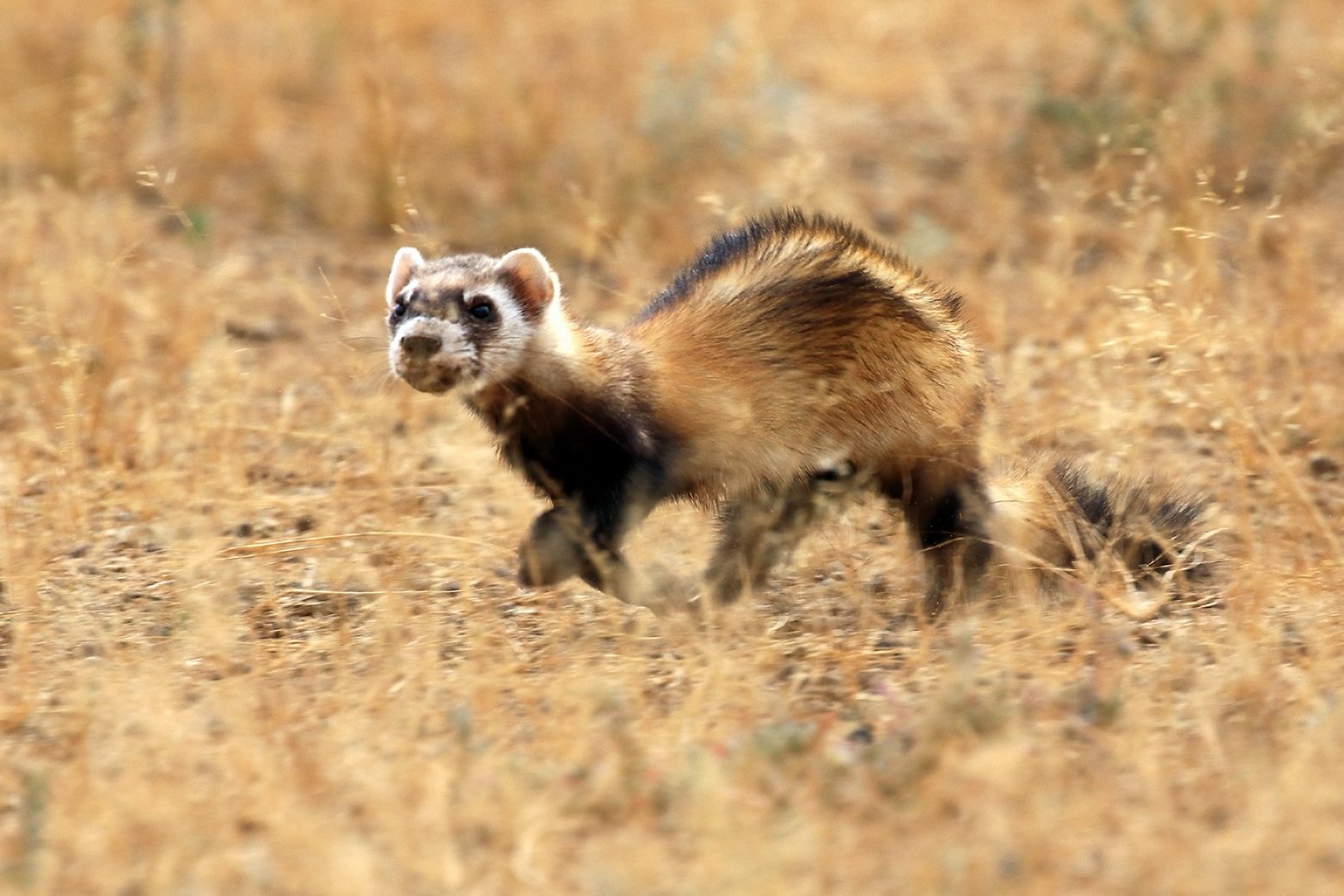
Pale, straw-coloured polecat with dark legs, chest and a dark mask; easily confused with the European Polecat.
Habitat
Steppe, arid plains and grassland; its presence usually depends on the European Ground Squirrel.
Distribution
Poorly known in Romania, largely because of confusion with the European Polecat; confirmed in Dobrogea, Muntenia and Oltenia.
Approximate range in Romania
Diet
Small mammals, especially ground squirrels and hamsters, plus voles and mice; often eggs and chicks of ground-nesting birds. Caches surplus prey.
Behaviour
Mates between February and May.