Birds
White-backed Woodpecker
Dendrocopos leucotos · Ciocănitoare cu spate alb
A large pied woodpecker of old beech forests with plenty of standing dead wood.
At a glance
- Status in Romania
- Resident
- Habitat
- Forest / Mountain
- Activity
- Morning · Daytime
- Diet
- Mainly insect larvae from under bark and inside wood, especially dead trees; also nuts, acorns, hazelnuts and wild cherries.
- Conservation status
- Least Concern (IUCN)
- Photography difficulty
- Difficult
Photography Guide
Practical starting points based on the species’ behaviour and habitat, not fixed rules.
- Where and how to look
- Old beech forests with fallen and standing dead trees.
- Best time / activity
- Morning · Daytime
- Behaviour to anticipate
- Woodpeckers usually work their way up a trunk; watch where the bird lands and wait for it to turn its head.
- Photography difficulty
- Difficult
- Starting shutter speed
- Around 1/1000 sec on the trunk; 1/2000 sec or faster when it flies off.
- Fieldcraft
- Follow drumming and calls, then stay still at a distance and let the bird come round the trunk into view.
- Ethics
- Never wait beside an occupied nest hole, never use playback, and move on if the birds stop feeding or start alarm-calling.
Identification
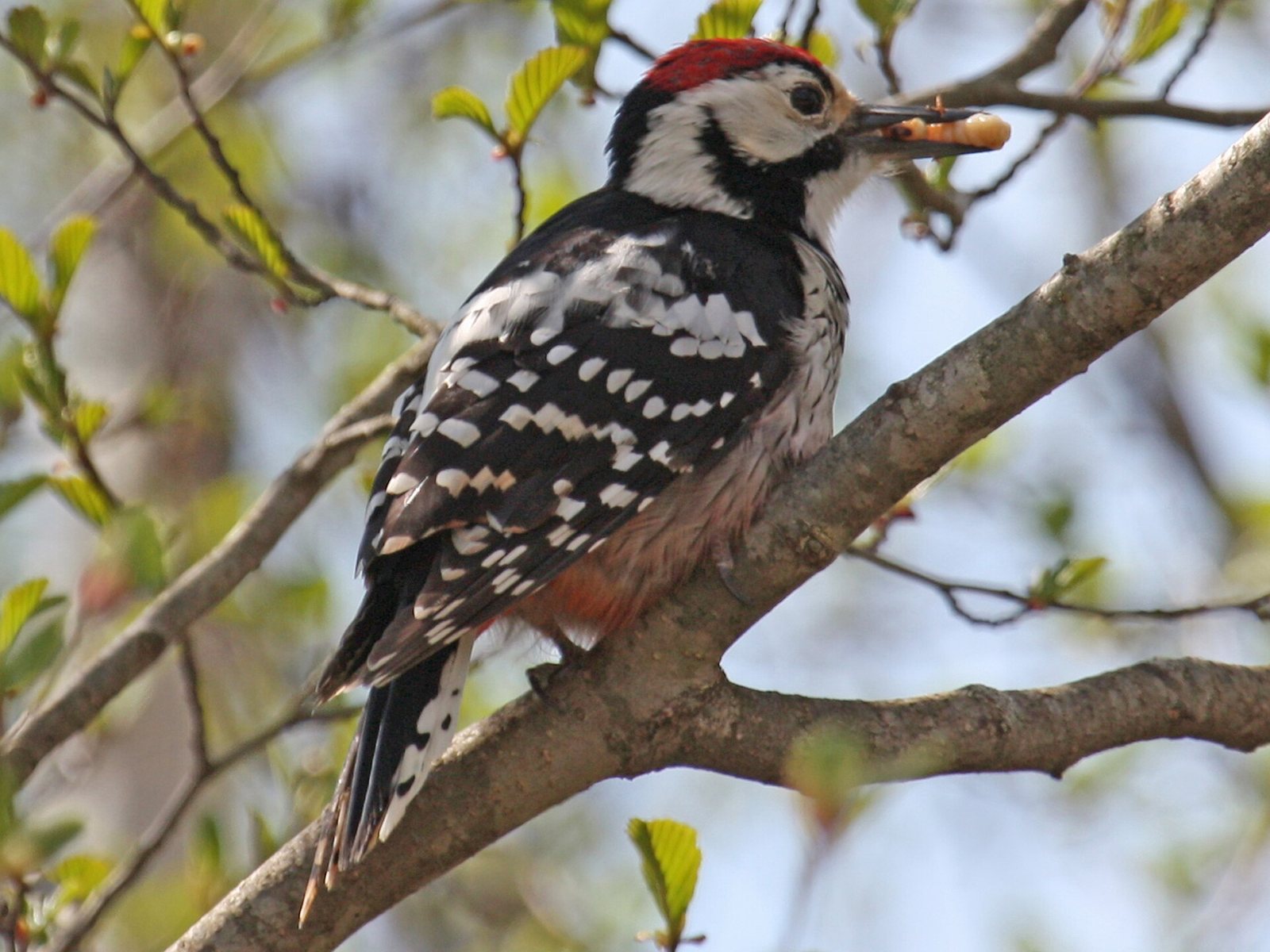
The largest pied woodpecker in Europe, with barred wings, a white lower back and streaked flanks; the male has a red crown.
Habitat
Mature or old deciduous and mixed forest rich in standing dead trees — in Romania especially old beech, beech with oak, and beech with spruce.
Distribution
All lower mountain regions (the beech zone), hill areas and parts of the Transylvanian and Moldavian plateaus, plus the Măcin Mountains.
Approximate range in Romania
Diet
Mainly insect larvae from under bark and inside wood, especially dead trees; also nuts, acorns, hazelnuts and wild cherries.
Behaviour
Depends heavily on dead wood, which makes it a good indicator of old-growth forest.
Seasonality in Romania
Breeds in Romania and is resident; young birds disperse more widely.
- JanPresent
- FebPresent
- MarPresent
- AprPresent
- MayPresent
- JunPresent
- JulPresent
- AugPresent
- SepPresent
- OctPresent
- NovPresent
- DecPresent
Source-verified months inform the seasonal filters. Local timing can vary. Unconfirmed months do not imply absence. * Event timing retained from the earlier entry, not yet source-verified.
Breeding
Lays 3–5 eggs from late April, incubated by both parents for 14–16 days; young leave the nest after 27–28 days.