Birds
White Stork
Ciconia ciconia · Barză albă
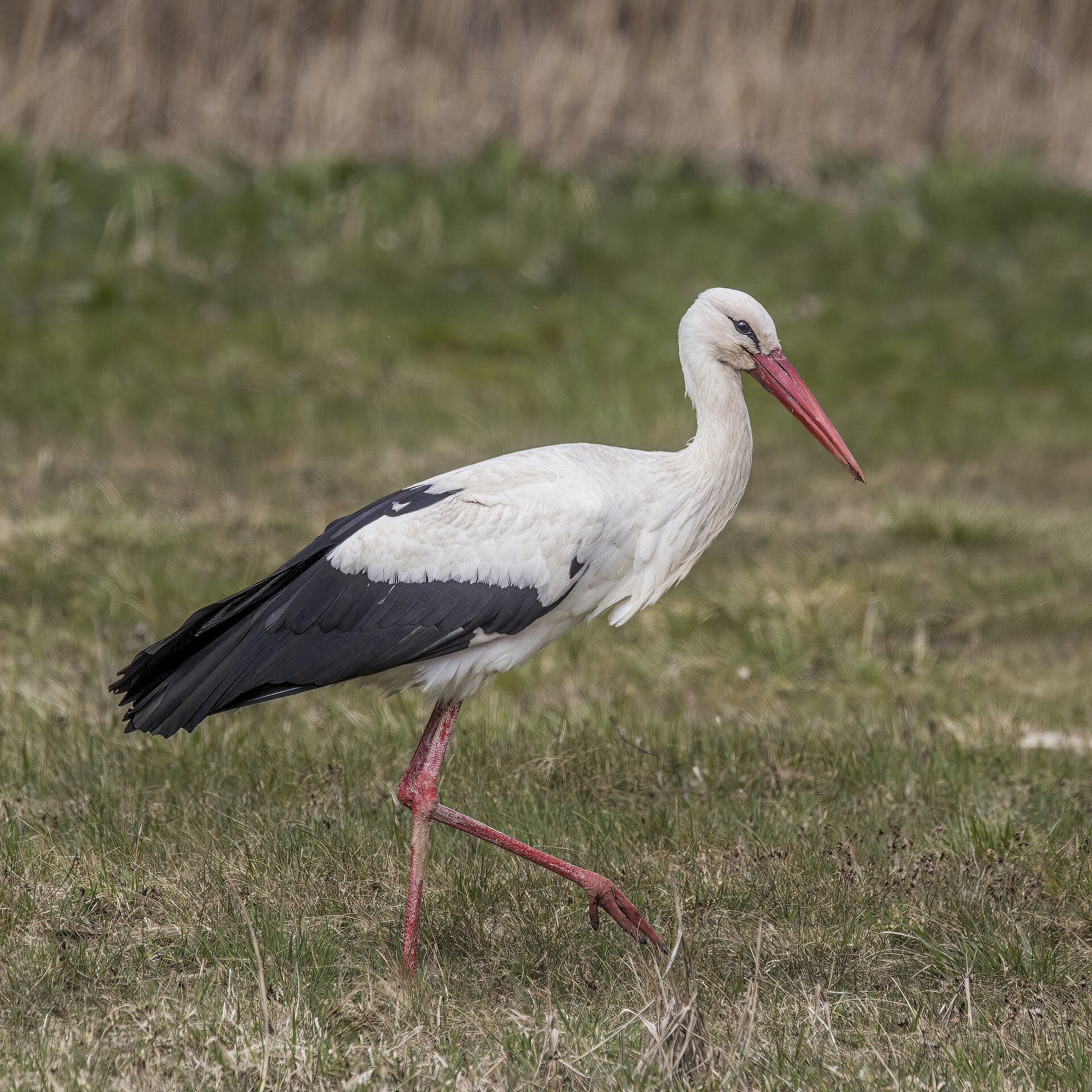
A large black-and-white wader with a red bill and legs, famous for nesting on chimneys, poles and rooftops in villages.
At a glance
- Status in Romania
- Summer visitor
- Habitat
- Wetland / Meadow / Urban
- Activity
- Daytime
- Diet
- Insects, earthworms, frogs, small rodents and other small animals caught while walking through fields and shallow water.
- Conservation status
- Least Concern (IUCN)
- Photography difficulty
- Easy to observe
Identification
Tall, white body with black flight feathers, long red bill and long red legs. Flies with neck and legs stretched out, often soaring.
Habitat
Wet meadows, pastures, farmland and river floodplains, usually close to villages.
Distribution
Breeds across much of Europe and winters mainly in Africa. A summer visitor to Romania.
Approximate range in Romania
When it is active
Daytime
Diet
Insects, earthworms, frogs, small rodents and other small animals caught while walking through fields and shallow water.
Behaviour
Pairs greet each other with loud bill-clattering at the nest. Migrates in large flocks, using thermals to soar.
Seasonality in Romania
SOR records arrival from March and departure in late August or early September.
- JanUnknown
- FebUnknown
- MarPresentMigration*
- AprPresentBreeding*
- MayPresentBreeding*
- JunPresentBreeding*
- JulPresentBreeding*
- AugPresentBreeding*
- SepPresentMigration*
- OctUnknown
- NovUnknown
- DecUnknown
Source-verified months inform the seasonal filters. Local timing can vary. Unconfirmed months do not imply absence. * Event timing retained from the earlier entry, not yet source-verified.
Breeding
Builds large stick nests on buildings, poles or trees, often reused for many years.
How to find it
Villages and farmland near wet meadows and rivers in spring and summer.
How to identify it in the field
Size, black-and-white pattern and red bill and legs make it unmistakable.
Photography
General guidance based on the species’ behaviour, not a report of Nick’s personal field experience.
- Difficulty
- Easy to observe
- Ethics
- Photograph nests from a public road or path, never from private property or by climbing nearby.
Practical starting points, not fixed rules.