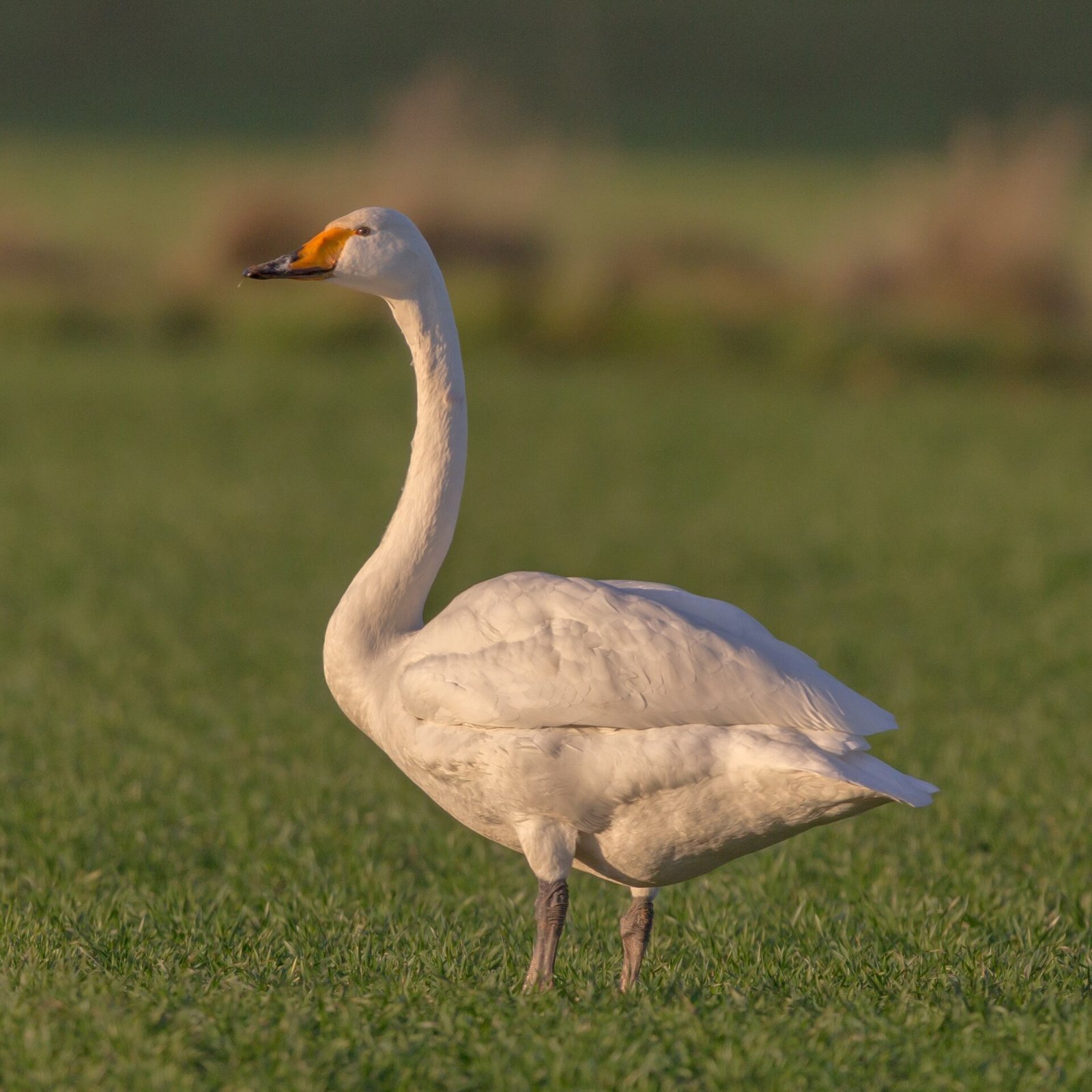
Whooper Swan
Cygnus cygnus · Lebădă de iarnă
A large all-white winter swan from the northern taiga and tundra, found in Romania mostly in the lowlands near large wetlands.
At a glance
- Status in Romania
- Winter visitor
- Habitat
- Wetland / Meadow
- Activity
- Morning · Daytime · Evening
- Diet
- Almost entirely vegetarian: aquatic and marsh plants, plus grass and crops, including seeds, especially in winter.
- Conservation status
- Least Concern (IUCN)
- Photography difficulty
- Moderate
Photograph this species
- Best months
- January, February, October, November, December
- Best time / activity
- Morning · Daytime · Evening
- Photography difficulty
- Moderate
- Where to look
- From late October to February, check large lowland wetlands and nearby farmland, where flocks feed by day.
Months confirmed by a Romanian source. General guidance, not local sightings.
Photography Guide
Practical starting points based on the species’ behaviour and habitat, not fixed rules.
- Where and how to look
- From late October to February, check large lowland wetlands and nearby farmland, where flocks feed by day.
- Best time / activity
- Morning · Daytime · Evening
- Behaviour to anticipate
- Take-offs from the water and flocks flying between resting and feeding areas.
- Photography difficulty
- Moderate
- Starting shutter speed
- 1/1600 sec or faster for flight.
- Fieldcraft
- Stay at the edge of the field or shore and let the flock settle; a vehicle often works as a hide.
- Light
- White plumage clips easily; watch the highlights, especially in sun or snow.
- Ethics
- Do not feed birds to attract them, and avoid flushing resting or feeding flocks.
Identification
Habitat
Distribution
Approximate range in Romania
Diet
Behaviour
Seasonality in Romania
Does not breed in Romania and is present only in winter. Arrives from the end of October and returns to the breeding grounds in February or early March.
Presence
Estimated from existing data
Breeding
Migration
Wintering
Data note. Some monthly timing is based on existing estimates and has not yet been verified against a Romanian source.
About this data
Source-verified months inform the seasonal filters. Local timing can vary. Unconfirmed months do not imply absence. Presence verification is separate from monthly status; each month's details identify its verification. Lighter bands mark estimated timing. Empty event rows mean no event is recorded, not confirmed absence.