Birds
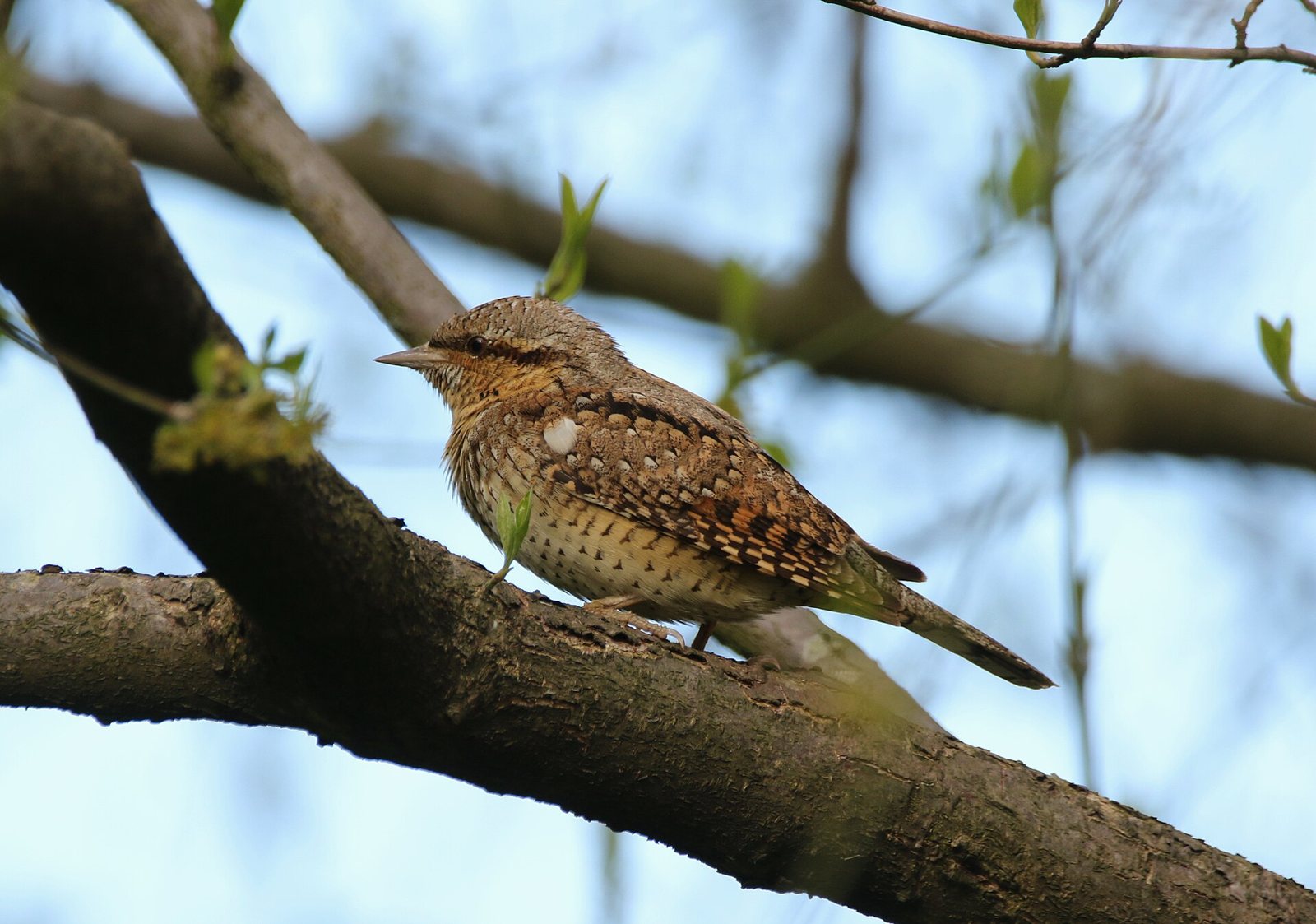
Eurasian Wryneck
Jynx torquilla · Capîntortură
An atypical, cryptically patterned woodpecker and the only migratory woodpecker in Europe.
At a glance
- Status in Romania
- Summer visitor
- Habitat
- Meadow / Forest
- Activity
- Morning · Daytime
- Diet
- Mainly ants, especially larvae and pupae, plus other ground insects, spiders and occasionally small fruit.
- Conservation status
- Least Concern (IUCN)
- Photography difficulty
- Moderate
Photography Guide
Practical starting points based on the species’ behaviour and habitat, not fixed rules.
- Where and how to look
- Orchards and pastures with old trees in spring, when its repeated calls give it away.
- Best time / activity
- Morning · Daytime
- Behaviour to anticipate
- Feeding on the ground at ant nests, often in short bursts.
- Photography difficulty
- Moderate
- Starting shutter speed
- Around 1/1000 sec for a perched bird.
- Fieldcraft
- Its camouflage works against bark; look for a clean branch or a moment on open ground.
- Ethics
- Never wait beside an occupied nest hole, never use playback, and move on if the birds stop feeding or start alarm-calling.
Identification
Small (16–18 cm). Bark-like camouflage of brown, grey and black above; pale, finely barred underparts. Sexes look alike.
Habitat
Open habitats with mature trees: pastures with old trees, orchards, forest edges and riverside woods. It cannot excavate its own hole, so existing cavities are essential.
Distribution
Breeds across Romania, from the Danube Delta up to the submontane hills.
Approximate range in Romania
Diet
Mainly ants, especially larvae and pupae, plus other ground insects, spiders and occasionally small fruit.
Behaviour
Twists its head in a snake-like way when threatened, which gives the species its name.
Seasonality in Romania
Breeds in Romania and is migratory. Arrives from late March and leaves in August; a long-distance migrant wintering in sub-Saharan Africa.
- JanUnknown
- FebUnknown
- MarPresent
- AprPresent
- MayPresent
- JunPresent
- JulPresent
- AugPresent
- SepUnknown
- OctUnknown
- NovUnknown
- DecUnknown
Source-verified months inform the seasonal filters. Local timing can vary. Unconfirmed months do not imply absence. * Event timing retained from the earlier entry, not yet source-verified.
Breeding
Breeding starts in April with eggs from May; usually 7–12 eggs in an existing tree cavity, incubated by both parents for 11–12 days.